


Philippine manufacturers tightened their purchasing activity in October as weak demand continued to drag on production and hiring, underscoring the gap between businesses’ improving outlook and the still-fragile state of factory orders.
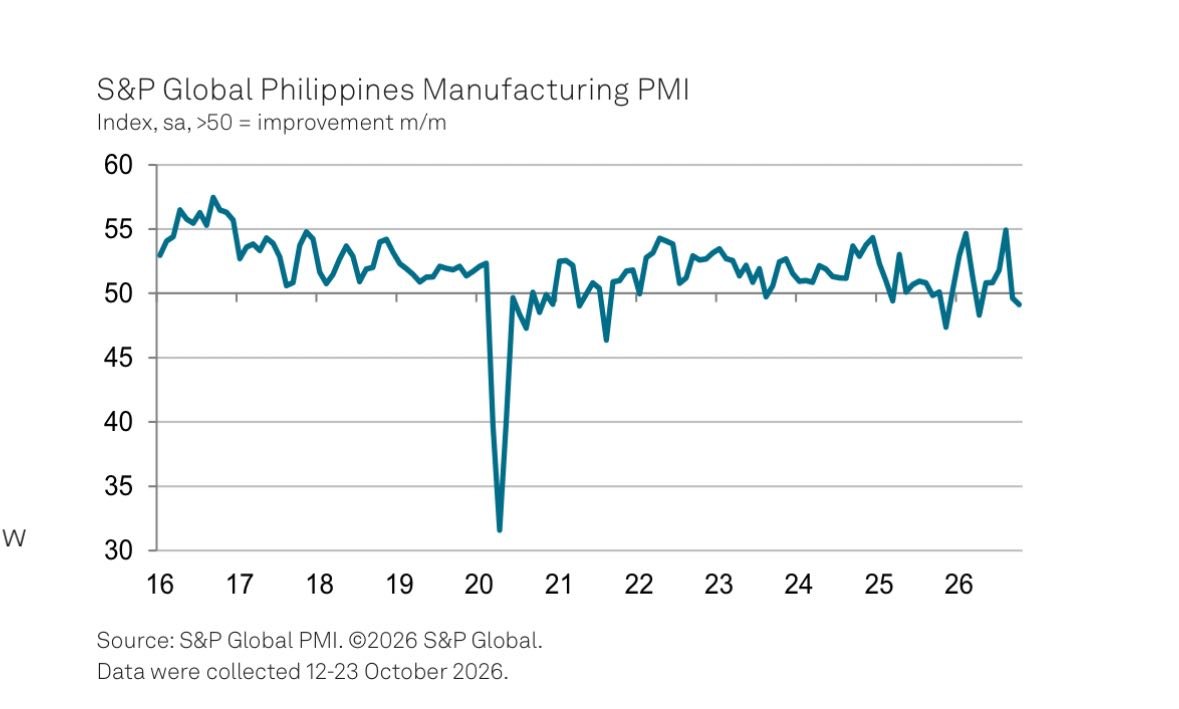
The S&P Global Philippines Manufacturing Purchasing Managers’ Index (PMI) slipped to 49.1 from 49.6 in September, marking a second straight month of deteriorating operating conditions. A reading below 50 indicates contraction.
Input buying fell at the fastest pace in 11 months, suggesting manufacturers are keeping a tighter rein on inventory and production commitments rather than betting prematurely on a recovery. Employment also declined for a second consecutive month, although surveyed firms attributed the reduction to resignations.
“However, stronger optimism has yet to translate into a recovery in orders or hiring,” said Siân Jones, principal economist at S&P Global Market Intelligence.
New orders contracted more sharply in October, reflecting subdued demand in both domestic and overseas markets. Some manufacturers also cited hot weather, which they linked to El Niño, as a drag on business activity.
Output continued to decline, although at a slower rate than in September. With new work remaining scarce, factories also reduced their outstanding business for a second month, indicating that existing workloads offered little buffer against weaker demand.
The near-term caution stood in contrast to a rebound in business confidence. Manufacturers’ expectations for output over the next 12 months climbed to a near two-year high, buoyed by hopes of new projects, additional customers and improving demand.
Some firms appeared to be preparing for that recovery, with finished goods inventories rising marginally for the first time in four months and input stocks stabilizing.
Cost pressures also eased. Operating expenses increased at their slowest pace in eight months, while selling price adjustments remained modest, giving manufacturers some room to compete for orders.
Still, the October survey points to an industry not yet ready to turn optimism into spending. Until new orders improve, factories are likely to remain cautious about buying, hiring and expanding production.
Factories deepen buying cuts as optimism fails to lift orders


Previous article

Next article

Related Stories


