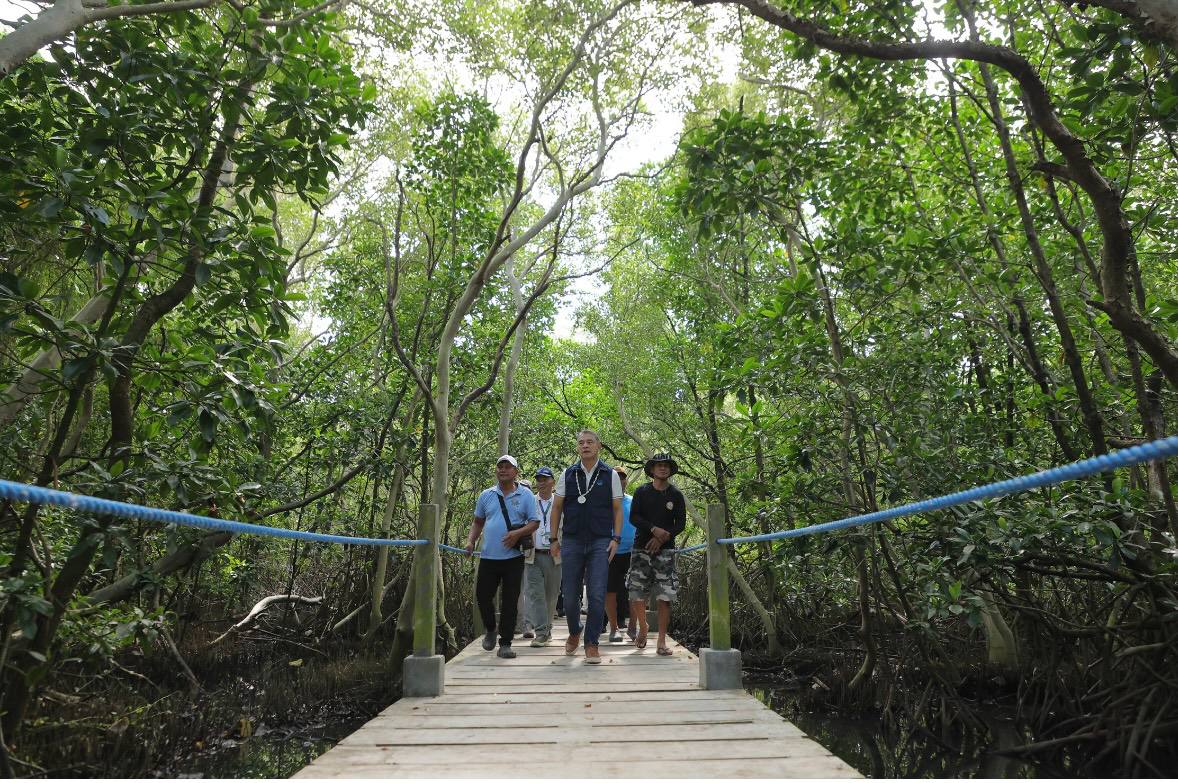
Coastal communities in Balanga City once faced constant worry: regular flooding during high tide worsened by storms, and shrinking fish catches as mangrove forests were cut down and damaged. Jaime Buenaventura, head of the City Fishery and Aquatic Resources Management Council, recalled how clearing mangroves made water levels rise dangerously and left fishing families struggling to make ends meet. Today, that story has changed completely.
Restored mangrove forests now stand as natural barriers, absorbing floodwaters and holding back strong waves and storm surges before they reach homes and fishponds. These coastal wetlands also serve as nurseries for fish and marine life, bringing back richer catches. Fisherman Benjie Manuel said his income has more than doubled, and recent typhoons brought far less damage to the community. Local businesses have benefited too, with steady seafood supplies and growing interest from visitors.
This success comes as the national government strengthens climate resilience. In November 2024, President Ferdinand Marcos Jr. called on the DENR and other agencies to update the country’s flood control plans to match more intense storms and heavier rainfall. The DENR has been advancing nature-based solutions — working with ecosystems like mangroves, wetlands, and rivers alongside traditional infrastructure — to keep communities safer.
Environment Secretary Juan Miguel “Mitch” T. Cuna, during a visit to the Balanga Wetland and Nature Park, noted how vital it is to let natural ecosystems play a bigger role in climate protection. The DENR has provided technical support, training, monitoring, and deployed River Rangers to guard waterways, while installing waste traps to keep trash away from sensitive coastal areas. Local residents and fishermen themselves have led much of the planting and care of the mangroves, making the effort truly community-led.
Keeping these ecosystems healthy remains an ongoing task, with River Rangers and volunteers continuing cleanup and protection work. For the people of Balanga, the message is clear: nurturing mangroves does more than protect the environment — it safeguards homes, secures livelihoods, and builds stronger communities. As one resident put it, the mangroves have become a defense not just for fishponds, but for everyone.