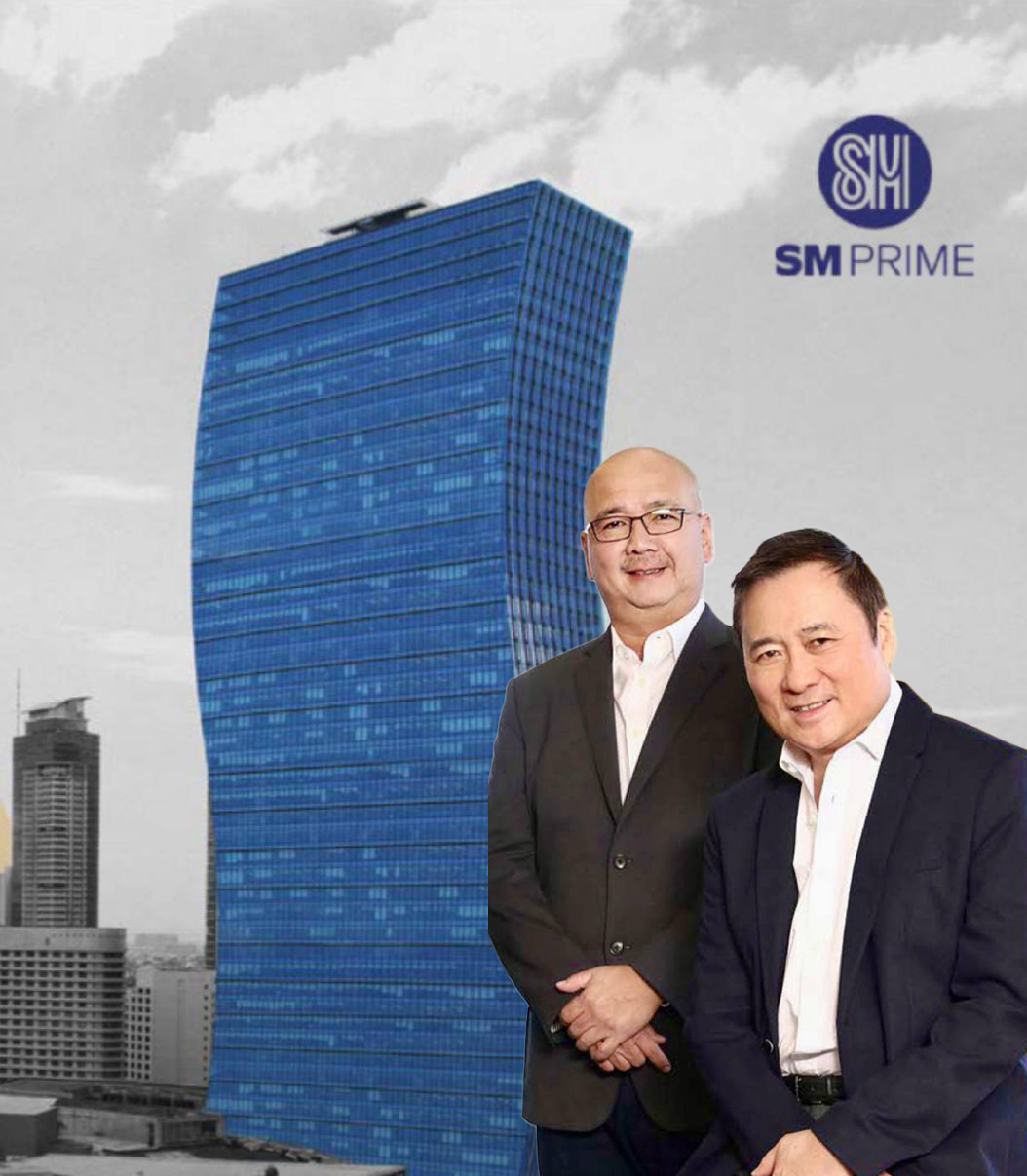
SM Prime Holdings is tightening cost controls and scaling back non-essential capital expenditures as it moves to shield profitability amid global uncertainty, including heightened risks stemming from the US-Iran conflict.
Speaking to stockholders on Tuesday, chairman Henry Sy Jr. said the property giant remains confident in its ability to weather volatility, citing the company’s stable, recurring-income-driven business model as a key buffer.
“We recognize the situation is volatile and that it could become even more difficult in the coming months,” Sy said. “But we are in a very solid position to manage through this period.”
He said SM Prime’s diversified portfolio—anchored by its malls and other steady-income assets—continues to provide resilience even as external pressures build.
“Our business model gives us stability, mostly providing recurring income when other parts of the portfolio are under pressure,” he added.
Sy noted that while expansion plans remain in place, the company is adopting a more cautious investment stance and closely managing its balance sheet.
“We are also monitoring costs and prioritizing capital spending to protect our balance sheet strength,” he said, adding that the company remains “in a very, very strong position” for the longer term.
President Jeffrey Lim said SM Prime is actively implementing margin-protection measures, including reducing mall operating hours and deferring select expansion-related spending.
“We are undertaking several measures to ensure that we can maintain our margins,” Lim said. “We are actually reducing mall operating hours. We are also looking at deferring some of the non-critical capex for expansions that we had planned before.”
He added that the company is currently reassessing its full-year capital spending program and expects further deferrals depending on market conditions.
“We are now reviewing our capex for the year and will probably defer some of those given current information,” he said.
Operational efficiencies are also being pursued, including the centralization of procurement processes to reduce costs and improve scale.
“This is a continuous process. We don’t know when this will end, so we just have to continue to look at our operating costs and try to save as much as we can,” Lim said.
Despite the cautious tone, SM Prime remains upbeat about its core mall business, which continues to benefit from high occupancy levels and steady demand.
Lim said malls are expected to remain the company’s most stable earnings driver in the near term, underscoring their role in sustaining recurring income.
However, he flagged more uncertainty in the hotel and MICE segments, where consumer spending and event activity could soften.
“The hotel business is a bit difficult to call right now,” Lim said. “We expect demand to remain, but we cannot really project the level of growth, particularly for our conventions, MICE, and related businesses.”
SM Prime reported first-quarter net income of P11.66 billion, broadly flat year-on-year, as modest revenue growth was offset by higher costs and expenses. Revenues rose 2 percent to P33.3 billion, driven by stronger rental and other income, with malls contributing the bulk of growth.
Lim said the company’s performance in 2026 will continue to be anchored by recurring income, with a focus on occupancy stability, customer experience, and disciplined cost management amid an uncertain operating environment.