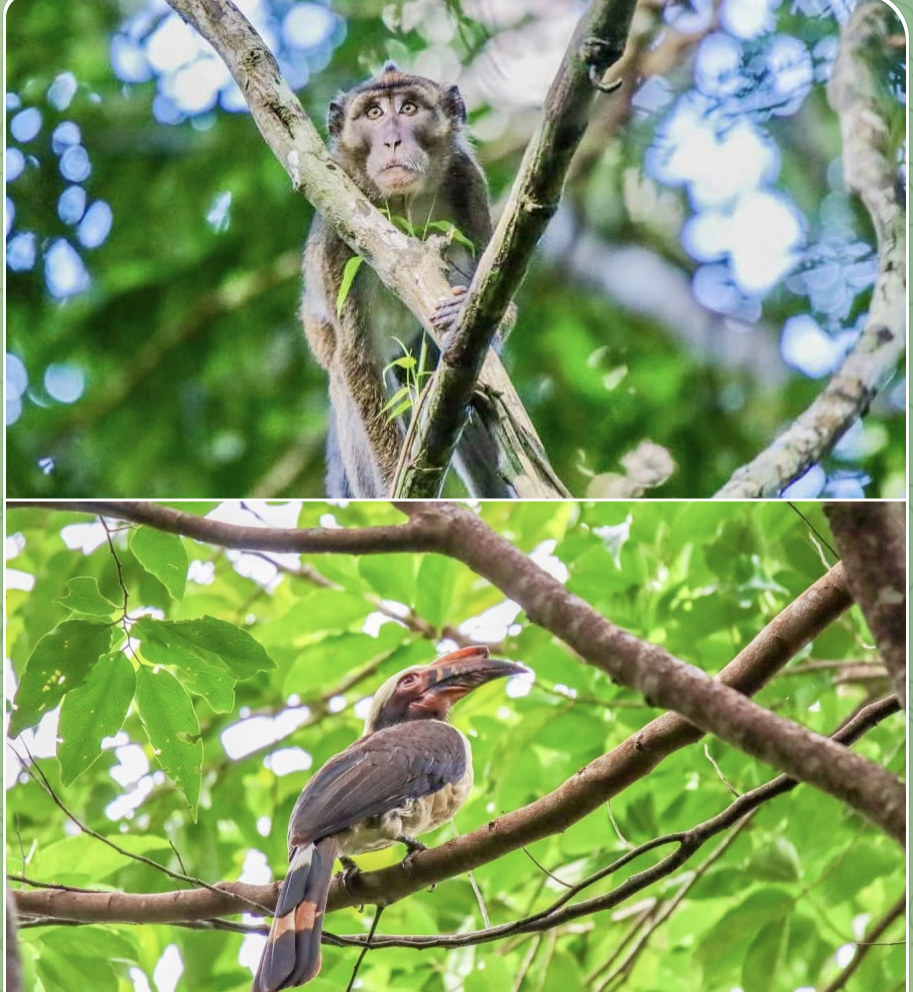
At Bulusan Volcano Natural Park, the spectacle is not only volcanic. It is also biological, unfolding quietly in the form of wings, whiskers, and rustling leaves that have been waiting for an update since the last century.
A recent survey by researchers from the National Museum of the Philippines and the Wild Bird Club of the Philippines has refreshed decades old wildlife records and delivered a far livelier census than expected. Across forest slopes between 300 and 900 meters, scientists recorded two rodent species, nine bat species, and 74 bird species, many of them found only in the Philippines.
The forest is clearly doing the heavy lifting. Around 65 percent of the birds recorded are endemic, including several restricted to the Bicol Peninsula. In ecological terms, Bulusan is not just hosting wildlife. It is quietly banking it.
Patterns across the landscape are just as revealing. Birds and bats decline as elevation rises, while rodents remain surprisingly steady, suggesting that altitude is less of a gatekeeper than habitat condition. The real dividing line is disturbance. Where forests are intact, species accumulate. Where they are broken up, they disappear from view.
Published in the April issue of the Philippine Journal of Science, the study effectively turns Bulusan into a living benchmark for biodiversity in motion. It captures not just what is present, but what is at risk of slipping away unnoticed.
That risk is not theoretical. Southern Luzon lost most of its forest cover over decades of agricultural expansion and logging. Some species never returned. Others are still hanging on, making do with what remains.
Bulusan, in other words, is not short on life. It is short on untouched space. And in ecology, space is rarely just background. It is the main character.