Agriculture and fisheries output in the first quarter of 2026 edged lower from a year earlier, as declines in crops and fisheries offset solid gains in livestock and poultry, underscoring uneven recovery across the sector.
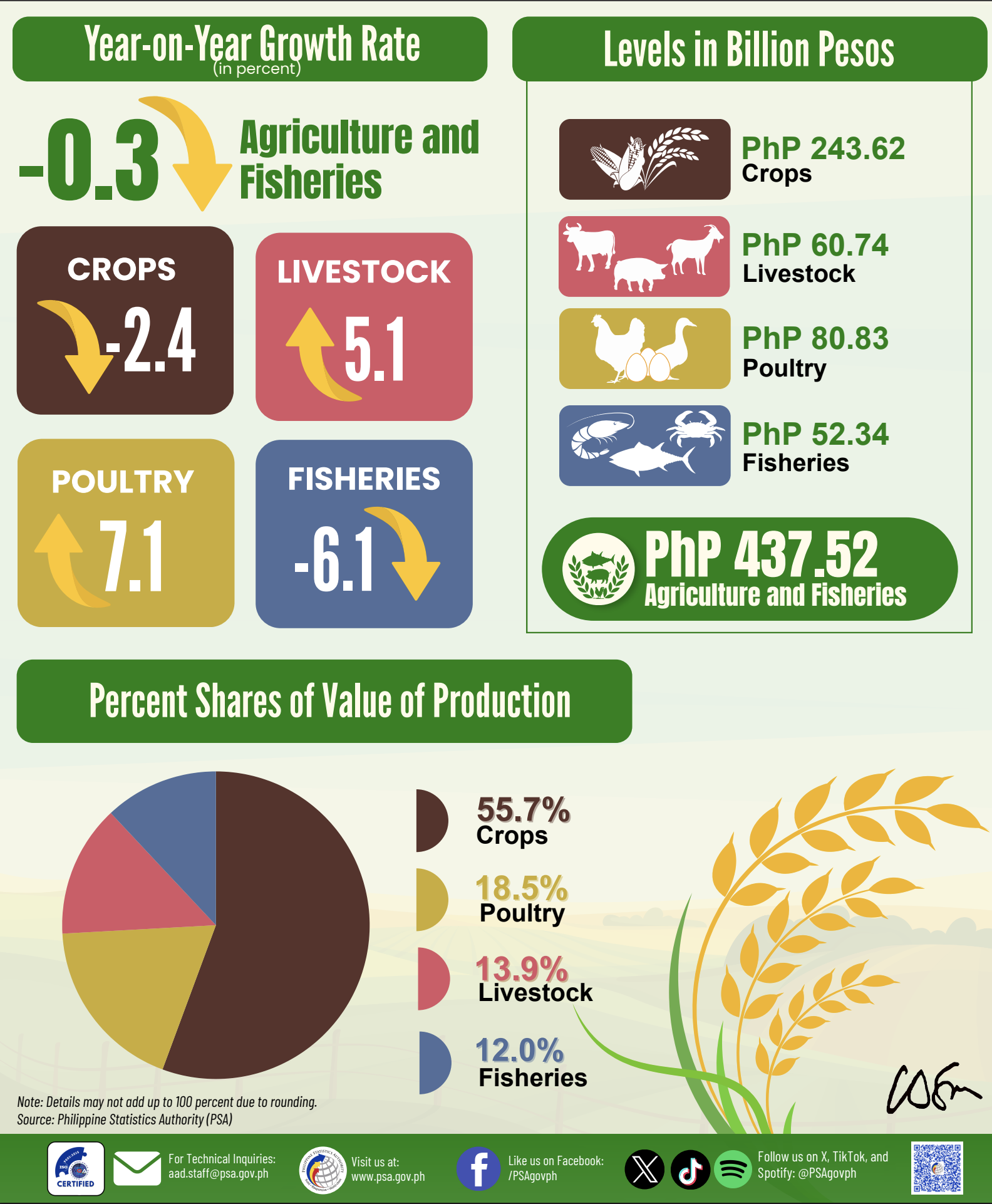
Data released Wednesday by the Philippine Statistics Authority showed the value of production slipped 0.3 percent to P437.52 billion at constant 2018 prices. The marginal drop masks sharper contractions in key segments, particularly crops, which still account for the bulk of agricultural output.
Crop production, representing nearly 56 percent of the total, fell 2.4 percent to P243.62 billion, dragged mainly by weaker rice output. Palay production declined 6.26 percent to 4.4 million metric tons, reflecting supply disruptions that rippled through the broader farm economy.
Fisheries also weighed on overall performance, with output value dropping 6.1 percent to P52.34 billion, pointing to continued challenges in coastal and aquaculture production.
In contrast, livestock and poultry emerged as bright spots.
Livestock output rose 5.1 percent to P60.74 billion, supported by a 6.4 percent increase in hog production, signaling gradual recovery from past disease outbreaks. Poultry posted even stronger growth, climbing 7.1 percent to P80.83 billion, as demand for relatively affordable protein remained firm.
The mixed performance highlights the sector’s sensitivity to weather, price signals, and infrastructure gaps. While gains in animal protein production offer some resilience, sustained recovery will depend on restoring crop output, particularly rice, which remains central to both food security and inflation dynamics.
Agriculture contributes roughly 9 percent to gross domestic product and accounts for one in every five jobs in the country. Yet millions of farmers and fisherfolk remain among the poorest, even as food prices heavily influence inflation, which consequently determine monetary policy and business costs.