TAGS: Jobs Data, Labor Market, PSA
The Philippine labor market showed modest improvement in March, with unemployment easing slightly, though broader indicators suggest lingering pressures on job quality and workforce participation.
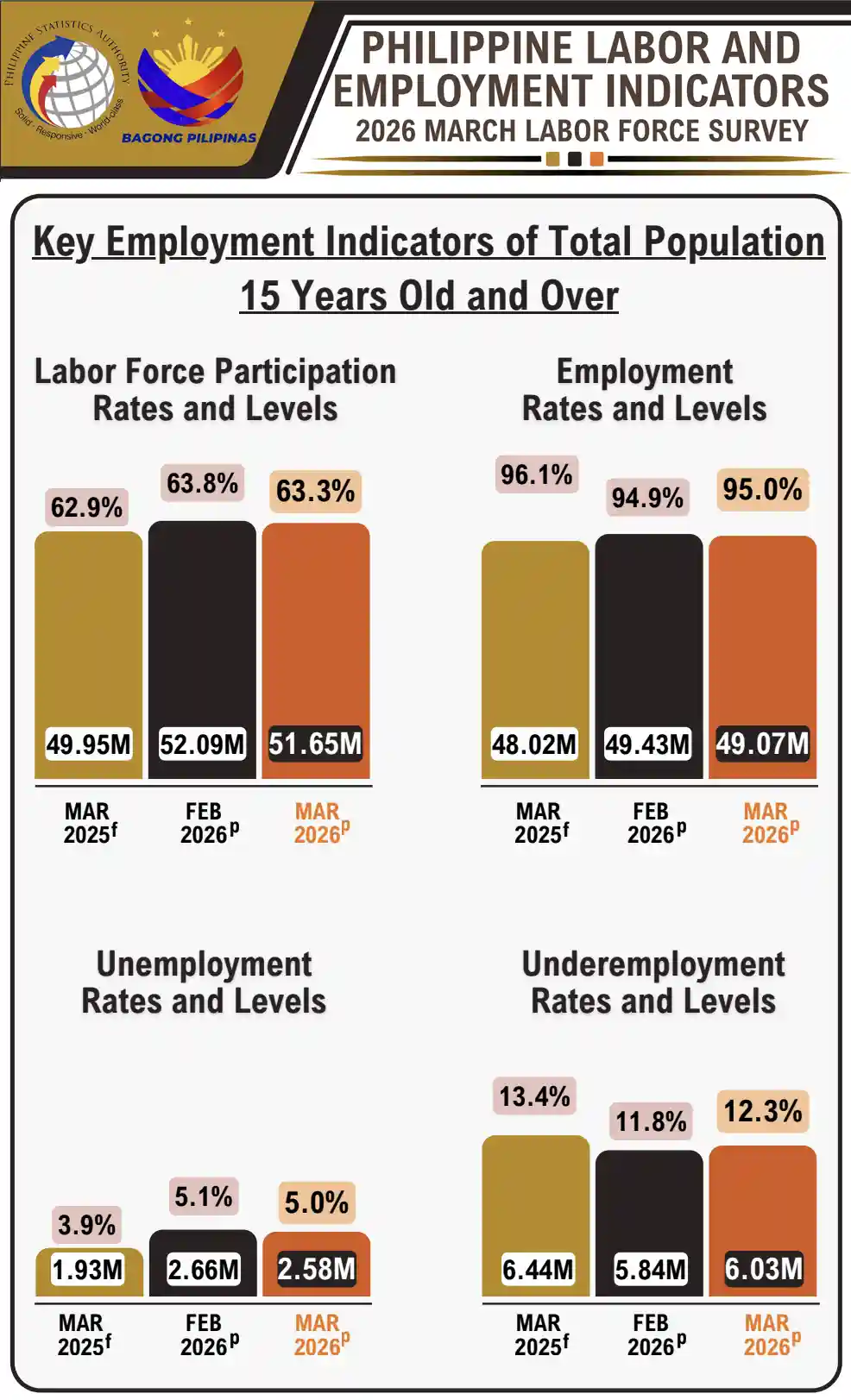
According to data released Wednesday by the Philippine Statistics Authority, the unemployment rate dipped to 5.0 percent from 5.1 percent in February, although it remained higher than the 3.9 percent recorded a year earlier.
In absolute terms, 2.58 million Filipinos were jobless, down from 2.66 million the previous month but still significantly above the 1.93 million in March 2025.
Labor force participation edged up to 63.3 percent from 62.9 percent a year ago, translating to 51.65 million Filipinos either working or actively seeking jobs.
However, this was slightly lower than February’s 63.8 percent, suggesting some softening in workforce engagement.
Employment data painted a mixed picture. The employment rate stood at 95.0 percent, below last year’s 96.1 percent, even as the number of employed persons rose to 49.07 million from 48.02 million a year earlier.
On a month-on-month basis, however, employment declined from 49.43 million, pointing to a loss of momentum.
Job creation remained concentrated in the services sector, which accounted for 63.0 percent of total employment, followed by agriculture at 19.1 percent and industry at 17.9 percent.
Wholesale and retail trade remained the largest employer, followed by agriculture and construction.
Sectoral shifts were uneven. Gains were recorded in transportation, administrative support, and professional services, reflecting continued recovery in mobility and business activity.
In contrast, declines in fishing, manufacturing, and public administration suggest persistent structural challenges.
A key concern is underemployment, which rose to 12.3 percent from 11.8 percent in February, with 6.03 million workers seeking additional hours or better-paying jobs. Average weekly hours also dipped to 40.7, reinforcing signs of softer labor demand.
Overall, the data point to a stabilizing labor market, but one where improving headline unemployment masks deeper issues around job quality and sustained employment growth.