The Philippine stock market remains cautiously constructive as investors weigh short-term macro headwinds against improving medium-term earnings visibility.
At Friday’s PSE STAR Investor Day, Kervin Sisayan, head of research at Maybank Securities Philippines, reaffirmed a 7,000-point target for the PSEi, highlighting opportunities in undervalued blue chips and high-yield defensive names.
“We see potential in quality laggards as the market navigates ongoing cyclical pressures,” he said.
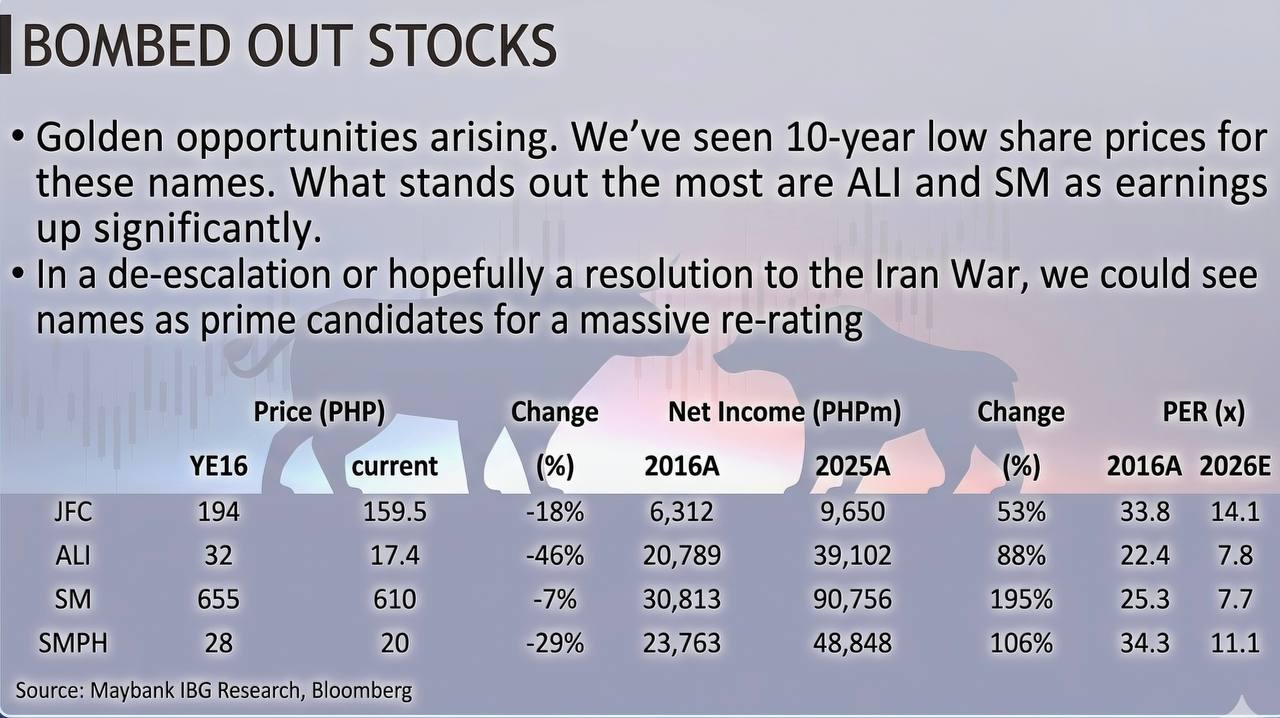
Several index heavyweights—including Ayala Land, Jollibee Foods Corp., SM Investments, and SM Prime Holdings—have underperformed in price terms over the past decade despite sustained earnings growth.
Analysts describe these as “bombed-out” stocks, noting a widening disconnect between valuation and fundamentals. Inflationary pressures, higher interest rates, and concerns over global expansion and property cycles have dampened sentiment, yet the companies’ earnings resilience points to potential re-rating over a three- to five-year horizon.
Medium-term structural drivers are also supportive. Initiatives like the emerging Luzon Economic Corridor and a proposed industrial hub could further solidify the Philippines’ role in global supply chains and higher-value manufacturing, providing additional tailwinds for select sectors.
In the near term, investors are rotating toward income-generating and defensive plays. Telecom giants PLDT and Globe offer attractive dividend yields underpinned by stable cash flows, while International Container Terminal Services benefits from global trade flows.
Consumer staples such as Puregold continue to demonstrate resilience amid downtrading trends, and digital financial platforms maintain strong growth momentum.
Analysts emphasize that long-term positioning is key, as structural reforms and deeper trade integration provide greater visibility for earnings growth. With select blue chips trading below intrinsic value, patient investors may find a window to capitalize on medium-term opportunities, even as short-term headwinds persist.
The current environment, Sisayan suggests, favors a careful balance of quality, income, and structural-growth plays for disciplined portfolios.