The Philippine automotive industry endured a slower first half of 2026, but a sharp June rebound and accelerating demand for electrified vehicles are providing momentum for a stronger second half.
Combined vehicle sales from members of the Chamber of Automotive Manufacturers of the Philippines Inc. (CAMPI) and the Truck Manufacturers Association (TMA) declined 11 percent to 204,557 units in the January-to-June period from 230,912 units a year earlier.
Passenger car sales dropped 11 percent to 40,503 units from 45,647, while commercial vehicle sales fell 11 percent to 164,054 units from 185,265 units.
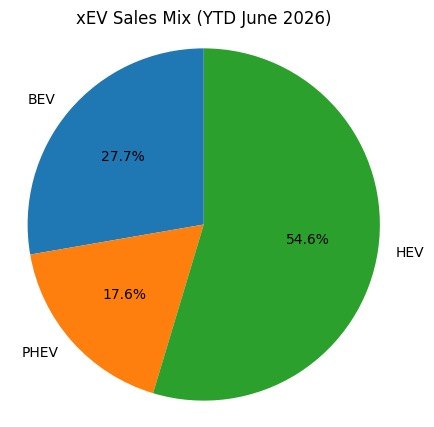
The slowdown reflected softer consumer demand during the first half, but the market’s shift toward cleaner mobility continued to gain traction. Electrified vehicle (xEV) sales more than doubled to 31,381 units from 13,241 units, and accounted for 15 percent of total vehicle sales, compared with only 5 percent a year earlier.
Hybrid electric vehicles remained the largest segment, increasing 57 percent to 17,148 units. Battery electric vehicle sales surged 256.8 percent to 8,702 units, while plug-in hybrid electric vehicle sales posted the strongest growth, jumping to 5,531 units from just 160 units previously.
The rising popularity of xEVs highlights a major transition in consumer preferences as more buyers weigh fuel efficiency, technology, and long-term ownership costs in vehicle decisions.
Momentum also returned in June, when CAMPI-TMA members sold 37,231 vehicles, an 11 percent increase from May and the strongest monthly performance so far this year. Including non-member estimates, total industry sales reached about 42,000 units, representing an 19 percent month-on-month increase.
CAMPI President Jose Maria Atienza said the recovery was supported by new model launches, stable fuel prices, and improved xEV availability, strengthening expectations that monthly sales in the second half could exceed last year’s levels.
Toyota Motor Philippines led the market in June, followed by Mitsubishi Motors Philippines, Suzuki Philippines, Ford Philippines, and Honda Cars Philippines.
While the first half reflected a challenging environment, the combination of recovering demand and the rapid rise of electrified mobility suggests the industry’s next growth phase may be driven less by volume alone and more by a fundamental shift in what Filipino consumers want from their vehicles.