The Philippines will continue negotiating with the Office of the United States Trade Representative (USTR) after Washington imposed a 12.5 percent tariff on most Philippine exports under its forced labor-related trade review, with Manila maintaining that the assessment remains open and subject to further evaluation.
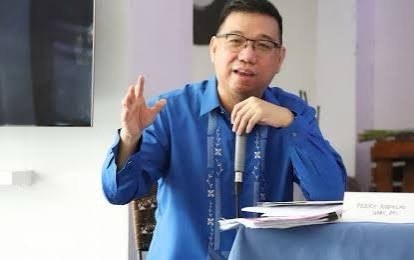
Speaking at a July 24 press briefing, Department of Trade and Industry Undersecretary Ceferino Rodolfo said the higher tariff, which took effect after the temporary 10 percent rate expired, had been anticipated. More importantly, he said, the Philippines secured assurances that the USTR’s review is ongoing rather than final.
“We continue to engage the US, in particular, the USTR, on the forced labor issue,” Rodolfo said.
He added that US officials are awaiting the country’s newly signed Joint Administrative Order (JAO), which institutionalizes a nationwide ban on the importation of goods produced through forced labor.
“We were assured that in our engagements with the USTR, the assessment is actually continuous,” Rodolfo said. “They look forward to receiving formally the JAO that was signed yesterday so that they could assess it accordingly.”
The tariff follows the USTR’s latest Section 301 review, which acknowledged that the Philippines had adopted measures against forced labor imports but concluded that implementation and enforcement remain insufficient.
The timing proved critical. Philippine officials signed the JAO only after the review had effectively been completed, preventing the reform from influencing the latest decision. However, the government believes the new policy could strengthen its case as discussions with Washington continue.
The tariff applies to most Philippine exports, although several key industries remain exempt, including semiconductors, electronics, electrical equipment, industrial machinery, automotive parts, and medical devices.
Goods loaded onto vessels before July 24 and entered into the US market before July 28 are also exempt from the new duty.
Rodolfo said talks with the USTR began during meetings in Washington, D.C., followed by virtual consultations that refined the JAO before it was signed this week.
The episode underscores how trade policy is increasingly shaped by labor and governance standards, with regulatory compliance now carrying as much weight as market access in preserving export competitiveness.