Philippine agriculture gathered momentum in the second quarter as all four major farm subsectors expanded, signaling a broader recovery that could bolster food supply and help temper inflation despite persistent climate and animal disease risks.
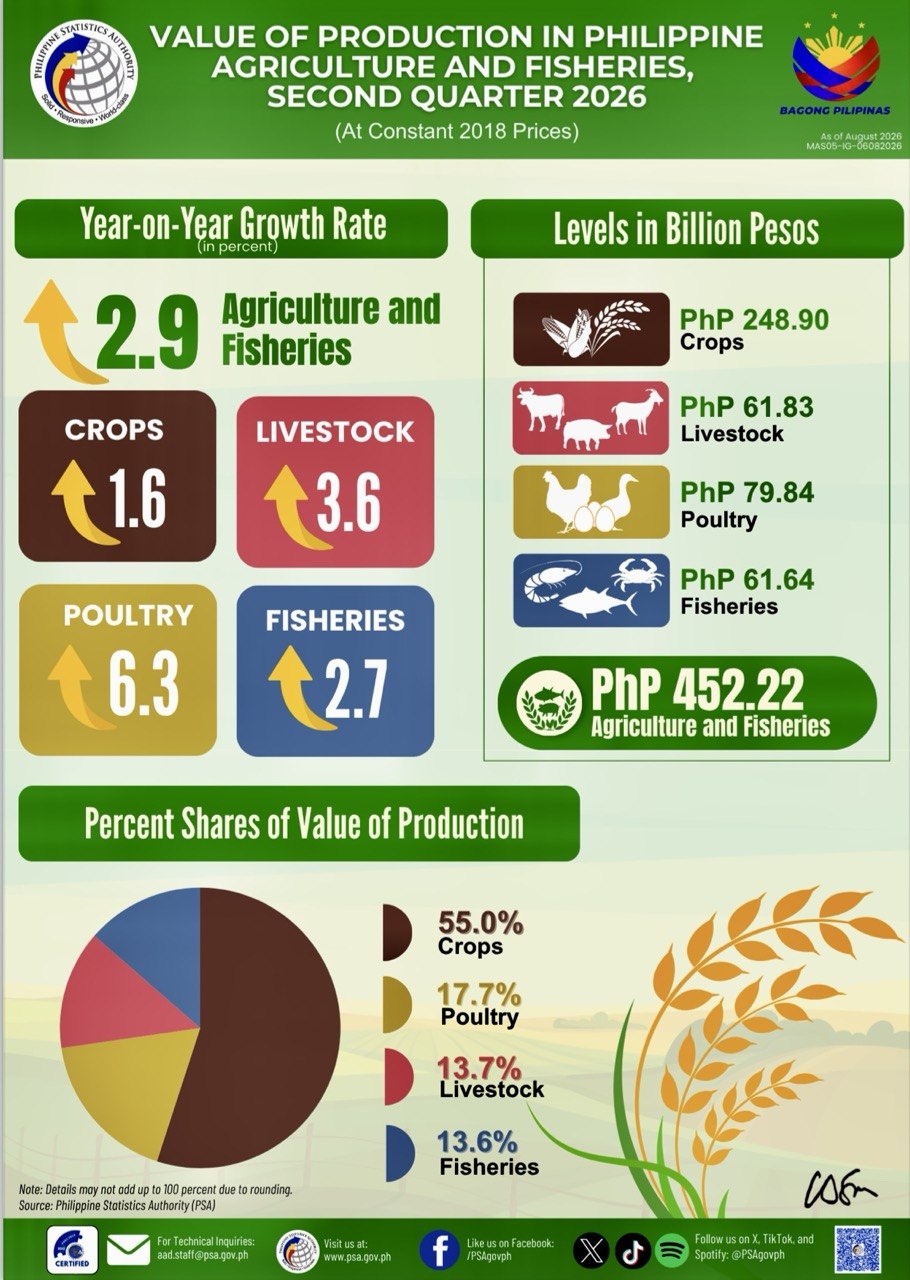
Data released by the Philippine Statistics Authority (PSA) on Thursday showed the value of agriculture and fisheries production, at constant 2018 prices, rose 2.9 percent year on year to P452.22 billion in the April to June period. The increase was driven by gains in crops, livestock, poultry, and fisheries, marking one of the sector’s most broad-based expansions in recent quarters.
In the first quarter, agriculture and fisheries contracted 0.3 percent due to weather disruptions and lower crop and fisheries yield.
The figures reinforce earlier production data showing stronger harvests during the quarter and suggest the farm sector is regaining its footing after years of disruptions from extreme weather, African swine fever, and elevated production costs.
Crop production, which accounted for 55 percent of total agricultural output, climbed 1.6 percent to P248.90 billion. Palay remained the biggest growth driver, with production value rising 5.7 percent, while corn edged up 0.8 percent.
Earlier PSA data showed palay output reached a record 4.63 million metric tons in the second quarter, the highest April-to-June harvest on record, reflecting improved yields and planting conditions.
Livestock production increased 3.6 percent to P61.83 billion, led by a 5.6 percent rise in hog production as the industry continued its gradual recovery from African swine fever.
Poultry was the fastest-growing major subsector, posting a 6.3 percent increase in production value to P79.84 billion and accounting for 17.7 percent of total farm output. Fisheries likewise contributed to the recovery, growing 2.7 percent to P61.64 billion.
The across-the-board gains indicate the farm sector is becoming less reliant on a single commodity for growth, an important shift as climate volatility and global supply uncertainties continue to challenge agricultural production.
A sustained recovery in farm output would also strengthen food security, support rural incomes, and help ease pressure on consumer prices, where food remains the biggest driver of inflation.