When Typhoon Yolanda struck in 2013, artists Precious Leaño and Alex Baluyut asked a simple question: “Can we cook for them?” — “them” being survivors arriving at Villamor Air Base from Tacloban, many days without proper food. Using their own equipment and artist network, they mobilized volunteers to serve hot meals around the clock. That urgent start grew into Art Relief Mobile Kitchen (ARMK), a volunteer-led nonprofit now deploying community kitchens during typhoons, quakes, eruptions, conflict, fires, and public health crises. What began as one effort has expanded to 12 mobile kitchens across the country, each capable of preparing 500 to 3,000 fresh meals per operation. Today, ARMK is part of Jollibee Group Foundation’s FoodAID program, which boosts disaster preparedness through training, prepositioned meals, and stronger partner coordination.
ARMK’s roots remain tied to the arts. Cultural worker Leaño and award-winning photojournalist Baluyut drew early support from fellow artists. Though Baluyut has passed, his spirit lives on in ARMK’s work. “We’re artists. We provide relief. We’re mobile, and this is our kitchen,” Leaño said. Serving hot meals is central — food is made close to affected areas for quality and comfort, often using locally sourced ingredients to support farmers and vendors hit by the same crisis. “Community kitchens comfort people when it’s needed,” Leaño noted. “Whether it’s a disaster or a fiesta, it is there.”
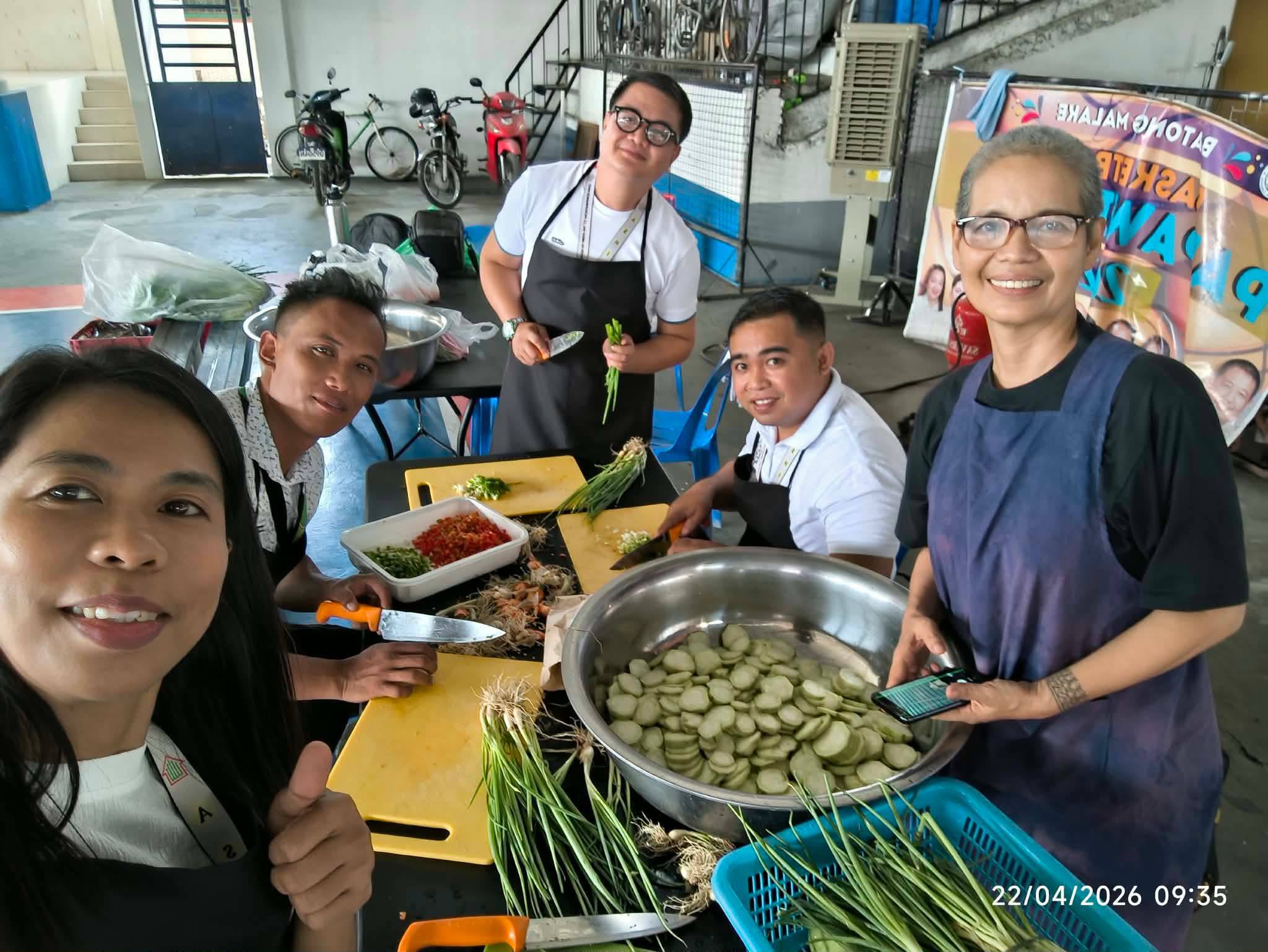
FoodAID builds more than just individual capacity — it strengthens local disaster response networks. Partners receive training, ready-to-cook meals, and connection opportunities before emergencies strike, building trust and coordination. Organizations now collaborate directly, combining complementary strengths. For example, ARMK and long-time partner Ahon sa Hirap, Inc. (ASHI) worked together in Los Baños, Laguna, where FEP farmers donated fresh vegetables while staff volunteered to cook for affected families. These partnerships extend to local governments, volunteers, and private groups, creating a broad support ecosystem. “Disaster response becomes stronger when local organizations know and trust one another before a crisis happens,” said Jollibee Group Foundation President Gisela Tiongson. “Our role is not only to help provide food during emergencies, but also to help strengthen partnerships that allow communities to respond more quickly, complement each other’s strengths, and care for more families when disasters strike.”
Since 2020, this collective approach has delivered over 18 million meals across more than 100 partners, including 3.4 million meals in 2025 alone. For Leaño, the support is personal — during the COVID-19 pandemic, when ARMK ran low on supplies, FoodAID arranged 700 kilograms of chicken to keep operations going. “It felt like it came from heaven,” she said. The model centers on working with communities rather than just for them, helping build local response capacity that endures. As climate disasters grow more frequent, these partnerships show that effective response means more than delivering aid — it means building trusted local networks so communities can care for one another when it matters most.