The Philippines’ economic rebound will depend heavily on how quickly public investment and construction activity recover, with the energy shock and domestic flood-control issues weighing on growth, according to the ASEAN+3 Macroeconomic Research Office (AMRO).
AMRO sharply lowered its growth forecasts for the Philippines, leaving the economy facing a slower recovery than many of its Southeast Asian neighbors as inflation, weak investment and external pressures continue to constrain activity.
The regional economic monitor now expects the Philippine economy to grow 3.3 percent in 2026, down 0.8 percentage point from its July forecast of 4.1 percent. Its 2027 projection was cut to 4.6 percent from 5.5 percent.
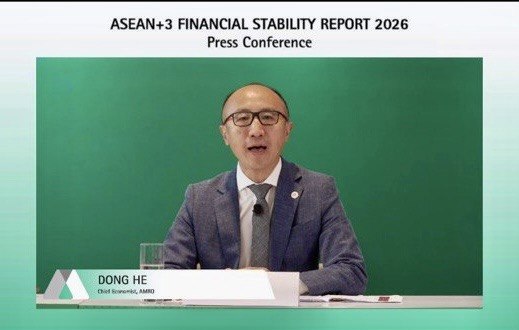
AMRO Chief Economist Dong He said the Philippines was among the economies more severely affected by the energy shock linked to the conflict in the Middle East, which contributed to a sharp slowdown in growth and a rapid increase in inflation.
Domestic issues surrounding flood-control projects have also weighed on government spending.
“The growth outlook is very dependent on how fast public investment and construction-related activities can pick up,” Dong said during a press briefing on AMRO’s ASEAN+3 Regional Economic Outlook October Update.
He said “well-governed public investment” must regain momentum and that planned government projects need to be completed for the economy to return to its potential growth path.
AMRO made only a modest adjustment to its 2026 inflation forecast, lowering it to 5.6 percent from 5.7 percent. But it raised its 2027 forecast to 4.6 percent from 4.1 percent, suggesting price pressures could remain elevated even as growth weakens.
Dong said the Bangko Sentral ng Pilipinas faces a difficult policy trade-off: further monetary tightening could weigh on economic activity, while insufficient action on inflation could erode household purchasing power.
He said the BSP should remain anchored to its inflation-targeting framework and take a forward-looking approach in determining policy.
Despite the weaker outlook, Dong pointed to resilient remittance inflows and continued strength in the IT-BPM sector and services exports as key sources of support for the Philippine economy.