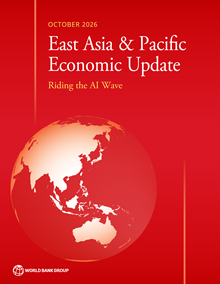
A worldwide surge in artificial intelligence technology is giving a major boost to economies across the East Asia and Pacific region, including developing manufacturing hubs like the Philippines, according to the World Bank’s latest regional economic update released Tuesday.
The report, titled “East Asia and Pacific Economic Update, October 2026: Riding the AI Wave,” reveals that while overall regional growth is slowing slightly, it is holding up much better than previously expected. The primary engine behind this stability is the booming global demand for AI-related goods, microchips, and technology manufacturing.
The influence of AI is most visible inside the region’s factories and industrial supply chains. Countries participating in the global AI hardware network, such as the Philippines, Vietnam, Malaysia, and Thailand, have seen strong demand for tech assembly, microchips, and electronic components. In several of these nations, AI-related products have accounted for the majority of recent export growth.
However, the picture is quite different outside manufacturing floors. Everyday business use of AI tools across service sectors, small businesses, and general workplaces in East Asia and Pacific remains far lower than in more advanced economies. Businesses report three main obstacles holding them back from adopting AI: setting up new technology remains expensive, many managers and workers lack the technical know-how to integrate AI into daily tasks, and companies face serious concerns surrounding data security, privacy, and system reliability.
Despite these hurdles, AI is already changing what employers look for in job applicants. Businesses are increasingly seeking workers who combine basic AI literacy with strong analytical abilities, problem-solving capabilities, and soft skills like communication.
The news is less bright for regions less involved in tech manufacturing. Pacific Island economies, in particular, are feeling the strain of high imported fuel and energy costs, which continue to weigh down local growth.
Looking ahead, the World Bank warned of several key risks that could disrupt the region’s progress. First, because so much recent growth relies on the AI tech boom, any sudden dip or reversal in global AI spending would hurt the region’s manufacturing exports. Second, AI data centers and tech factories require massive amounts of electricity, threatening power supplies if infrastructure falls behind. Finally, extreme weather events, such as an unusually strong El Niño, could damage crops, disrupt supply lines, increase inflation, and drive up borrowing costs.
To protect growth and build higher-paying jobs, the World Bank recommends that governments invest heavily in modern digital infrastructure and workforce training programs. Upgrading skills will help everyday businesses use AI tools more effectively to boost productivity across all sectors.
Additionally, the report stresses the urgent need to expand renewable energy capacity. Scaling up solar, wind, and domestic power generation will help meet the soaring electricity demands of new technology while shielding economies from unpredictable global oil and fuel prices.