Exporters in the Philippines are warning of looming business closures as surging fuel costs and persistent supply chain disruptions strain operations, with many firms saying they may last only a few months without urgent government support.
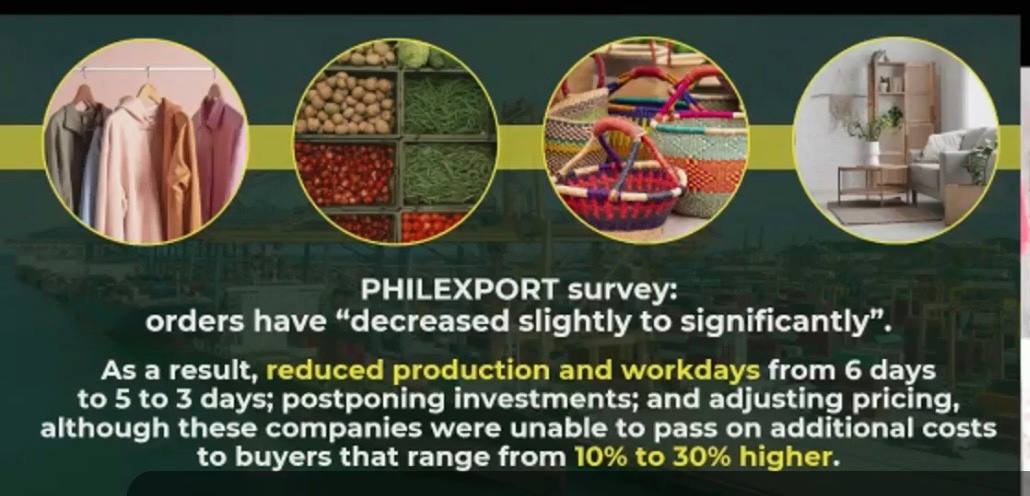
The Philippine Exporters Confederation Inc. said results of a recent survey point to deepening distress across key sectors, including garments, food, handicrafts, and furniture—industries heavily reliant on demand from the US.

Speaking at the group’s general membership meeting on Tuesday, Philexport president Sergio Ortiz-Luis Jr. said firms are grappling with falling orders and requests from buyers to delay shipments, signaling weakening external demand alongside rising costs.
“The firms project that they can only sustain current operations for three to six months more and may eventually close if there is no government support and alternative oil suppliers in Asia,” he said.
Companies have responded by cutting production schedules from six days to as few as three, raising prices where possible, and deferring investments. However, passing on higher costs has proven difficult, with exporters absorbing increases estimated at 10 to 30 percent.
Fuel, logistics, and raw materials account for most of the cost pressures. Fuel prices have more than doubled—from about P55 to over P100 per liter—while shipping lines have imposed emergency fuel surcharges of up to 26 percent and proposed additional risk fees reaching USD3,500 per container.
Despite these headwinds, export performance remained robust early in the year, with outbound shipments hitting USD14.47 billion by February, up 18.3 percent from a year earlier and the highest since 1991.
Still, Philexport warned that the ongoing energy crisis could derail momentum, particularly for time-sensitive sectors such as electronics, unless measures such as fuel subsidies, tax relief, and streamlined processes, warning that failure to act could trigger widespread closures and deeper supply chain disruptions.