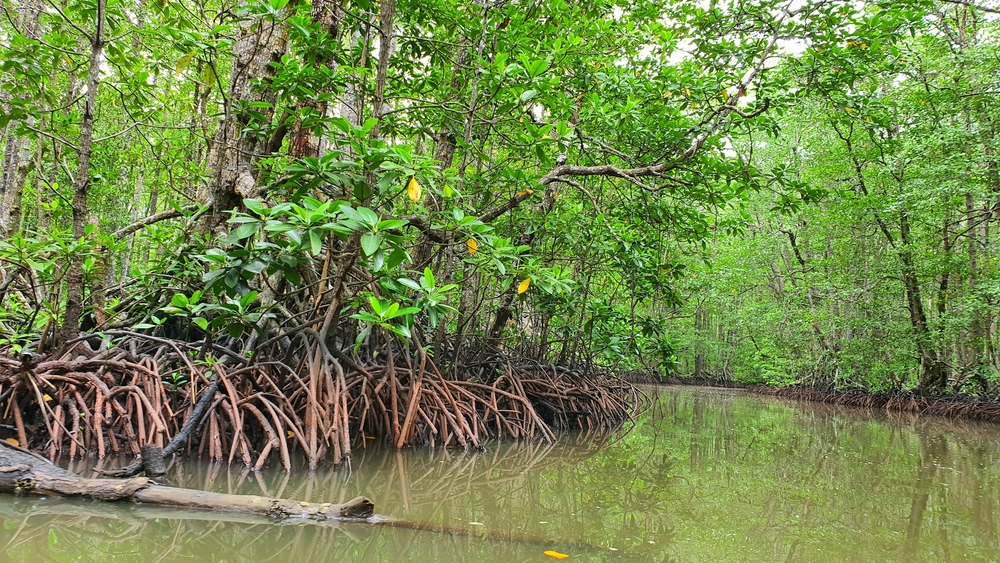
In a quiet stretch of coastline in Masinloc-Oyon Bay Protected Landscape and Seascape, the most important work is happening where few people bother to look.
Beneath tangled mangrove roots and thick coastal mud, tiny invertebrates are running the show. No fanfare, no spotlight, just nonstop ecosystem maintenance. These are not the usual marine celebrities. No dolphins, no whale sharks, no postcard coral scenes.
Instead, researchers focused on the shoreline’s quiet workforce. Snails, small crustaceans, and other invertebrates that crawl, cling, and burrow through the mangrove floor. They may look insignificant, but they are ecological multitaskers.
The numbers tell a surprisingly lively story. Scientists collected more than 1,300 individual specimens across four island sites, representing 95 species.
The most dominant group was gastropods, especially Littoraria species. These small snails act like nature’s sanitation team, breaking down organic material and keeping nutrients cycling through the mangrove system. Without them, the mud would be a lot messier and far less functional.
The discovery appears in the April issue of the Philippine Journal of Science. The study highlights an important idea in ecology. Biodiversity is not just about counting species, but about reading the health of an environment. A richer mix of invertebrates usually points to a more stable and resilient ecosystem.
For the Masinloc-Oyon Bay Protected Landscape and Seascape, the results are especially meaningful.
Earlier assessments described the marine protected area as poorly managed. Recent evaluations suggest improvement, and this study adds biological evidence to that claim. A diverse and active invertebrate community is a strong sign that the system is functioning better than before.
Mangrove health is not judged by what is big or flashy. The real work is done by small, slippery creatures in the mud, quietly keeping everything running.
They are like the elves of fable, working through the night so the shoemaker can open shop with shoes ready for comfortable walking. In the mangroves, these invertebrates play that same unseen role, stitching the ecosystem together while the world barely notices.