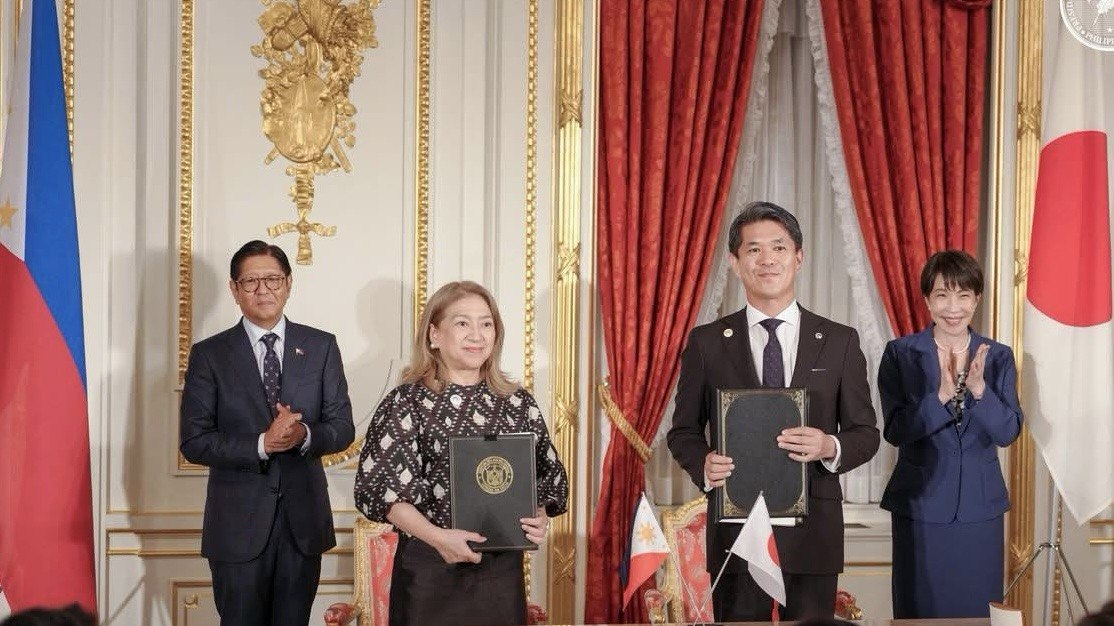
The Philippines and Japan have sealed a landmark new tax convention aimed at boosting cross-border investments and deepening economic ties, as both countries also move to explore possible upgrades to key regional trade agreements.
Signed during the State Visit to Japan of President Ferdinand Marcos Jr., the agreement fully revises the existing Philippines-Japan tax treaty that first took effect in 1980 and was partially amended in 2008.
The new pact is expected to strengthen the business climate by modernizing rules on taxation, investment income, and corporate profits while tightening safeguards against tax evasion and treaty abuse.
The move comes as Manila and Tokyo begin discussions on possible enhancements to the Japan-Philippines Economic Partnership Agreement (JPEPA) and the Japan-ASEAN Comprehensive Economic Partnership Agreement to further expand trade and investment flows across the region.
President Marcos and Japanese Prime Minister Sanae Takaichi witnessed the signing ceremony at the Akasaka State Guest House in Tokyo.
The updated convention introduces arbitration procedures under mutual agreement mechanisms, expands the exchange of tax information, and allows assistance in the collection of tax claims between the two countries.
“Today, we also witnessed the signing of an important agreement on the avoidance of double taxation, which will enhance the business environment and promote greater cross-border investment,” Marcos said during a joint press conference.
Beyond taxation, Manila and Tokyo also signed cooperation agreements covering agriculture and fisheries, healthcare access, and human resource development. Japan likewise reaffirmed support for the Philippines through the POWERR Asia initiative, including programs aimed at strengthening supply chain resilience, energy security, and medical product manufacturing.
The new convention was signed by Endo Kazuya and Mylene J. Garcia-Albano in Tokyo.