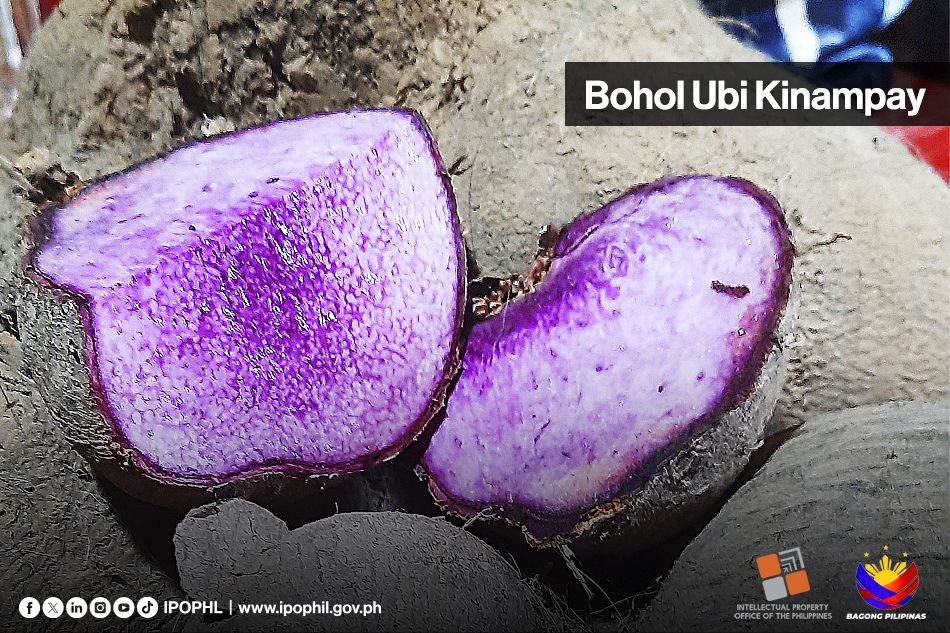
Ube has gone from a local favorite to an international food phenomenon. Purple lattes, cheesecakes, doughnuts, ice cream and premium desserts have helped fuel a worldwide craze, turning the distinctly Filipino crop into what many now call the latest “purple gold.” The challenge is making sure the world knows where the best ube comes from.
That is why Bohol is seeking geographical indication (GI) protection for its famed Ubi Kinampay, a move that could help secure the Philippines’ stake in a fast-growing global market while protecting one of its most celebrated agricultural treasures.
The Intellectual Property Office of the Philippines (IPOPHL) has accepted the GI application filed by the Provincial Government of Bohol through the Bohol Economic Development and Investment Promotion Office. If approved, the designation would legally recognize the unique qualities of Bohol Ubi Kinampay, linking its prized characteristics directly to the province’s soil, climate and generations of traditional farming.
Often referred to as the “queen of Philippine yams,” Ubi Kinampay is known for its naturally vibrant violet flesh, rich flavor and distinctive aroma. Those qualities have helped elevate it from a backyard crop into a premium ingredient sought by chefs, food manufacturers and consumers around the world.
IPOPHL Director General Teodoro Pascua said the timing is critical as international demand for ube continues to surge.
“As ube becomes more global, we must make sure the roots of varieties from the country are not lost,” Pascua said.
The application highlights a growing realization that in today’s food economy, provenance can be as valuable as production. Just as Champagne belongs to Champagne and Parmigiano Reggiano to Italy, Bohol wants its most famous yam to carry a protected identity.
If granted, the GI could boost farmer incomes, discourage copycats and strengthen the Philippines’ branding in a market where authenticity increasingly commands a premium. In the race for purple gold, Bohol is staking its claim.