Filipino food brands are steadily carving out space in Singapore’s highly competitive premium consumer market, as the Department of Trade and Industry (DTI) ramps up efforts to position Philippine exports beyond traditional commodity offerings and into higher-value branding and innovation-driven segments.
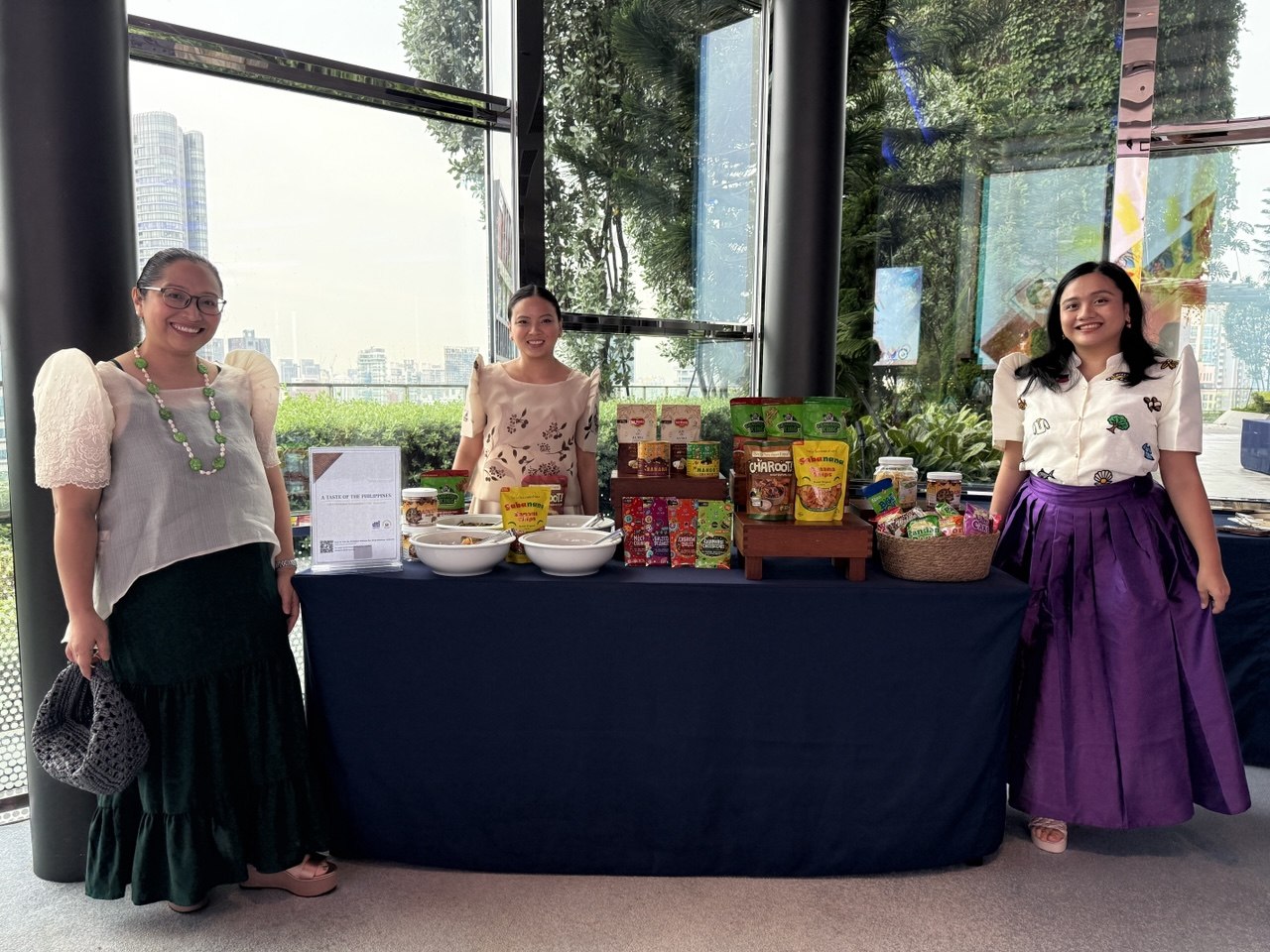
At the Philippines’ 128th Independence Day celebration in Singapore, the DTI, through the Philippine Trade and Investment Centre (PTIC)-Singapore and the Export Marketing Bureau (EMB), mounted a curated “Taste of the Philippines” pavilion designed not just as a cultural display but as a strategic export pitch to one of Asia’s most discerning food markets.
The showcase highlighted a clear shift in strategy. Philippine exporters are no longer competing solely on price or ethnic familiarity, but increasingly on product differentiation, premium positioning, and design-led food innovation.
Featured brands reflected this transition. Auro Chocolate presented its internationally recognized single-origin chocolates, while Kangkong King pushed the boundaries of snack innovation with crispy water spinach chips. Villa Socorro Farm showcased banana and sweet potato chips, Year Luck Food featured Konitos wafer cones, and Regent Foods expanded its presence with a diversified snack portfolio.
More notably, product concepts such as calamansi cheesecake chocolate, ube-infused snacks, and flavored vegetable chips signaled a growing sophistication in how local ingredients are being reimagined for global consumers.
Held at the Pan Pacific Orchard Singapore and supported by the Philippine Embassy and Philippine Airlines, the event drew diplomats, investors, and retail buyers, including Singapore Foreign Minister Vivian Balakrishnan, underscoring its significance as both a trade and soft power platform.
Beyond sampling, the initiative functioned as a business development gateway, linking Philippine exporters with potential distributors and retailers through curated product catalogs and structured engagement sessions.
Analytically, Singapore remains a strategic test market. Its demanding consumer base, tight retail ecosystem, and regional connectivity make it both a proving ground and a launchpad for broader ASEAN expansion.
For the DTI, the message is increasingly clear. Philippine food exports are evolving from ethnic niche products into competitive premium goods. The next challenge is scaling that momentum into sustained brand presence in international retail shelves.