As ride-hailing demand continues to expand across the Philippines, the biggest obstacle for many aspiring drivers remains the steep upfront cost of acquiring a vehicle.
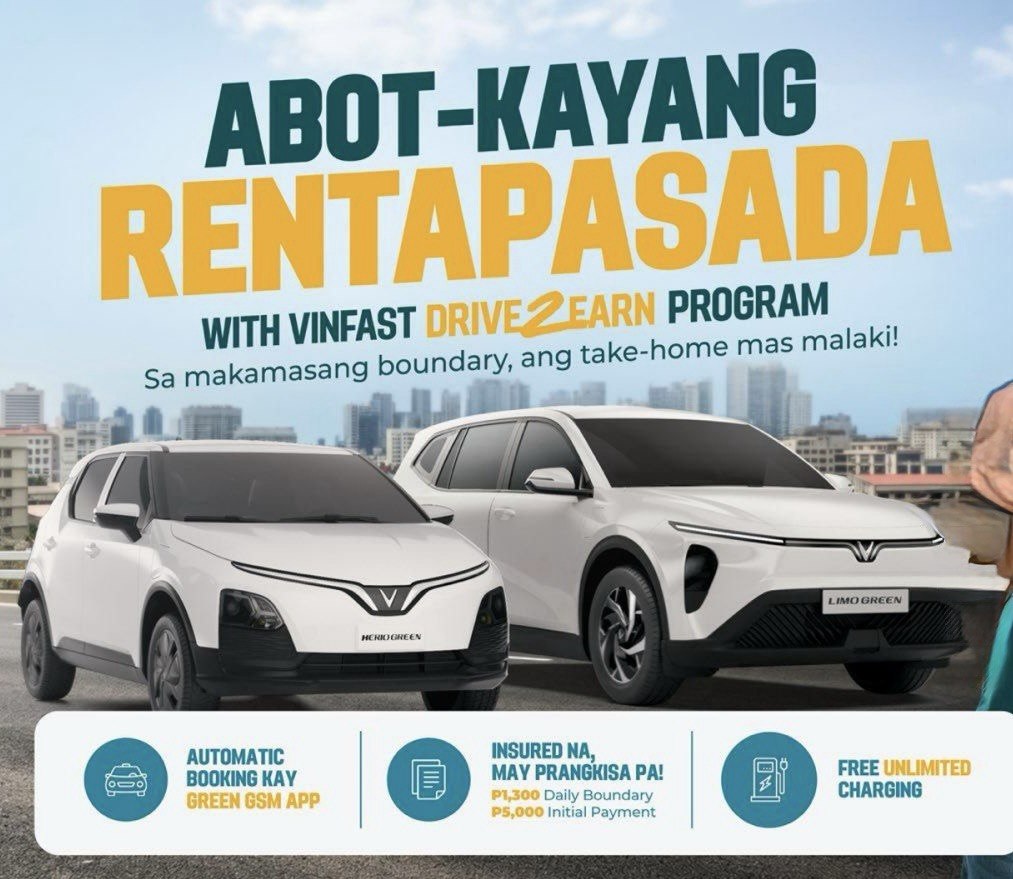
RENTAPASADA, a drive-to-earn program launched by Green GSM and VinFast Philippines, is positioning itself as a lower-cost alternative by replacing vehicle ownership with a rental-based model.
Instead of taking out a bank loan to buy a car, qualified applicants can begin the process with a P5,000 security deposit or initial registration payment, subject to Green GSM’s approval. Once accepted, drivers gain access to a VinFast electric vehicle and can immediately start accepting bookings through the Green GSM ride-hailing platform.
The model reflects a broader shift in the gig economy, where lowering barriers to entry is becoming as important as creating earning opportunities.
By removing the need for large capital outlays, the program seeks to attract more drivers while expanding the country’s electric mobility ecosystem.
Beyond vehicle access,
RENTAPASADA bundles several operating expenses into the program, including maintenance, insurance, registration support and charging services.
Drivers will also receive free EV charging until March 31, 2029, significantly reducing one of the largest recurring costs in transport operations and improving the economics of full-time ride-hailing.
The initiative also offers a transparent revenue-sharing structure, allowing drivers to keep 90 percent of trip earnings during their first year and 85 percent over the next two years, subject to applicable government taxes and fees. Actual income will still depend on trip volume, service quality and operating performance.
By combining affordable vehicle access with operational support and electric vehicle infrastructure, Green GSM and VinFast are betting that more Filipinos will view ride-hailing as a viable source of income without assuming the financial risks of car ownership.
As competition intensifies in the transport sector, programs that reduce drivers’ startup costs while promoting electric vehicles could help accelerate both financial inclusion and the country’s transition to cleaner urban mobility.