The Philippine tourism industry used less water in 2025 but consumed more energy and emitted more carbon dioxide, highlighting a growing sustainability challenge as the sector’s environmental footprint shifts from the tap to the tailpipe.
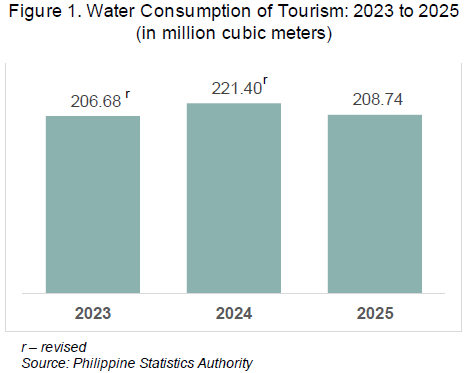
Data from the Philippine Statistics Authority’s Measuring the Sustainability of Tourism (MST) framework showed tourism water consumption fell 6 percent to 208.74 million cubic meters from 221.40 million cubic meters in 2024, suggesting businesses have become more efficient in managing one of the industry’s most visible resources.
Hotels and other accommodation providers remained the biggest water users, accounting for 88.93 million cubic meters, or 43 percent of the sector’s total consumption.
The gains, however, were offset by rising energy demand. Tourism’s consumption of electricity, petroleum and other fuel products edged up 1 percent to 7,532.16 kilotonnes of oil equivalent (KTOE), driven largely by transport services, which accounted for 41 percent of total energy use.
That modest increase in fuel and power consumption translated into a much sharper environmental cost.
Carbon dioxide emissions climbed 4 percent to 10,587.14 gigagrams in 2025, with transport services responsible for 71 percent of the total. The figures underscore a stubborn reality for the tourism industry: while hotels can install water-saving fixtures, moving millions of travelers still depends heavily on carbon-intensive transport.
The data illustrate the evolving nature of sustainable tourism. Conservation efforts inside hotels and resorts appear to be paying off, but the sector’s overall climate impact will increasingly hinge on cleaner transportation, more fuel-efficient aircraft and vehicles, and wider adoption of renewable energy.
Compiled by the PSA since 2021, the MST satellite account is designed to measure tourism’s economic, environmental and social impacts using internationally recognized standards. The latest figures suggest that as visitor numbers grow, the industry’s next sustainability milestone may depend less on shorter showers than on lower-emission journeys.