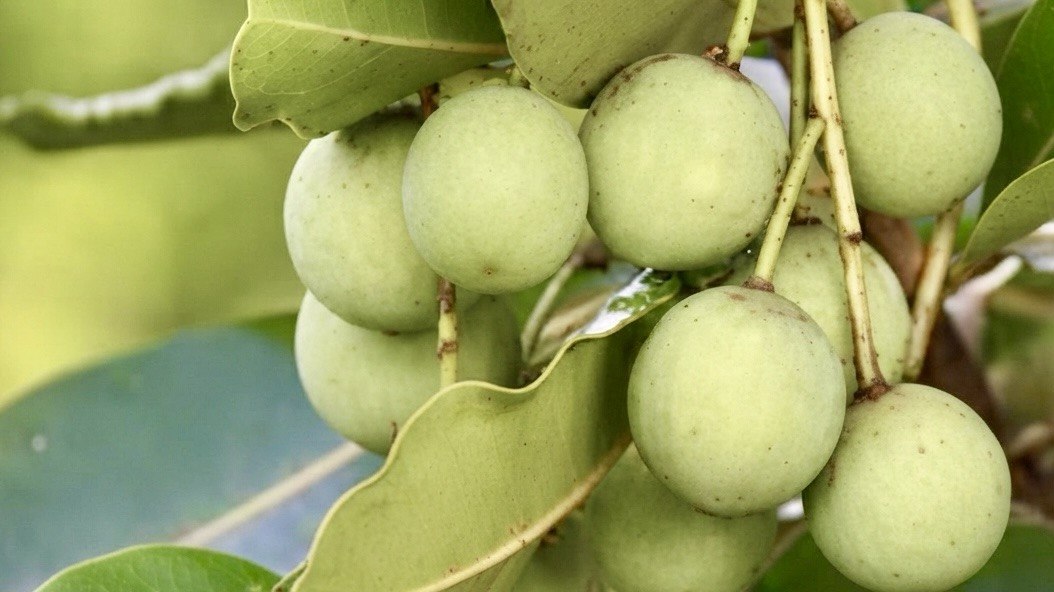
That scraggly tree growing near the beach might be worth more than its shade.
Scientists have found that the humble bitaog tree—also known as Palo Maria, Tamanu Tree, Dangkalan, or Alexandrian laurel—that are common along Philippine coastlines and often overlooked, produces an oil rich in compounds prized by the skincare industry.
Their findings suggest the tree found across Southeast Asia, Pacific Islands, and coastal tropics could become an unlikely source of livelihood for coastal and rural communities.
The study, published in the June 2026 issue of the Philippine Journal of Science, examined oil extracted from bitaog seeds collected in Ilocos Norte, Leyte, and Surigao del Sur.
Known internationally as tamanu oil, the thick greenish oil has long been used in traditional medicine and beauty products. It is already found in creams, lotions, soaps, and facial oils marketed for moisturizing skin, calming irritation, and helping wounds heal.
The researchers wanted to know whether Philippine-grown bitaog could compete.
The answer was encouraging.
Regardless of where the trees grew, the seed oil consistently contained high levels of oleic and linoleic acids, healthy unsaturated fatty acids commonly found in premium skincare ingredients. It also contained natural plant compounds linked to antioxidant, anti-inflammatory, and antimicrobial properties, qualities that have made tamanu oil increasingly popular worldwide.
The amount of oil varied by location and extraction method, with seeds from Surigao del Sur producing the highest yield. That means where the tree grows and how the oil is extracted can influence production, an important consideration for future cottage industries.
Perhaps the most exciting takeaway is economic rather than cosmetic.
Instead of exporting raw forest resources, communities with abundant bitaog trees could eventually process the seeds into higher-value products, creating new income streams from a native species that already thrives in the country’s coastal landscape.
The researchers caution that more work is needed to develop affordable extraction methods and determine commercial production costs. Even so, the findings point to a simple but powerful idea. Sometimes the next business opportunity is not hidden in a laboratory. It is already growing quietly by the shoreline, waiting to be discovered one seed at a time.