The Philippines’ digital economy is growing faster than the broader economy, but outdated regulations and inadequate infrastructure continue to hold back its full potential, according to De La Salle University economist Tereso Tullao.
Speaking at the “Advancing Digital Transformation and Resilient Supply Chains in the Asia-Pacific” forum hosted by the Philippine Institute for Development Studies, Tullao said the country’s digital economy now accounts for about 10 percent of gross domestic product and supports 10.4 million jobs, or 21.2 percent of the labor force.
The sector expanded 5.4 percent in 2025, outpacing the country’s 4.4 percent GDP growth and underscoring its growing role as a driver of economic activity.
“This dynamism reflects the strong demand for digital products and services and creates greater opportunities for income and employment,” Tullao said.
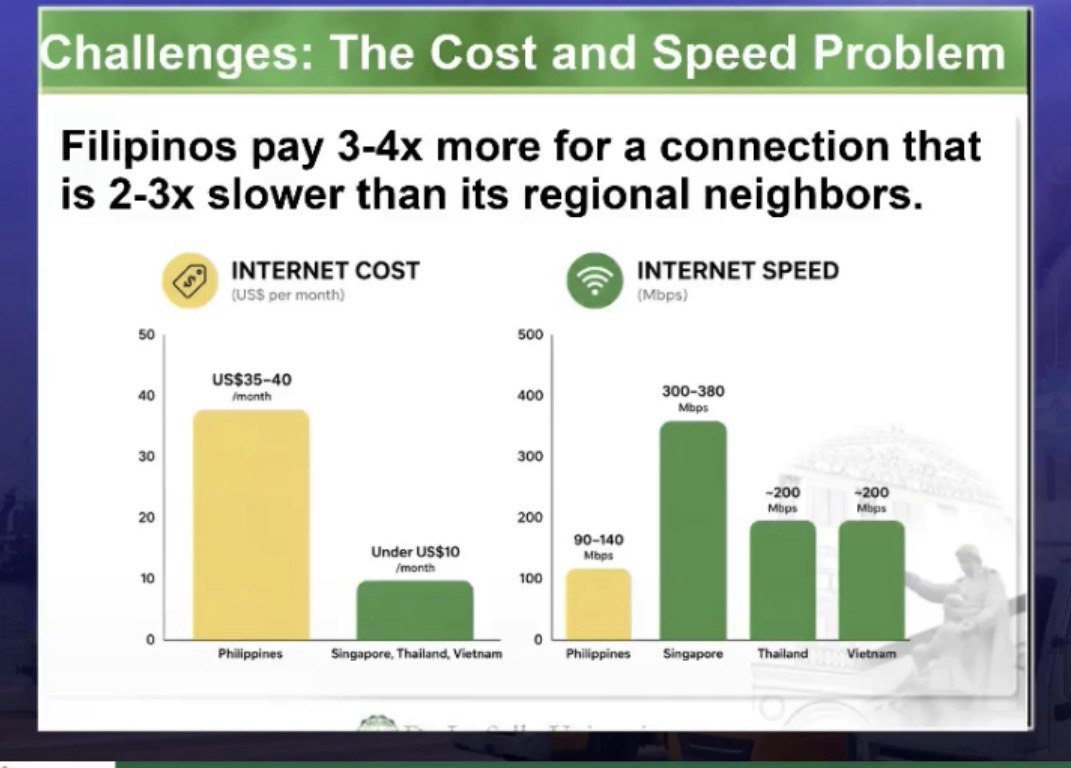
Despite the momentum, he said the Philippines continues to trail many regional peers in digital infrastructure, investing just 0.44 percent of GDP in information and communications technology. Coupled with the country’s archipelagic geography, the investment gap has left Filipinos paying three to four times more for internet services that are two to three times slower than those in neighboring countries.
Tullao urged the government to ramp up investments in fiber-optic networks and 5G infrastructure while pursuing long-delayed regulatory reforms to stimulate competition in the telecommunications industry.
He argued that requiring telecom companies to secure legislative franchises has created a high barrier to entry, effectively limiting competition and slowing investments.
“In many countries, telecommunications licenses are issued by independent regulatory agencies rather than Congress,” he said. “Making market entry easier would promote competition, improve service quality, lower prices, and accelerate investments in ICT infrastructure.”
The economist said accelerating digital transformation will require more than technology spending. Modernizing regulations, lowering barriers to investment and fostering a more competitive telecom market will be equally critical if the Philippines hopes to narrow its digital gap, reduce connectivity costs and build a more resilient, inclusive and globally competitive digital economy.