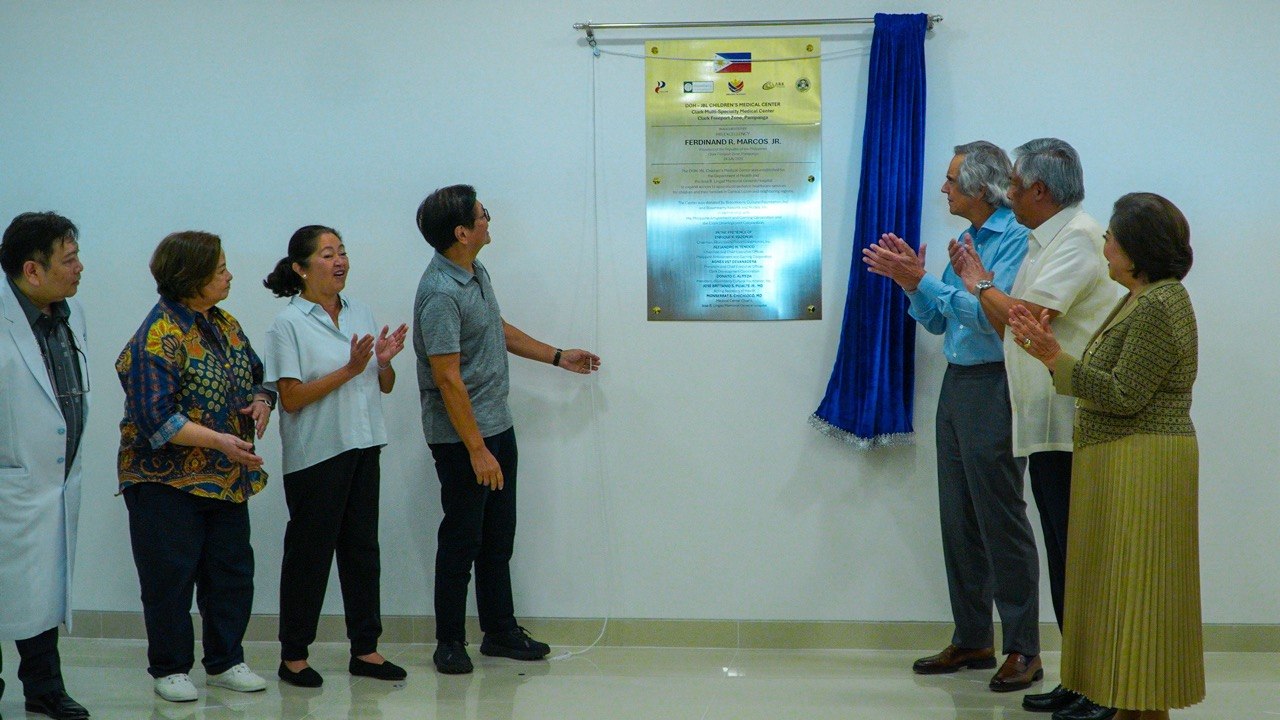
President Ferdinand R. Marcos Jr. on Friday inaugurated the DOH-JBL Children’s Medical Center in Clark, marking the completion of the first specialty hospital under the Clark Multi-Specialty Medical Center (CMSMC) and advancing the government’s push to decentralize specialized healthcare services.
The 100-bed Level 2 government hospital is expected to ease pressure on Metro Manila’s major medical centers by providing specialized pediatric care closer to families in Central and Northern Luzon. It will offer emergency care, outpatient specialty clinics, pediatric subspecialty services, diagnostic imaging, laboratory facilities, and other support services.
Beyond healthcare, the project highlights a growing model of public-private collaboration in delivering large-scale social infrastructure.
Completed in just two years, the facility was funded through a P1-billion donation from Bloomberry Cultural Foundation Inc. (BCFI), the corporate social responsibility arm of Bloomberry Resorts Corp. led by Chairman and CEO Enrique K. Razon Jr. The Philippine Amusement and Gaming Corporation (PAGCOR) financed major medical equipment, while Clark Development Corporation provided the site and technical support. The Department of Health, through Jose B. Lingad Memorial General Hospital, will operate the facility until CMSMC becomes an independent institution.
Razon said the hospital supports President Marcos’ vision of establishing regional specialty hospitals to bring quality healthcare closer to communities.
“This is not a business venture. It is a contribution to our nation’s development and, more importantly, a worthwhile investment in the future,” he said.
PAGCOR Chairman and CEO Alejandro H. Tengco said the project demonstrates how government agencies and private companies can pool resources to deliver public services more efficiently.
The children’s hospital is the first of four specialty centers planned within the Clark medical complex. Future phases include dedicated renal, cardiovascular, and cancer hospitals.
Once completed, the integrated medical hub will have about 1,200 beds, significantly expanding specialized healthcare capacity outside the capital. The project also underscores a broader economic reality that healthcare infrastructure is increasingly viewed not only as a social service but also as a strategic investment in regional development, workforce productivity, and long-term competitiveness.