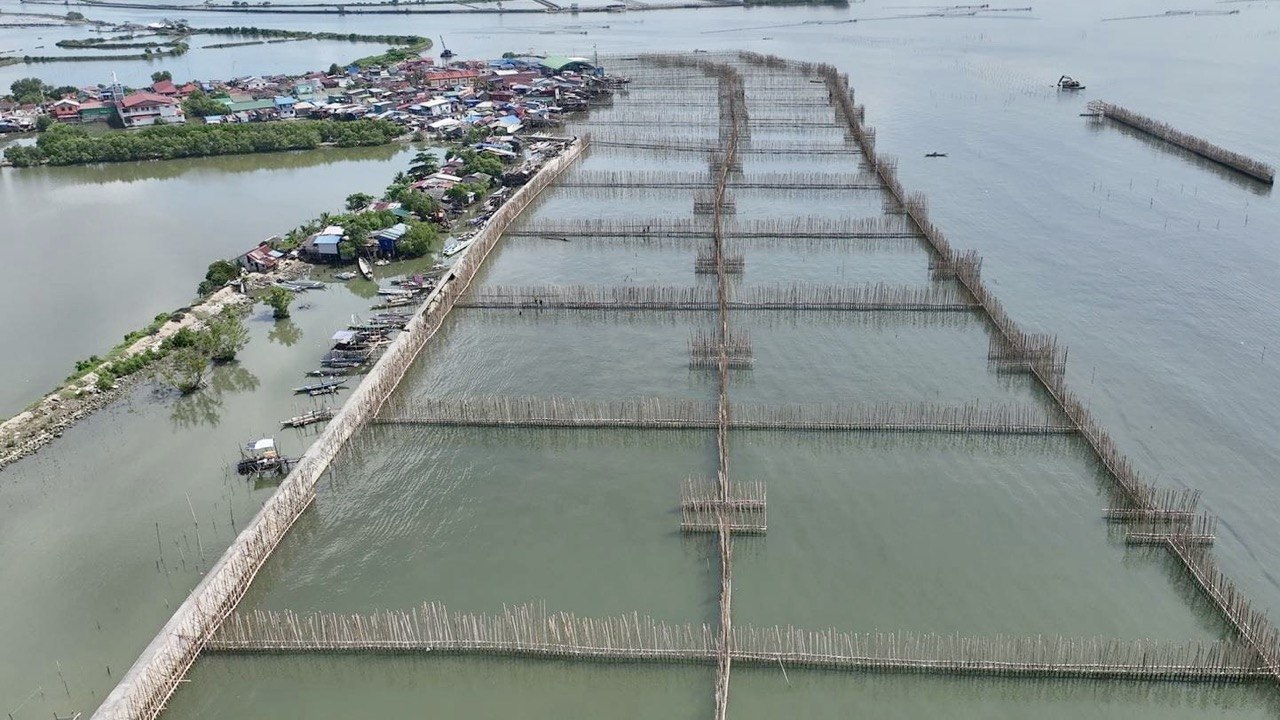
On a small island in North Manila Bay, nature was recruited to fight rising water, and the experiment had been showing that flood protection did not always have to come wrapped in concrete.
Barangay Pamarawan in Malolos City had long lived with flooding from both the sea and nearby rivers. Sea-level rise and sinking land had made the problem worse, disrupting fishing, schooling, local trade, and trips to the mainland. For families already living on tight budgets, every flood had meant less income and less food on the table.
There was an added irony. Malolos City, once the seat of the First Philippine Republic, had sat in Bulacan, a province just north of Manila whose perennial struggle with flooding had made it the epicenter of the country’s recent flood-control controversy.
The island had been identified as one of the most vulnerable communities under the North Manila Bay Flood Protection Strategy, raising an urgent question. How could a community be protected from the sea without simply building another wall against nature?
Netherlands-based Haskoning took on the undertaking three years ago, moving from the earlier strategy phase into detailed engineering design, and by September 2024 it launched as the Philippines’ first implemented nature-based coastal protection pilot.
Haskoning, formerly known as Royal HaskoningDHV, is an independent international engineering consultancy and project management firm headquartered in Amersfoort, a town in Utrecht.
The project had borrowed ideas from sediment-trapping and mangrove restoration efforts in Indonesia, adapting them to North Manila Bay’s tides, sediment flows, and typhoons.
Bamboo and oyster breakwaters had reduced wave energy. Oyster bags had encouraged reef and habitat recovery, while sediment traps had captured material carried by the water, gradually raising the seabed. Areas had also been prepared for mangrove regeneration.
By May, the City Government of Malolos had showcased the project in Pamarawan. The initiative had expanded across three barangays and covered 14 hectares, at a reported cost of about P70 million.
That price tag is less than the estimated expense of building just 600 linear meters of the lowest-cost standard dike or slope protection. In flood control, where concrete could consume budgets almost as quickly as rivers consumed riverbanks, that comparison had deserved attention.
The project had been designed with local governments and residents, whose knowledge of tides, erosion, sediment movement, and fishing routes had helped shape the work. About 80 to 90 percent of construction workers had come from Pamarawan, providing income while strengthening local ownership.
Early signs had been encouraging. Sediment had accumulated within the project area, while wave energy reaching the community had declined.
That local involvement had mattered because nature-based protection had needed maintenance, too. Residents who had helped build the system had also had a reason to keep it healthy.
For Pamarawan, the project had been more than flood protection. It had been a practical experiment in letting nature do some of the heavy lifting, while showing that resilience could be built with fewer walls, more wetlands, and perhaps a little more imagination.