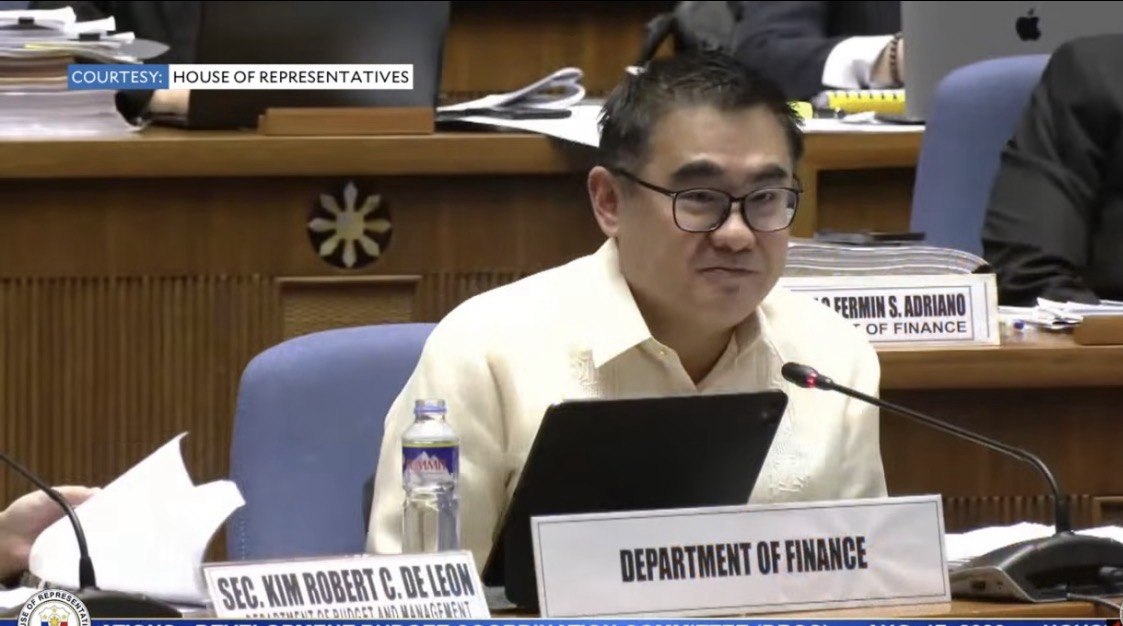
Finance Secretary Frederick Go said the government’s 2027 budget will prioritize fiscal discipline and higher-impact spending as the administration works to sustain economic growth while reducing the deficit and managing debt levels.
In a briefing with the House of Representatives on the government’s fiscal position, Go said the administration is pursuing a balance between rebuilding fiscal space and funding programs that generate stronger economic and social returns.
Go said the Marcos administration inherited P12.79 trillion in national government debt in 2022, largely accumulated during the pandemic. Since then, the government has adopted a medium-term fiscal framework focused on reducing debt, supporting growth, creating jobs, and lowering poverty.
The government remains committed to cutting the deficit-to-gross domestic product ratio from 5.4 percent in 2026 to 3.5 percent by 2030. The deficit ratio stood at 5.46 percent in the first half of 2026, slightly lower than the 5.65 percent recorded a year earlier, while the full-year target is set at 5.45 percent.
Revenue growth will be critical to meeting fiscal goals. Total government revenues increased by an average of 10.5 percent annually over the past four years, while tax revenues grew by 10.47 percent.
Tax collections reached P2.14 trillion in the first half of 2026, up 5.4 percent year-on-year and equivalent to 49.7 percent of the government’s full-year target.
Go said tax revenues are projected to reach P4.4 trillion by the end of 2026, with total revenues expected to climb to P5.5 trillion by the end of President Ferdinand R. Marcos Jr.’s term and exceed P6 trillion by 2030.
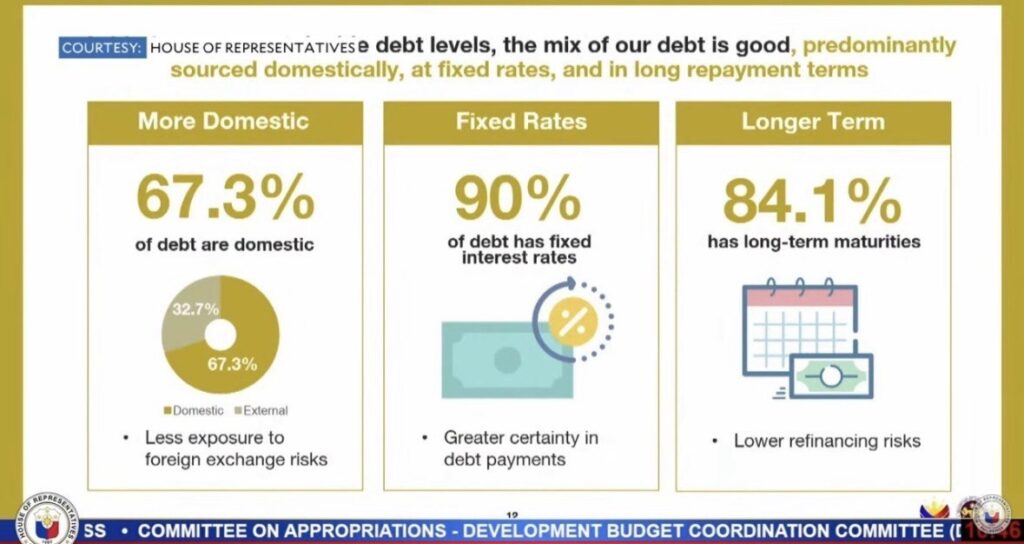
For 2027, the government expects borrowing requirements of P3.3 trillion, with 72 percent, or about P2.4 trillion, expected to come from domestic sources.
Go emphasized that fiscal consolidation does not mean cutting spending across the board but improving the quality of public expenditure.
“The objective is not to spend less, it is to spend better,” he said.
Priority areas will include infrastructure, health, education, and other programs with strong multiplier effects.
The government expects national government debt to decline from 65 percent of GDP in 2026 to 63 percent by 2030, while general government debt is projected to fall from 59 percent to 56 percent.
The challenge for the administration will be maintaining growth momentum while ensuring that increased spending delivers measurable returns for the economy.