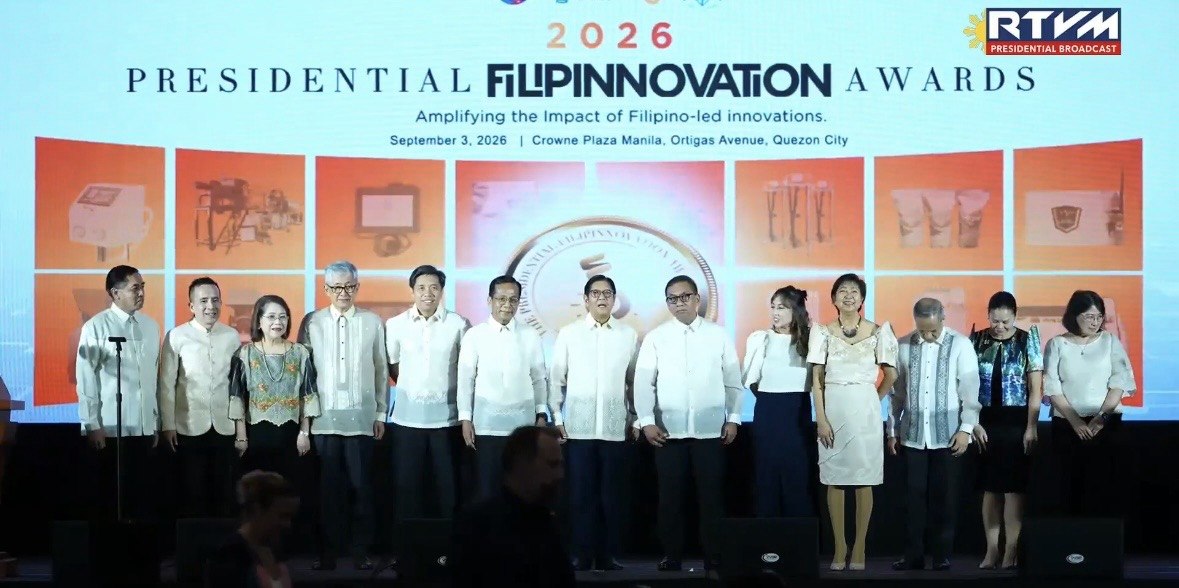
The Philippines needs to move more homegrown innovations from laboratories and prototypes into commercial use to raise productivity and sustain economic growth as the country moves into upper-middle-income status, government officials said Thursday.
President Ferdinand Marcos Jr. called for stronger collaboration among government, businesses, academe, and innovators to turn Filipino-developed technologies into practical solutions for some of the country’s most pressing economic and social challenges, including food insecurity, flooding, soil erosion, and energy shortages.
“I call on each of you to work with the government in addressing modern challenges—from food insecurity and flooding to soil erosion and energy shortages,” Marcos said at the 2026 Presidential Filipinnovation Awards.
Economy, Planning and Development Secretary Arsenio Balisacan said innovation would become increasingly critical as the Philippines seeks to sustain its recent economic gains.
“Sustaining this progress will increasingly depend on raising productivity, advancing technology, and creating greater value. Innovation is therefore central to our next stage of development,” Balisacan said.
The challenge, however, extends beyond producing new technologies. Balisacan said the country needs an ecosystem that links innovators with government, industry, academe, investors, and development partners so promising technologies can move from concept to commercial application.
That shift could help the Philippines capture more economic value from its own research and development while creating new businesses, jobs, and investment opportunities.
Five innovations received the 2026 Presidential Filipinnovation Award, spanning a locally developed ventilator, an economical biodiesel reactor, a river-powered turbine, scientific technologies for the native chicken industry, and a gasification-based waste disposal system.
Each winner received a P3.5-million cash grant and P1 million worth of expert mentorship and post-competition support aimed at helping scale and commercialize their technologies. Eleven other finalists received P250,000 each.
Balisacan said the awards should ultimately be judged not by the number of technologies recognized but by what happens after the competition.
The program’s broader success, he said, will be measured by innovations adopted, investments mobilized, jobs created, and communities served.
For an economy seeking to move up the value chain, the message is clear. Developing Filipino technology is only the first step. The bigger economic payoff will come from turning those ideas into products, businesses, and solutions that can compete and scale.