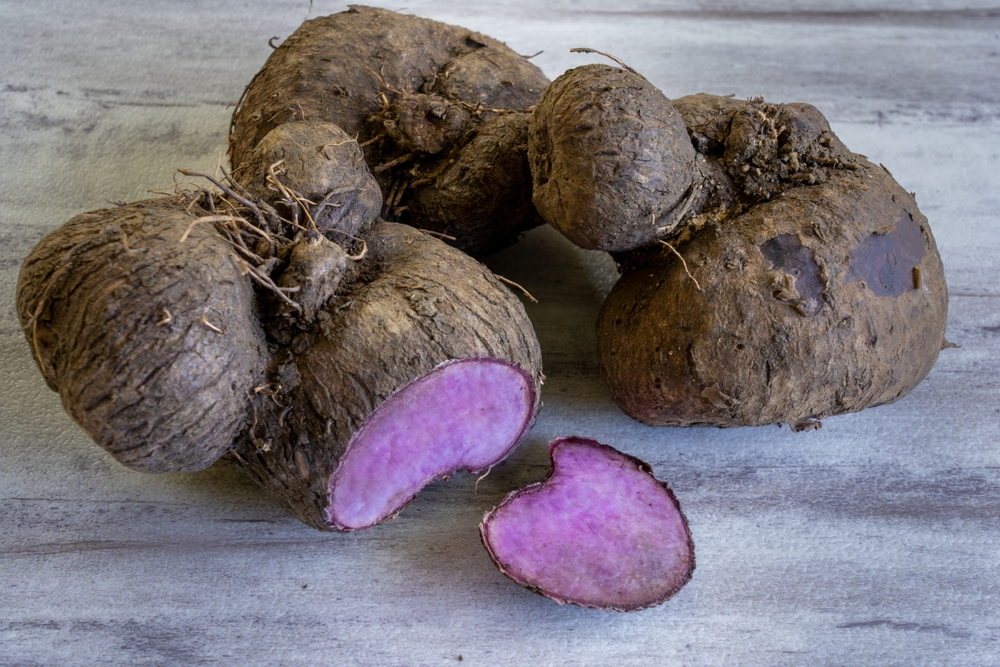
The Department of Agriculture (DA) has welcomed a $34.1-million (approx. ₱2.1-billion) grant from the United States government aimed at boosting the Philippine ube industry and connecting local growers to expanding international food and beverage markets.
Funded through the US Department of Agriculture’s (USDA) Food for Progress Program and announced by US Ambassador to the Philippines Lee Lipton on October 22, the five-year project will be implemented by US-based nonprofit TechnoServe. Financed through the sale of nearly 40,000 metric tons of American soybean meal, the initiative is expected to assist more than 12,500 Filipino farmers by strengthening technical expertise and supply chain coordination.
The US aid complements the DA’s existing ₱300-million expansion initiative, which targets doubling local ube production and adding 1,000 hectares of cultivation in its first year, ahead of the November 2026 harvest and propagation cycle. The department is budgeting approximately ₱850,000 per hectare for farm development, support facilities, and production, focusing on 10 identified ube varieties for large-scale cultivation.
“We are grateful to the US government and the US Department of Agriculture for this support, which will help us scale up ube production, meet growing global demand, realize the tuber’s potential as an export winner, and create better income opportunities for our farmers,” Francisco P. Tiu Laurel said.
The combined initiatives aim to transform the growing global popularity of ube into sustained economic gains for local growers. To maintain stability, the DA plans to expand the industry gradually as Philippine ube gains international attention. This measured pace is intended to prevent supply imbalances, quality inconsistencies, and production missteps that previously affected other high-value crops following sudden spikes in overseas demand. Beyond expanding hectarage, the department is prioritizing reliable production and stronger supply-chain coordination to meet processor requirements without outpacing the country’s capacity to supply the market sustainably.