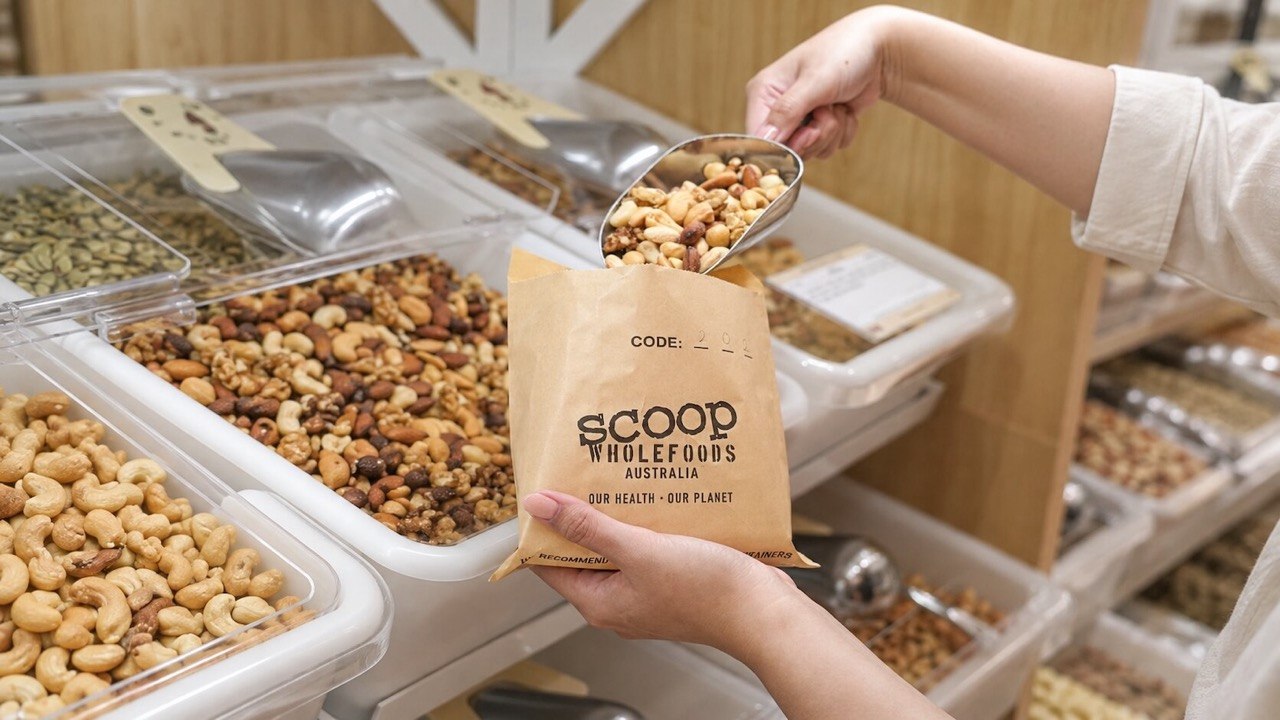
Australian retailer Scoop Wholefoods has entered the Philippine market with a retail concept that turns bulk buying into a modern shopping experience, letting consumers purchase groceries and personal care products by weight while cutting packaging waste and avoiding the cost of buying more than they need.
Its first Philippine outlet, at Power Plant Mall in Makati, combines Scoop Wholefoods with its personal care counterpart, Scoop Whole Beauty, offering everything from pantry staples and specialty ingredients to soaps, skincare, and cosmetics.
The idea is simple. Bring a clean container, have it weighed, fill it with whatever catches your fancy, and pay only for what goes inside. Paper bags are also available for shoppers without their own containers.
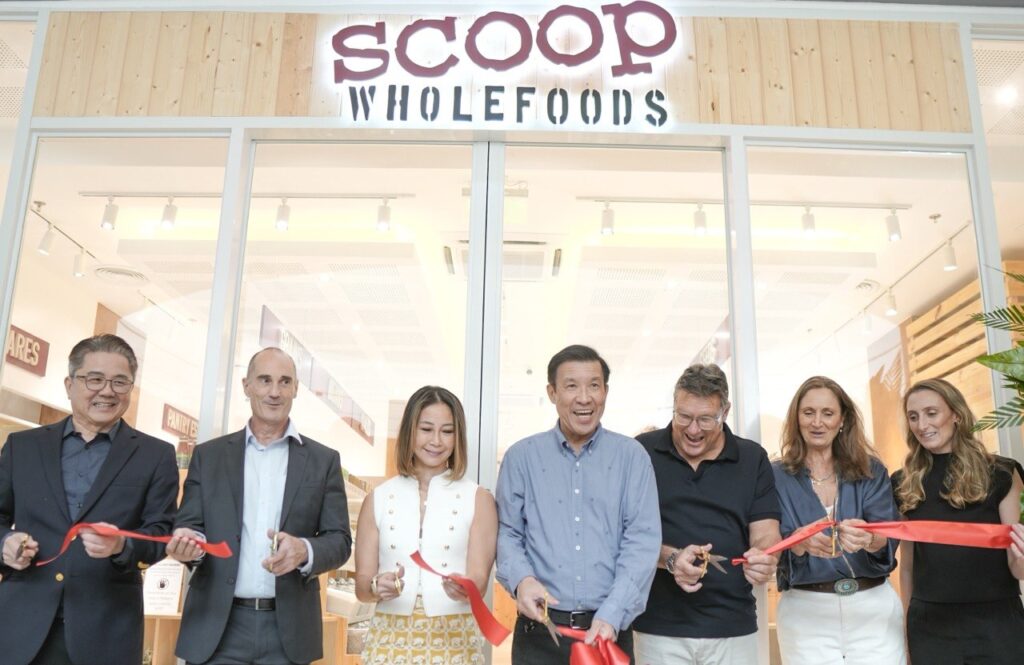
Founded in Sydney in 2013 by Jeremy and Bettina Kirk, Scoop Wholefoods now has more than 20 outlets worldwide. Inspired by traditional markets in Malta, the business has turned bulk buying into a modern retail experience built around reducing packaging and food waste.
For Filipinos, buying in small portions is hardly revolutionary. What Scoop is selling, however, is a more polished version of the neighborhood practice, complete with organic products, specialty ingredients, and a wider sustainability pitch.
The store offers Australian favorites such as chocolate-coated fruits and nuts, granolas, and mueslis, alongside locally sourced rice from Family Farms and probiotic kombucha from Brye and Brew. Healthy Options Group Managing Director Romy Sia said the company plans to expand its network of Filipino farmers, artisans, and producers.
The concept extends beyond the kitchen through Scoop Whole Beauty, which offers refillable soaps, body oils, and skincare products, as well as vegan cosmetics, solid shampoo bars, and compostable beauty accessories.
Its mineral makeup line also features refillable palettes, allowing customers to replace individual shades rather than discard an entire compact.
The commercial proposition is as practical as its environmental one: buy only what you need, avoid paying for packaging, and leave less behind. In a retail business built around selling more, Scoop is making a case for buying less, but buying smarter.