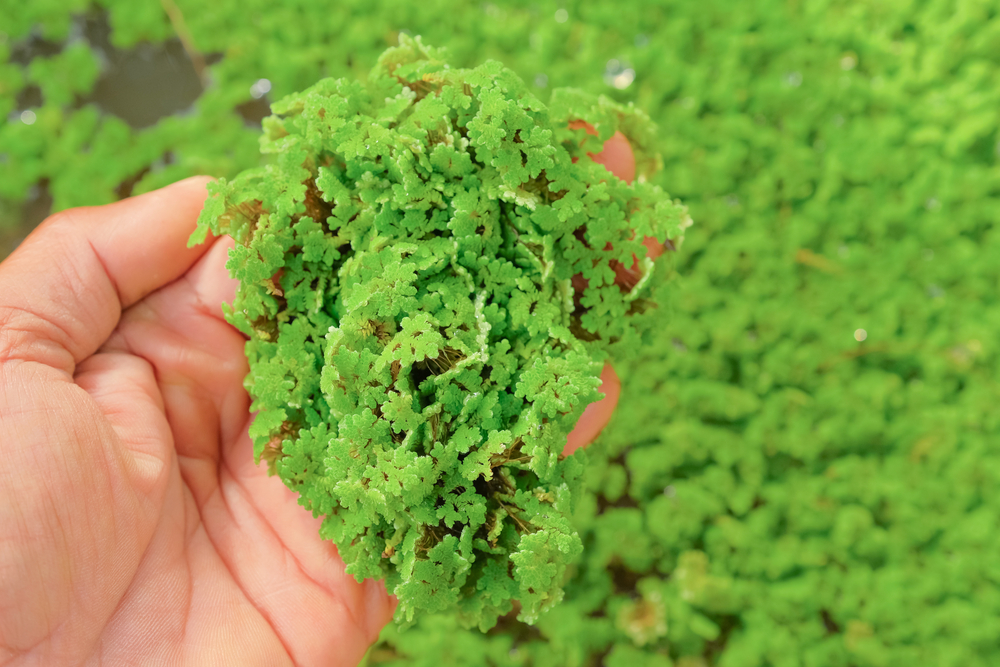
It looks like pond scum. It behaves like a green superhero.
Meet azolla—a tiny floating fern quietly rewriting the rules of farming, energy, and environmental cleanup in the Philippines.
Often overlooked, this fast-growing plant teams up with a microscopic partner, Anabaena azollae, to pull nitrogen straight from the air and turn it into natural fertilizer. In plain terms: azolla feeds crops without the pricey chemical inputs.
And it does this at scale.
Scientists estimate the azolla duo can fix up to 864 kilograms of nitrogen per hectare each year—comparable to industrial fertilizers, minus the environmental guilt.
For rice farmers, that’s a big deal. Spread across paddies, azolla acts as a living fertilizer, weed blocker, and soil booster rolled into one leafy mat.
These findings come from a recent study by researchers from the University of the Philippines, published in the April issue of the Philippine Journal of Science, which revisits azolla’s long-known benefits and argues it may be time for a serious comeback.
But azolla doesn’t stop at farming. With its high protein content, it doubles as feed for chickens, pigs, and fish—cutting feed costs while keeping livestock healthy. Think of it as farm-to-table efficiency, just with fewer middlemen.
It even has an industrial side hustle. Because it grows quickly and produces plenty of biomass, azolla can be converted into bioethanol, biogas, and biodiesel—turning humble pond plants into renewable energy. Not bad for something you can scoop up with a net.
Environmentally, azolla is a multitasker. It helps clean wastewater, absorbs heavy metals, and even locks away carbon—echoing its ancient role in cooling the Earth millions of years ago. Yes, this unassuming fern once helped shift the planet’s climate.
So why isn’t it everywhere?
Blame a mix of forgotten programs, limited farmer training, and decades of reliance on chemical fertilizers.
The Philippines actually led early azolla research in the 1970s and 1980s, but momentum faded when funding and support systems dried up.
Now, with rising fertilizer prices, climate pressures, and food security concerns, azolla is staging a quiet comeback. The UP-led study emphasizes that unlocking its full potential will require renewed investment in research, stronger extension services, and better systems for mass production and distribution.
In a world chasing high-tech solutions, azolla offers something refreshingly simple: a low-cost, low-tech, high-impact fix hiding in plain sight—floating, quite literally, on water.