The Philippines’ tourism sector posted a more nuanced performance in 2025: employment continued to rise, but its overall economic footprint softened, pointing to a recovery that is steady in participation but uneven in value generation.
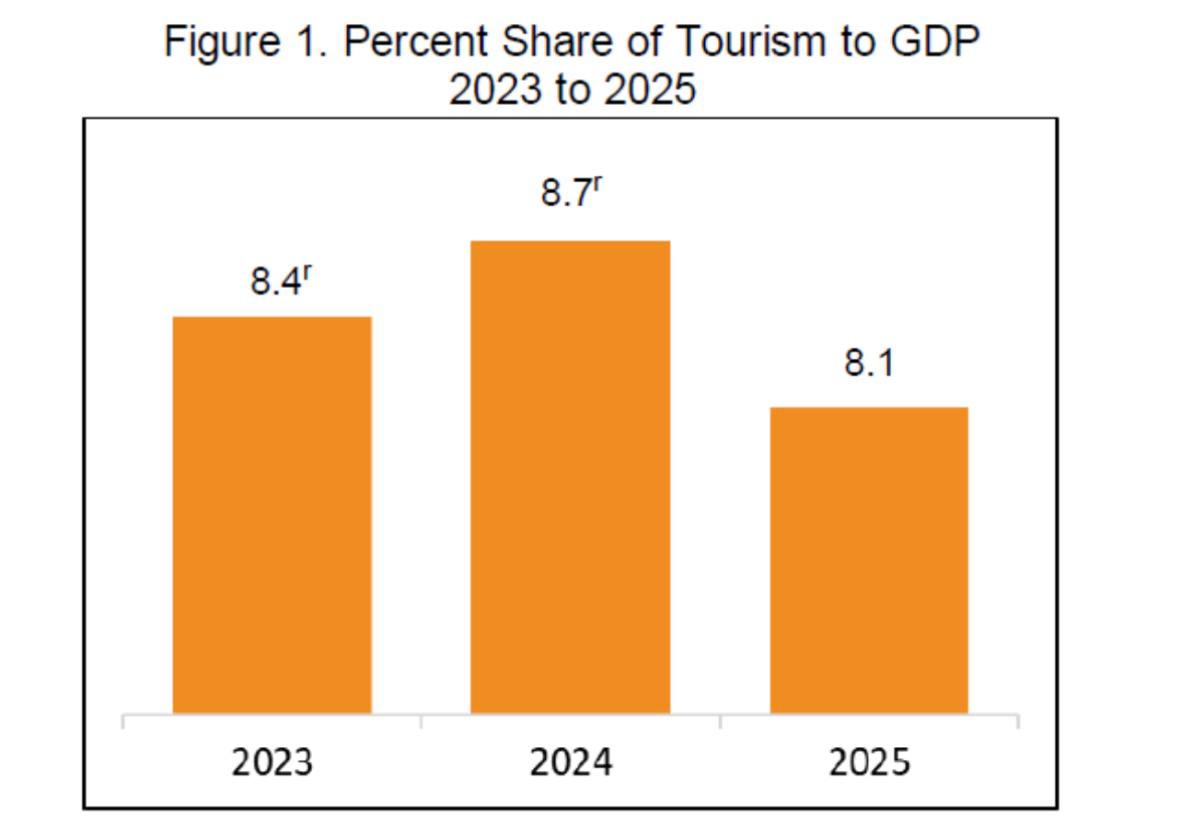
Data from the Philippine Statistics Authority (PSA) Tourism Satellite Account released Thursday showed Tourism Direct Gross Value Added (TDGVA) slipping to 8.1 percent of GDP in 2025.
While still a substantial share of the economy, this marks a slight decline from the previous year, with total TDGVA easing 1.4 percent to P2.27 trillion from P2.30 trillion in 2024.
The contraction was largely driven by weaker inbound tourism, which fell 6.4 percent to P698.46 billion. The drop suggests continued vulnerability to external pressures such as global inflation, higher travel costs, and intensifying regional competition for visitors—factors that continue to temper international arrivals even as borders have long reopened.
Domestic tourism, however, remained the sector’s stabilizing force. Spending by local travelers grew 3.0 percent to P3.26 trillion, underscoring sustained post-pandemic mobility and leisure demand within the country.
Outbound travel also expanded by 3.5 percent to P357.93 billion, reflecting the recovery of overseas trips among Filipinos despite elevated costs.
Overall internal tourism expenditure—which combines inbound and domestic spending—still managed a modest 1.2 percent increase to P3.96 trillion. The figure suggests that while foreign receipts are softening, resilient domestic demand continues to prevent a sharper slowdown in total tourism activity.
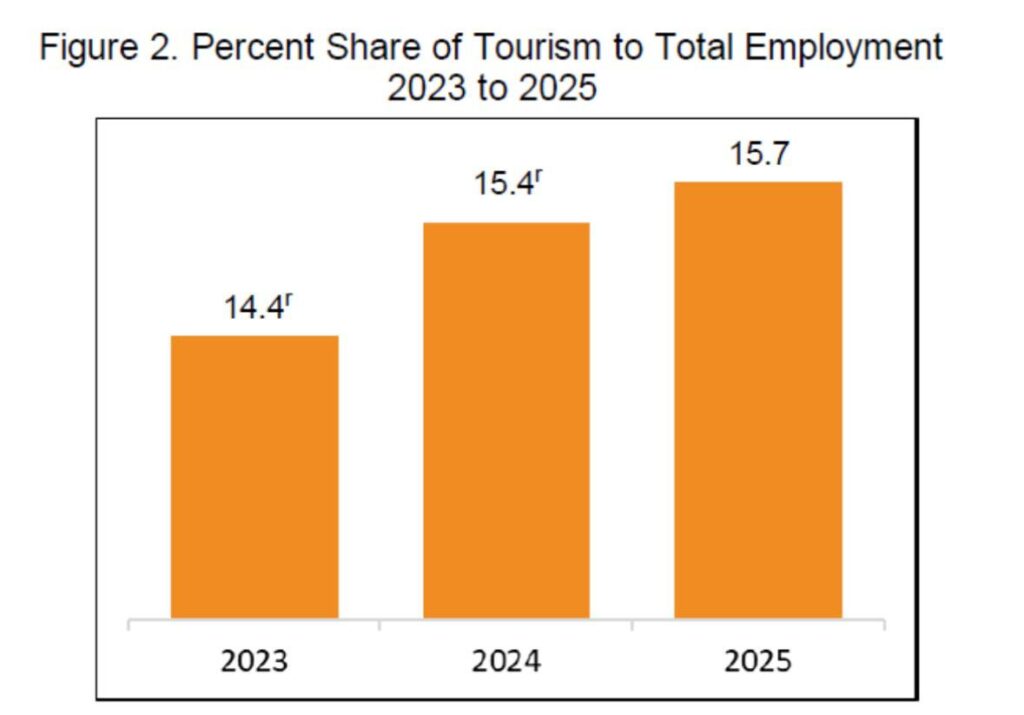
A contrasting picture emerges in employment. Tourism jobs rose 2.5 percent to 7.70 million in 2025, accounting for 15.7 percent of total national employment.
The divergence between weakening value-added contribution and rising employment highlights tourism’s structural profile as a labor-intensive sector—one that continues to absorb workers even when revenue growth moderates.
The PSA also noted that revisions to the Tourism Satellite Account reflect updated classification standards, aimed at improving measurement of the sector’s evolving economic role.