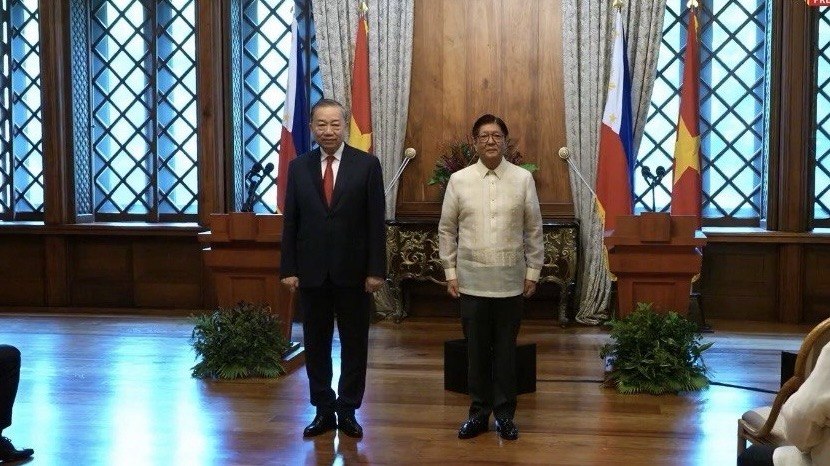
The Philippines and Vietnam are aiming to push bilateral trade beyond USD10 billion as the two Southeast Asian economies deepen economic and security ties under a planned Enhanced Strategic Partnership.
The commitment emerged from talks between President Ferdinand R. Marcos Jr. and To Lam during the Vietnamese leader’s state visit from May 31 to June 1, a meeting that signaled growing momentum in one of ASEAN’s increasingly important bilateral relationships.
Both leaders agreed to expand trade and investment by improving market access, reducing barriers, and strengthening cooperation between government and business sectors. They also pledged to pursue more balanced trade while exploring opportunities in digital transformation, innovation, energy, manufacturing, and green and creative industries.
The push reflects a broader effort by Manila and Hanoi to diversify growth drivers and strengthen economic resilience amid global trade uncertainties. As two of Southeast Asia’s fastest-growing economies, the Philippines and Vietnam see closer economic integration as a way to unlock new investments and reinforce regional supply chains.
Agriculture emerged as a key area of cooperation, with both countries committing to expand collaboration in rice trade, fisheries, smart agriculture, agribusiness, and climate adaptation. The initiatives are expected to bolster food security while creating new opportunities for rural development.
Tourism, infrastructure development, and supply chain resilience were likewise identified as priority sectors for future cooperation.
Beyond economics, the two sides agreed to strengthen mechanisms such as the Joint Trade Committee and Joint Commission on Bilateral Cooperation to ensure commitments translate into concrete projects.
Marcos and To Lam also reaffirmed cooperation on maritime security, defense, law enforcement, and efforts to combat cybercrime, illegal fishing, and other transnational threats, while emphasizing adherence to international law, including the United Nations Convention on the Law of the Sea.
The upgraded partnership comes as the two countries mark 50 years of diplomatic relations, adding fresh momentum to efforts to boost trade, security cooperation, and ASEAN integration.