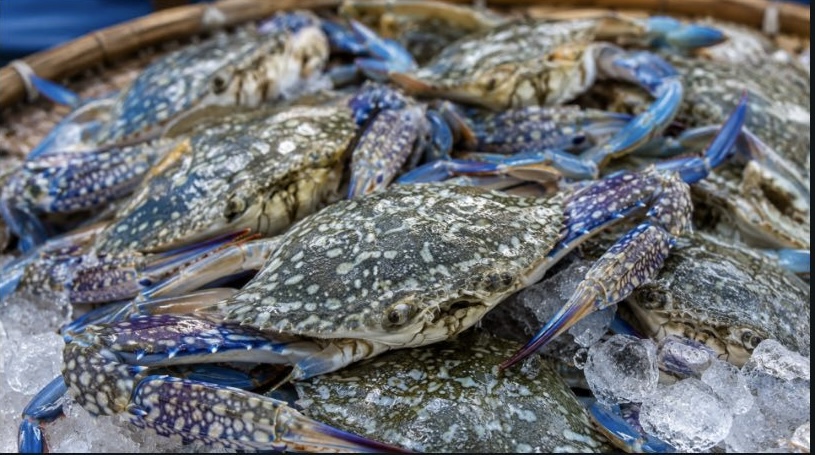
The Philippines’ blue swimming crab industry is facing a major threat to one of its most important export markets, prompting exporters to call for urgent government intervention before a looming US import restriction takes effect.
PHILEXPORT Cebu has urged the Bureau of Fisheries and Aquatic Resources (BFAR) to immediately address compliance gaps identified by US regulators, warning that failure to act could jeopardize an industry worth up to USD60 million annually and supporting thousands of coastal livelihoods.
In a position paper submitted on June 1, the exporters’ group said the US National Oceanic and Atmospheric Administration (NOAA) denied the Philippines a comparability finding under the Marine Mammal Protection Act’s import provisions.
The decision stemmed from what NOAA described as insufficient evidence that Philippine fisheries effectively prevent marine mammal bycatch at standards comparable to those enforced in the US.
As a result, crab products associated with specific fishery identifiers will no longer be allowed into the US market beginning June 11.
The ruling carries significant economic implications. PHILEXPORT Cebu noted that the US accounts for about 90 percent of Philippine blue swimming crab exports, making the sector particularly vulnerable to prolonged market disruption.
Beyond immediate revenue losses, exporters fear competitors from other countries could permanently capture market share if Philippine shipments remain restricted.
The group said the setback also highlights a broader challenge facing Philippine food exporters: compliance requirements in major overseas markets are increasingly tied not only to product quality but also to sustainability, traceability, and environmental management standards.
To restore market access, PHILEXPORT Cebu is proposing a package of reforms, including a national bycatch monitoring system, mandatory reporting of marine mammal interactions, stronger scientific documentation, and the creation of a dedicated export compliance task force.
The organization described the issue as a matter of national economic urgency, emphasizing that swift action is needed to protect export earnings, preserve investor confidence, and safeguard jobs across coastal communities that depend on the blue swimming crab supply chain.