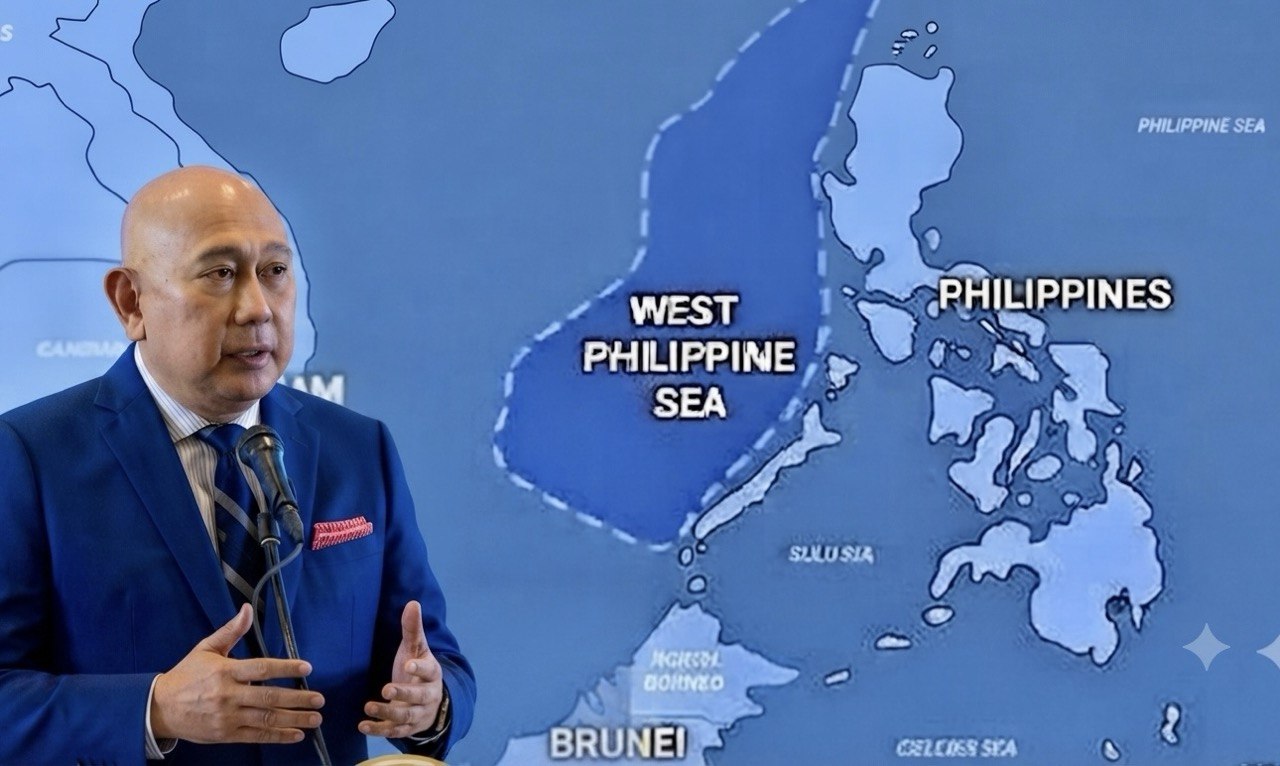
A decade after the Philippines won a landmark international legal victory against China, a policy think tank is urging the government to shift its focus from legal triumph to military readiness. it argued that credible deterrence has become the country’s next strategic imperative in the West Philippine Sea.
The Stratbase Institute made the call ahead of a high-level conference on July 10 commemorating the 10th anniversary of the 2016 South China Sea Arbitration, which invalidated Beijing’s sweeping claims over much of the South China Sea.
The forum, titled A Decade of the Arbitral Award: Credible Deterrence in Defense of the West Philippine Sea, will examine how the Philippines can build on its legal victory by accelerating the modernization of the Armed Forces of the Philippines and strengthening national resilience amid intensifying geopolitical tensions.
The discussions draw heavily from Stratbase’s June 2026 SPARK publication, 10 Years After the Arbitral Award: From Legal Triumph to Credible Deterrence Through Multidomain Modernization, which argues that international law must now be backed by strategic capability.
“The Arbitral Award gave the Philippines legal standing; the next decade must deliver strategic strength,” Stratbase president Victor Andres ‘Dindo’ Manhit wrote in the report.
Public sentiment appears to support that shift. A Stratbase-commissioned survey conducted in May found that 86 percent of Filipinos back the government’s efforts to defend the West Philippine Sea alongside like-minded nations in accordance with the arbitral ruling.
“The survey results show that Filipinos understand that defending the West Philippine Sea requires more than legal arguments and diplomatic statements,” Manhit said. “It requires credible deterrence, stronger partnerships, and national resilience.”
He said this means accelerating the transformation of the AFP into a technologically advanced, multidomain force capable of integrating operations across land, sea, air, cyber, and information domains under the Comprehensive Archipelagic Defense Concept.
The institute also emphasized that national security extends beyond military capability. It called for a whole-of-society approach involving government, business, academia, media, civil society, faith-based organizations, and international partners to strengthen resilience and uphold the rules-based international order.
The July 10 conference will feature keynote remarks from Gilbert ‘Gibo’ Teodoro Jr. and participation from at least 10 ambassadors representing like-minded countries that support a free and open Indo-Pacific, alongside leaders from business, youth groups, academia, and civil society, including Pablo Virgilio David.
Together, they will examine how the Philippines can turn a landmark legal victory into a lasting strategic advantage.