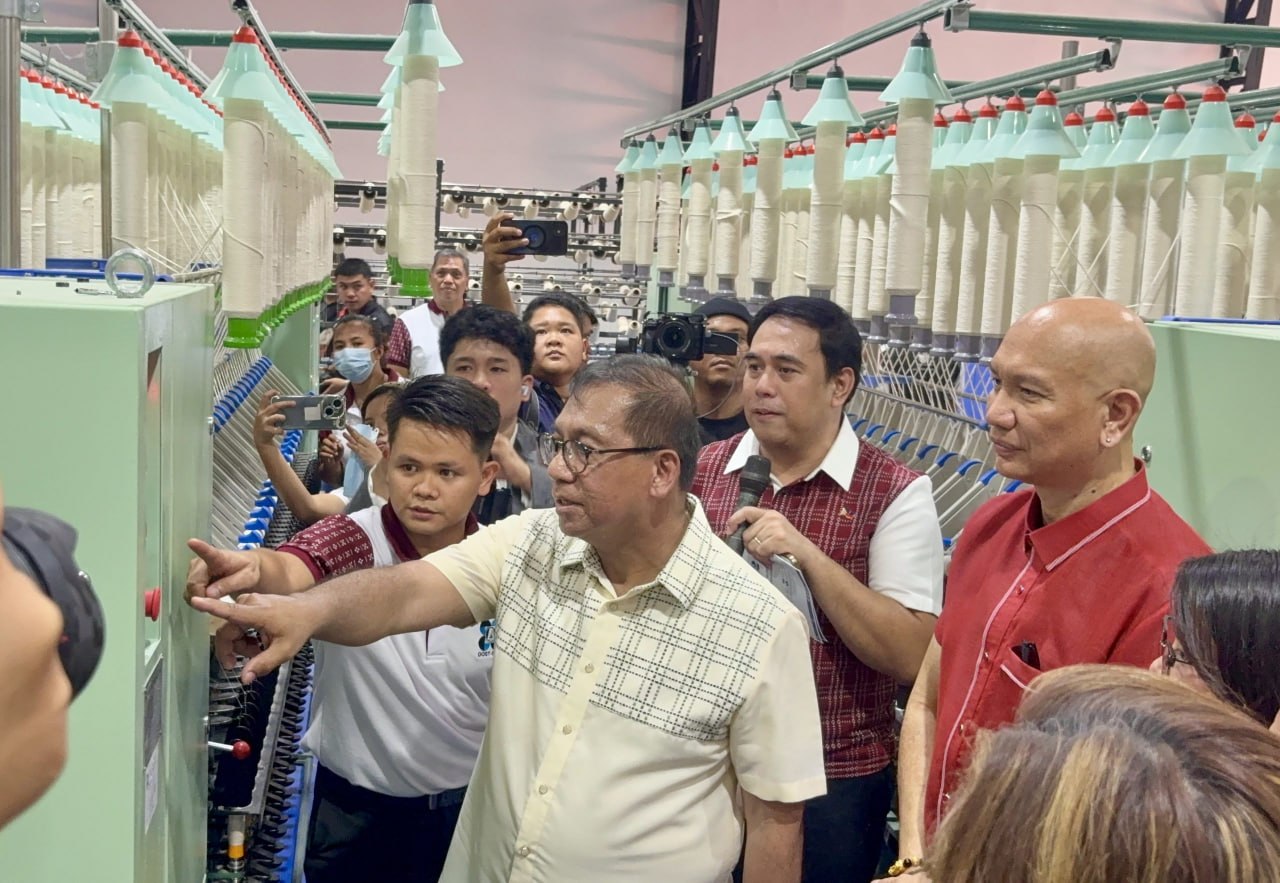
The Department of Science and Technology (DOST) has launched the Ilocos Region’s first Regional Yarn Production and Innovation Center (RYPIC), a move aimed at strengthening the domestic textile industry and creating up to 5,000 jobs across the country’s fiber-to-fashion value chain.
Opened on July 3 in Vintar, Ilocos Norte, the facility is the Philippines’ third and most technologically advanced yarn production center. At its baseline capacity, the hub can produce up to 13 tons of yarn annually during a standard eight-hour operation, with output expandable through additional work shifts.
DOST-Philippine Textile Research Institute (PTRI) Director Julius Leaño Jr. said the facility forms part of a broader strategy to rebuild the country’s textile ecosystem by linking agricultural fiber production with yarn manufacturing, weaving, garment production, and trade. The initiative also supports President Ferdinand Marcos Jr.’s push to revive the “Telang Pinoy” industry and create more value from locally sourced raw materials.
The center is expected to immediately benefit more than 860 handloom weavers across 56 communities in the Ilocos and Cordillera regions by providing access to commercial-grade yarn, modern equipment, and technical training, enabling them to improve productivity and expand market opportunities.
DOST Secretary Renato U. Solidum Jr. said the project demonstrates how science, technology, and innovation can transform indigenous resources into higher-value products and sustainable livelihoods.
“Our vision is for science and technology to create wealth from our natural resources while ensuring that economic growth translates into better opportunities,” Solidum said.
Beyond supporting traditional weaving communities, the facility is expected to stimulate investments in upstream agriculture and downstream manufacturing, reducing dependence on imported yarn while strengthening local supply chains.
The yarn hub is expected to become an economic catalyst for Vintar, generating employment not only in weaving but also in farming, processing, logistics, and other related industries.
The project reflects the government’s broader strategy of using innovation and regional industrial development to create jobs, boost rural incomes, and build a more competitive Philippine textile sector. (Hencel Barnedo)