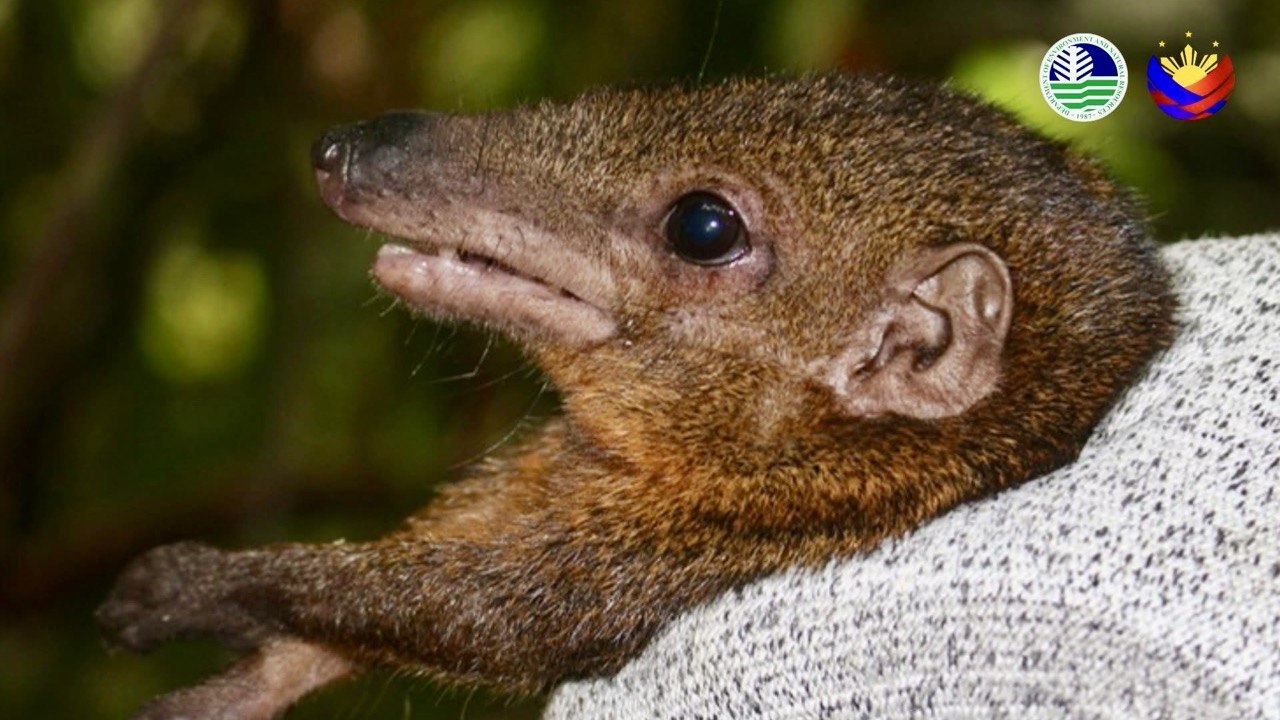
Some forest heroes don’t announce themselves. They don’t roar, flash brilliant plumage, or tower above the canopy. They slip through the undergrowth, light on their feet and easy to overlook. The Mindanao treeshrew is one of them.
Recently documented in a new monitoring site within Mount Apo Natural Park, the pint-sized mammal has handed scientists an outsized clue about the hidden life thriving along the mountain’s slopes.
Known as tingkolit by the Ubu Monuvu, the Mindanao treeshrew (Tupaia everetti) was recorded during a Biodiversity Monitoring System survey conducted from April 27 to May 1 this year, by park personnel and student trainees from the University of Southern Mindanao.
The find wasn’t remarkable because the animal was there. It was remarkable because of where it was.
Long associated with lower montane forests, the treeshrew turned up in a mid-montane site instead.
Low montane forests generally blanket elevations of about 1,000 to 1,500 meters above sea level, where warmer conditions support taller trees, thicker vegetation, and a bustling forest floor. Mid-montane forests, typically found around 1,500 to 2,000 meters, are cooler, mistier, and shaped by a different community of plants and wildlife adapted to the changing climate.
Finding the treeshrew in both zones hints that this tiny mammal may be more flexible, and more of a mountain wanderer than scientists once believed. It opens a new window into how endemic species adjust to the patchwork of habitats found in one of Mindanao’s most important landscapes.
The treeshrew, meanwhile, carries on as if none of the scientific excitement concerns it. By daylight, it scurries through the forest searching for insects, fruits, and small invertebrates. Every meal comes with a little ecological bonus. It helps keep insect populations balanced while spreading seeds that may one day grow into new forest giants.
In nature, the smallest creatures often do some of the biggest work. The treeshrew may not command the attention of larger, more dramatic wildlife, but its daily routines help keep the forest functioning.
For conservationists, every record of the Mindanao treeshrew is a valuable piece of the puzzle. Its continued presence suggests that Mount Apo’s forests remain capable of supporting the delicate relationships that connect countless species.
Great discoveries do not always arrive with thunder. Sometimes, they appear quietly—on tiny feet, beneath towering trees—leaving behind clues that even the smallest forest residents have enormous stories to tell.