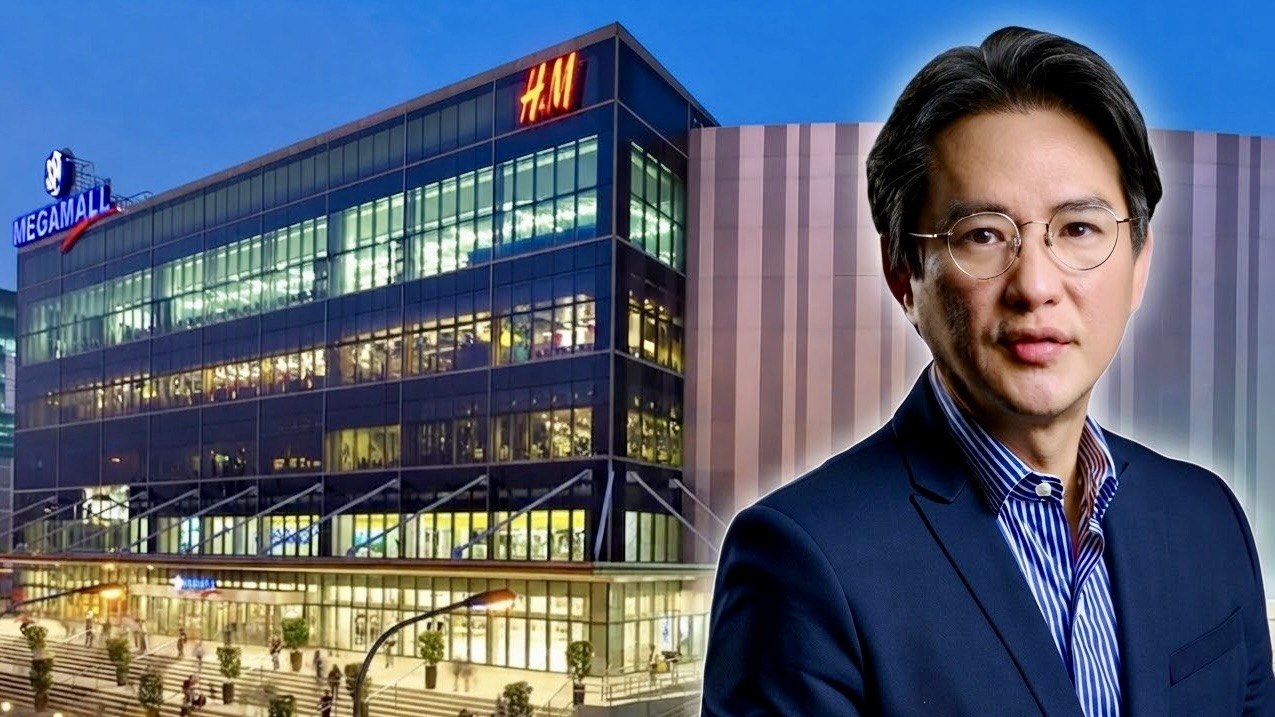
SM Supermalls is taking a demand-first approach to mall expansion, using tenant appetite, occupancy levels, local business activity and planned government infrastructure to decide where to deploy fresh capital.
Steven Tan, president of SM Supermalls, said the retail giant relies on an internal matrix to assess whether a market can support additional retail space, rather than expanding simply because a location appears promising on paper.
“We always check. We have a matrix on how to look at it. There’s an occupancy matrix and also the business activity within that area, and also the appetite of our tenants to expand,” Tan said.
SM also draws intelligence directly from its vast tenant network, which can provide an early signal of where retailers see room for growth.
“We study, we work together with our tenants, aside from our own study,” Tan said, noting that businesses sometimes identify areas where they need additional space.
Government infrastructure is another key part of the calculation. SM coordinates with the Department of Public Works and Highways and local government units to track projects that could improve connectivity, unlock development and generate new economic activity.
“We’re always aligning with not just our tenants, but also the LGU and also the DPWH,” Tan said.
The strategy is now underpinning a P4.1-billion expansion of three established regional malls. SM is allocating P1.7 billion for SM City Iloilo and P1.2 billion each for SM City Sto. Tomas in Batangas and SM City Naga.
Tan said the three malls are already about 95 percent occupied and have waiting lists for additional space, giving SM a concrete measure of demand before adding capacity.
“We will not expand the mall if we do not believe in the market,” he said.
For SM, the formula is straightforward: follow where customers and tenants are headed, while making sure roads, public infrastructure and local economies can keep pace.