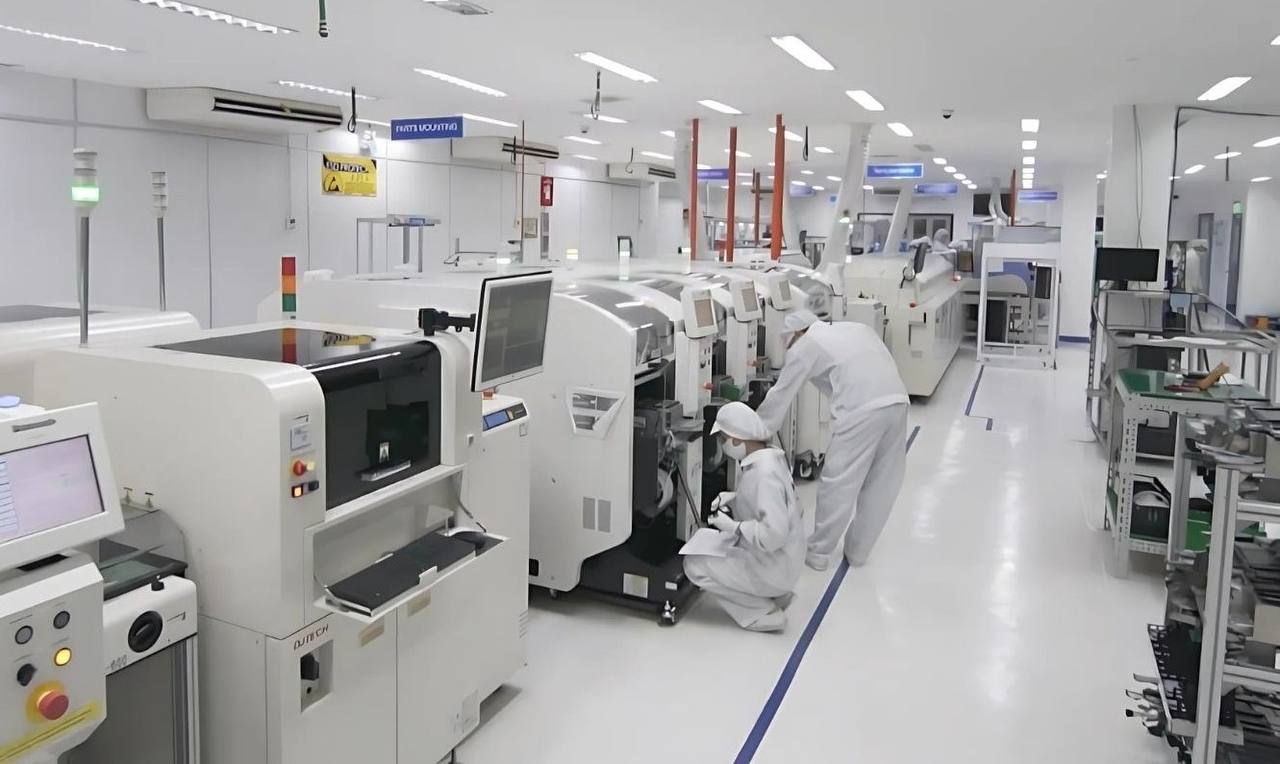
Amid escalating US-China trade tensions and renewed tariff uncertainty from Washington, Gruppo EMS is expanding production, accelerating its push into artificial intelligence hardware, and positioning the Philippines as an increasingly strategic alternative manufacturing base for global electronics firms.
The geopolitical turbulence has translated less into disruption than opportunity for Gruppo EMS. As Western manufacturers diversify away from China, the Philippine-based group has seen steady year-on-year growth, capitalizing on supply-chain realignments that favor flexibility and speed.
“Our business increased year over year because of the US-China trade conflict… we’re getting some of it,” chairman and chief executive officer Ferdinand “Perry” A. Ferrer told Context.PH in an exclusive interview.

Founded in 2004 on a platform of innovation, precision, and workforce development, Gruppo EMS has evolved well beyond its origins as an electronics assembler.
Today, it operates as a diversified manufacturing and services group spanning engineering, advanced electronics manufacturing, technical training, global deployment, and recruitment—an expansion that has positioned it to absorb shifting demand across markets.
That diversification is now being reinforced by a strategic expansion program. Initially designed to support US-bound production, the program has been recalibrated to serve a broader international customer base, allowing EMS to consolidate operations while maintaining the flexibility needed to navigate tariff volatility.
“That factory is up and running and supplying globally this famous brand of consumer product,” Ferrer said. “Now the challenge there is the tariff impositions of the U.S.… like any other companies, we’re looking at other channels to market and other markets.”
The strongest growth driver is AI hardware. Gruppo EMS is expanding its Batangas facility to meet surging demand, investing in new equipment and exploring unconventional solutions—such as building additional floors—to maximize capacity within its existing compound, at the request of customers.
“Demand for AI is unbelievable. For AI, we are the hardware,” Ferrer said, adding that the company expects a “significant increase” in AI-related production over the next 24 months.
At the same time, Gruppo EMS is deliberately moving up the value chain. Parallel to its hardware expansion, the group is developing capabilities in AI services and software, including chip design support and software development. “What we’re trying to develop is on the service and software side of the AI,” Ferrer said, noting that these initiatives are already underway rather than aspirational.
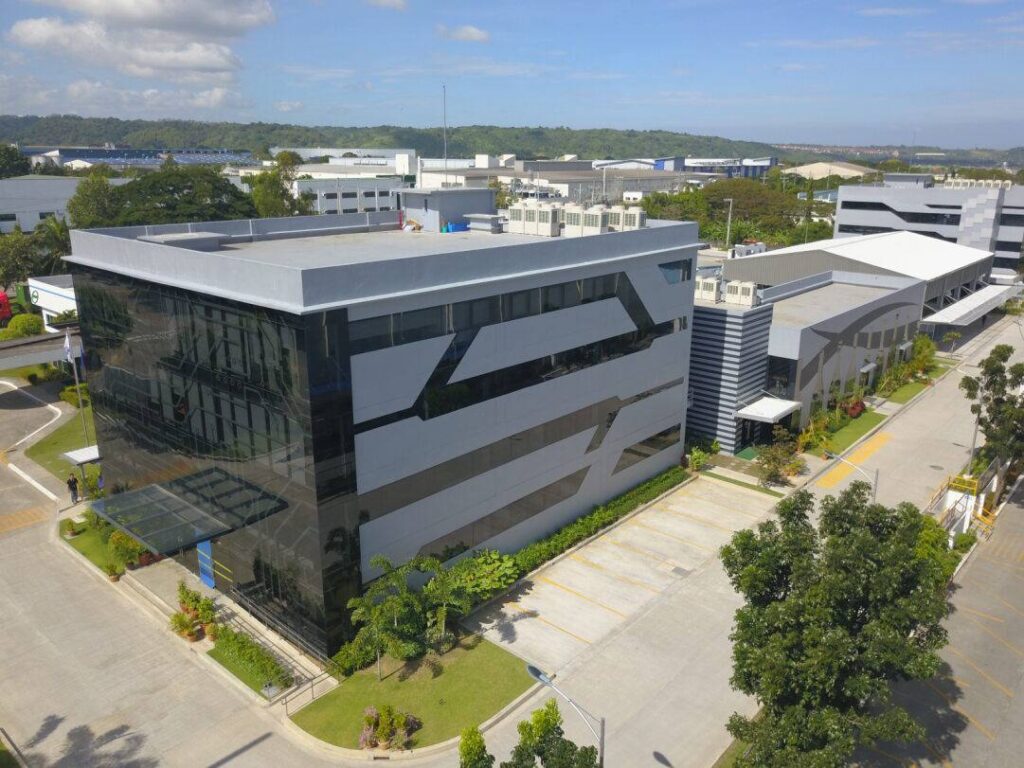
The current strategy reflects a longer arc of adaptation. Established by Ferrer’s father, Francisco Ferrer, with EMS Components Assembly Inc. at Laguna Technopark, the company expanded rapidly in its early years, earning recognition for people development and later adopting global manufacturing standards.
Over the past two decades, Gruppo EMS has branched into engineering services, printed circuit board assemblies, and global workforce solutions—demonstrating resilience during the pandemic by producing medical-grade face masks and sustaining overseas deployments.
Tariffs remain a moving target, but Ferrer said negotiations are ongoing and that the Philippines’ trade framework provides partial insulation. He pointed to the country’s access to Europe’s Generalized System of Preferences, existing free trade agreements, and zero tariffs on semiconductors “for the foreseeable future.” Still, he noted that many companies operating in the Philippines are actively diversifying their end markets to manage risk.
Underlying Gruppo EMS’ expansion is a sustained focus on workforce and supply-chain development.
The company works closely with the Technical Education and Skills Development Authority on enterprise-based training and senior high school immersion programs, while also pushing to localize suppliers to strengthen operational resilience.
Today, Gruppo EMS employs Filipinos across six countries, with total headcount expected to reach between 12,800 and 13,000 by year-end. As global manufacturers redraw supply chains and AI reshapes hardware demand, Gruppo EMS is positioning itself not merely as a beneficiary of disruption—but as a long-term partner in the next phase of global industrial growth