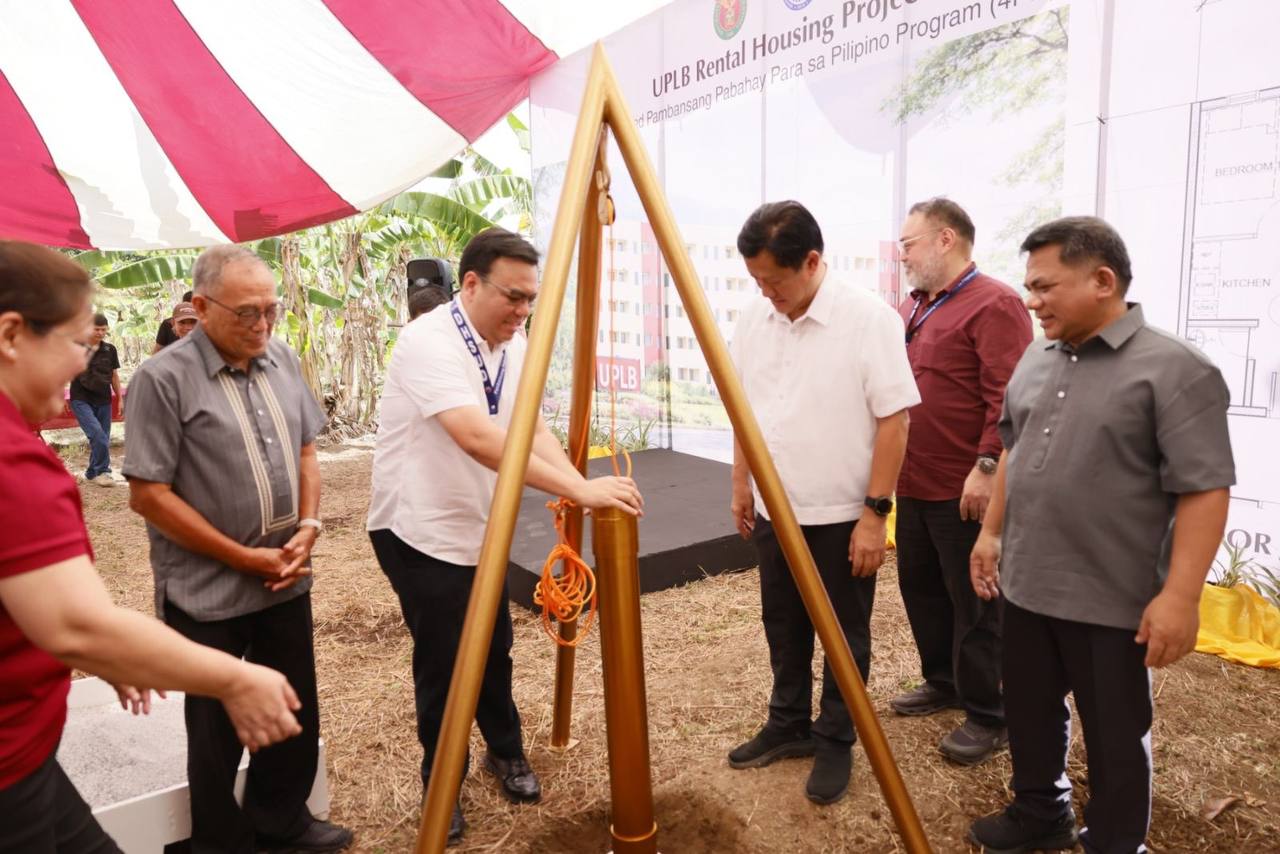
After more than four decades, housing construction has returned to the campus of the University of the Philippines Los Baños (UPLB), a development that signals how universities are becoming key partners in the Philippine government’s expanding affordable housing agenda.
Officials from the Department of Human Settlements and Urban Development (DHSUD) and the University of the Philippines on Friday, March 6, broke ground for a new rental housing complex inside the university in Bay, Laguna.
The project falls under the government’s Expanded Pambansang Pabahay para sa Pilipino Program (4PH), the flagship housing initiative of Ferdinand R. Marcos Jr.
The development will initially provide rental housing to about 1,000 beneficiaries—primarily low-income university employees, students, and informal settler families living near the campus.
The initiative marks its first housing project for UPLB since the 1980s, during the presidency of Ferdinand E. Marcos.
Housing Secretary Jose Ramon Aliling said the groundbreaking reflects the administration’s effort to widen access to safe and affordable homes. The project also emphasizes rental housing as a near-term solution to persistent affordability gaps in university towns.
Beyond shelter, the move highlights a broader strategic shift: universities are increasingly being tapped as anchors for community-focused urban development. Campuses often sit at the center of dense, fast-growing local economies, where rising land values and student demand can strain nearby housing markets.
UP President Angelo Jimenez said the project underscores the importance of proactive campus management in addressing the welfare of students, faculty, and neighboring communities. For institutions like UPLB—where staff and students often compete with private renters for limited housing—the initiative could ease pressure on surrounding barangays while strengthening campus-based support systems.
DHSUD officials also revealed that the partnership with UP may extend further. A similar housing initiative is being planned for the University of the Philippines Diliman campus in Quezon City, potentially scaling the model across the country’s premier state university system.
The UPLB project could demonstrate how academic institutions can double as catalysts for inclusive housing development—bridging education, community welfare, and urban planning in one site.