For all its growth potential, the Philippines still faces two stubborn barriers to attracting more foreign investment: expensive electricity and weak infrastructure. Fixing both could unlock the country’s next phase of economic expansion.
That was the blunt message from Frederic Dybuncio, president of SM Investments Corporation, who said high power prices remain one of the biggest deterrents for global investors evaluating Southeast Asia.
Speaking at the ASEAN Business Environment Forum, Dybuncio said electricity costs in the Philippines rank among the highest in the region, raising operating expenses for manufacturers and other industries that might otherwise consider expanding into the country.
“We probably have one of the highest power rates in the region, and that’s one of the main reasons why a lot of foreign investors hesitate,” Dybuncio said. “Power is very expensive.”
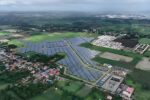
Reducing those costs, he argued, would immediately improve the country’s competitiveness. One path forward is accelerating the shift toward renewable energy, which could help stabilize supply and lower long-term generation costs.
SM Investments is already increasing its exposure to renewable power, particularly geothermal, while supporting broader efforts to expand clean energy in the national grid.
But energy is only part of the equation.
In an archipelago of more than 7,000 islands, logistics remains a structural challenge. Moving goods between regions can be slow and costly, limiting the efficiency of domestic supply chains and raising the price of doing business.
Dybuncio said investments in ports, transport networks, and logistics infrastructure are just as critical as energy reforms if the Philippines hopes to compete more aggressively for global capital.
Despite the bottlenecks, SM remains bullish on the country’s long-term outlook.
With a population of roughly 118 million, strong remittance flows from overseas workers, and a digital economy now worth around P1 trillion, the fundamentals remain compelling. The next wave of growth, Dybuncio said, may increasingly come from the Visayas and Mindanao—if infrastructure and energy reforms keep pace.