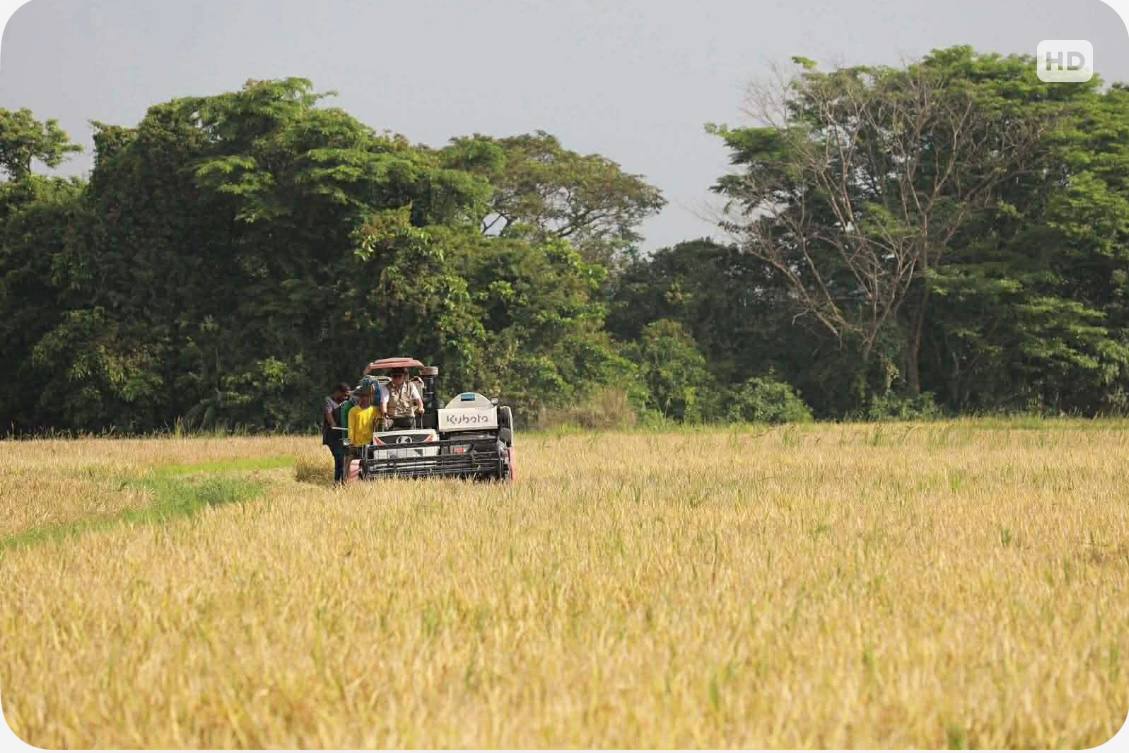
The Philippine Statistics Authority said the country’s agriculture and fisheries sector produced goods worth P1.79 trillion in 2025 at constant 2018 prices, with Central Luzon emerging as the top contributor.
Central Luzon generated P246.38 billion, or 13.8 percent of total output, outpacing Northern Mindanao and CALABARZON. The figures highlight not just the region’s scale, but also its balanced strength across multiple farm subsectors.
The data also point to a highly regionalized food production system, where different areas dominate specific commodities. Northern Mindanao led crop production, accounting for 12 percent of the total, followed by Cagayan Valley and Central Luzon, reinforcing their roles as key sources of rice, corn, and high value crops.
In livestock, CALABARZON took the lead, with Central Luzon and Northern Mindanao close behind. Their proximity to major consumption hubs such as Metro Manila gives these regions a logistical advantage in supplying pork and beef.
Central Luzon, however, stood out in poultry and fisheries. It produced 25.9 percent of the country’s chicken and eggs last year, far ahead of CALABARZON, and also topped fisheries output with a 17 percent share. Western Visayas and SOCCSKSARGEN followed as major fish-producing regions.
Other areas continue to play supporting but significant roles. Ilocos Region posted steady contributions across crops and fisheries, while Davao Region remained a key all-around producer.
Overall, the data underscore a diversified production base, with regions complementing each other. Central Luzon’s lead reflects its ability to deliver across crops, livestock, poultry, and fisheries, making it a cornerstone of the country’s food supply chain.