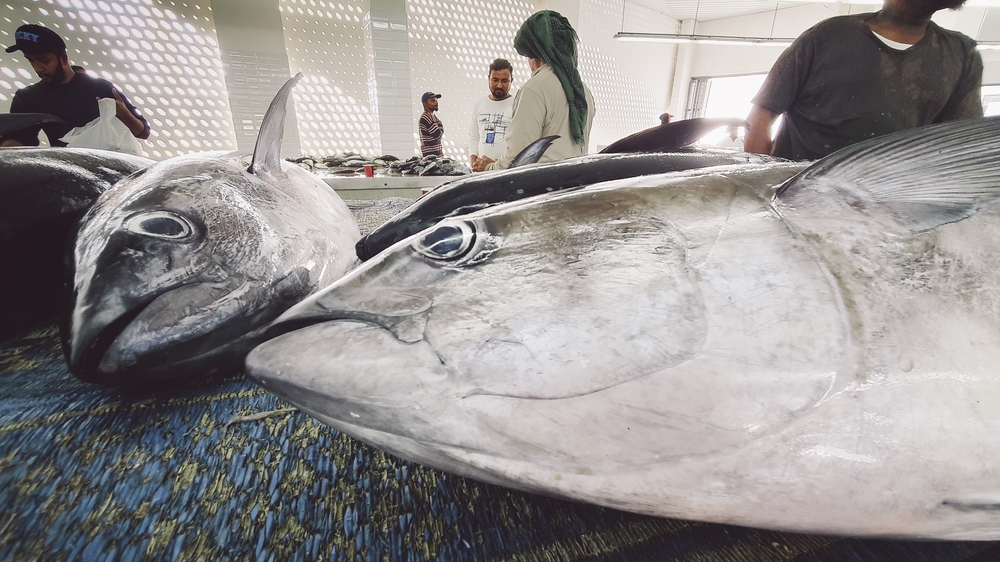
A tuna’s eyes may not be the most appetizing part of the fish, but scientists are proving they may be among its most valuable.
Researchers from Indonesia’s IPB University and Sriwijaya University have developed a way to turn tuna eyeballs, often discarded during seafood processing, into a stable nutritional ingredient rich in docosahexaenoic acid (DHA), the prized omega-3 fatty acid linked to brain, heart, and eye health.
The journey from fish waste to functional food begins with a surprisingly meticulous process. Frozen tuna eyeballs are thawed under controlled conditions before researchers carefully separate fatty tissue and eye muscles from non-lipid components. The material is then blended into a uniform paste and spun at high speed in a refrigerated centrifuge.
The result resembles a tiny industrial refinery. The spinning process separates the mixture into four layers, including an oil-rich top layer that contains the sought-after tuna eye oil, an emulsion layer, protein-rich fractions, and a bottom residue of tissue fragments.
Extracting the oil, however, is only half the battle.
Fish oils are notoriously fragile, prone to oxidation that can spoil flavor and diminish nutritional value. To protect the oil, the researchers employed microencapsulation, a technique that wraps microscopic droplets in a protective coating.
They enhanced the process by adding lemon essential oil and lecithin. The lemon oil helped create smaller and more uniform droplets, while lecithin acted as a natural emulsifier, keeping the mixture stable before drying.
Using an advanced optimization method known as an I-optimal mixture design, the team identified the ideal formula consisting of roughly 68 percent tuna eye oil, 22 percent lemon oil, and 10 percent lecithin. The resulting microcapsules demonstrated strong physical stability, improved oil retention, and acceptable sensory characteristics while preserving a DHA content exceeding 27 percent.
The study showed that carefully modifying the oil phase significantly improved emulsion quality before spray drying and produced microcapsules suitable for incorporation into foods and dietary supplements.
Beyond the laboratory, the findings point to a larger opportunity. As the food industry searches for sustainable ingredients and ways to reduce waste, yesterday’s discarded tuna eyeballs could become tomorrow’s brain-boosting nutrition. Further studies will examine storage stability and commercial-scale production, but the concept has already caught the industry’s eye.