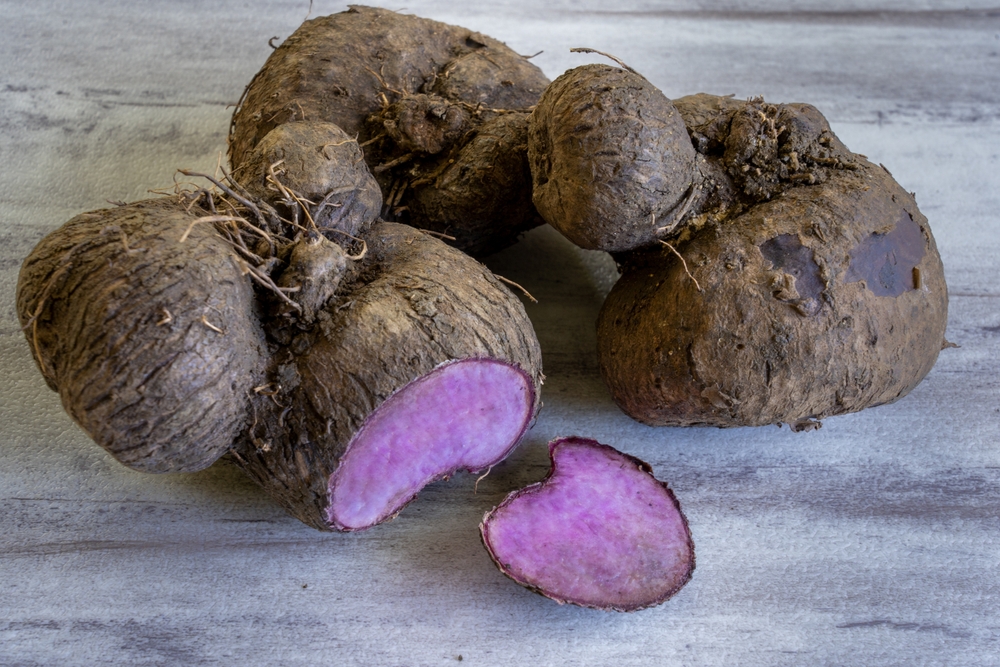
A new assessment by the United States Department of Agriculture Foreign Agricultural Service (USDA-FAS) reveals that the Philippines’ ube, or purple yam, value chain holds significant growth opportunities, yet requires coordinated action to address critical structural and operational challenges. Released on June 26, 2026, the report notes that ube has transformed from a traditional local ingredient into a globally recognized commodity used widely in desserts and beverages. In 2025, national production reached 12,483 metric tons, marking a 6.7 percent decline from the previous year’s total of 13,382 metric tons. Production is concentrated primarily in Central Visayas which accounts for 33 percent, followed by Calabarzon at 13 percent, Cagayan Valley at 12 percent and Northern Mindanao at 9 percent, with the remaining volume distributed across other regions of the country.
Export data shows rising international demand for the crop and its derivatives, with ube-based products generating $3.06 million in revenue during 2025. More than 60 percent of this value, equivalent to $1.86 million, came from fresh, chilled, frozen or dried ube products. The United States stands as the top export destination, followed by markets including the United Kingdom, Italy and countries across the Middle East.
Despite positive market trends, the report identifies several key constraints that limit further expansion of the sector. Access to certified, high-quality planting materials remains limited, and improved varieties that offer desirable traits such as enhanced color intensity, better starch content and higher yields are largely unavailable to smallholder farmers. There is also a lack of dedicated research infrastructure and laboratory capacity needed to develop genetically improved strains that balance productivity with quality characteristics suited to local soil conditions.
Production operations remain fragmented as most farmers work independently with limited coordination between producers. Intercropping is a common practice among growers, and many production areas are located in mountainous and upland terrain, making large-scale consolidated cultivation difficult to achieve. Significant challenges also exist in post-harvest handling, as inadequate facilities for sorting, curing and drying result in substantial product losses. This lack of infrastructure creates difficulties for processors in securing consistent raw material quality and meeting food safety standards.
The sector also faces regulatory and market related challenges, as there is no standardized formal definition of ube as an agricultural commodity. Currently the term is applied broadly across both domestic and export markets, encompassing not only genuine purple yam and its derivatives but also synthetic flavorings and artificial colorants that replicate the product’s appearance and taste. This ambiguity undermines product integrity, limits opportunities to position genuine ube as a premium product and creates difficulties in distinguishing authentic produce from substitutes. Pricing transparency is also limited as farmers rely heavily on intermediaries, which reduces returns at the farm level and makes consolidation of supply more challenging. Market demand signals are not consistently shared with producers, leading to mismatches between production cycles and actual market needs. Additionally, cooperatives and processing enterprises encounter barriers to accessing formal financing due to limited financial literacy, insufficient documentation and lack of acceptable collateral.
In response to these concerns, the Philippine Department of Agriculture has initiated support measures under its High Value Crops Development Program. The government is distributing more than 60,000 certified ube planting materials to over 900 farmers organized into more than 60 farmer groups across key production areas in Leyte and Bohol. This project, valued at nearly 2.
6 million Philippine pesos, represents the first large-scale distribution of its kind undertaken by the Bureau of Plant Industry. The agency also continues to provide technical assistance and capacity building activities to help improve farm productivity and enable producers to access emerging market opportunities.