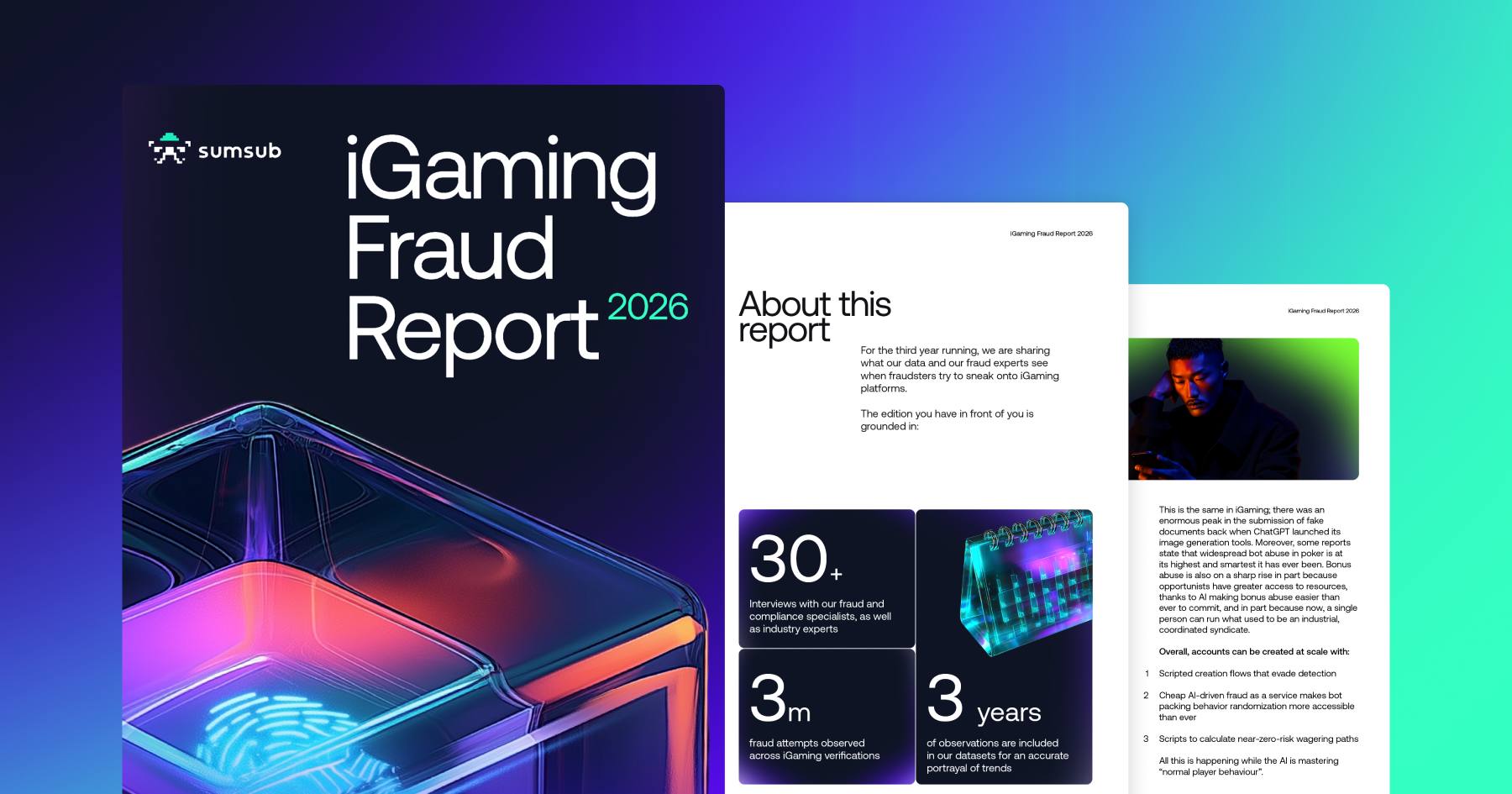
Sumsub, a global identity verification provider, has released its 2026 iGaming Fraud Report, drawing on data from more than 3 million verification attempts collected over 2024 to early 2026. The findings highlight a major evolution in fraud patterns, while also noting changing regulatory and risk landscapes across regions including Asia Pacific.
Globally, suspicious transaction volumes surged 4.5 times between the first quarters of 2025 and 2026, with the average value of flagged transactions climbing from US$3,960 to US$6,500. The overall global fraud rate also rose nearly 40 percent from 1.10 percent in 2024 to 1.53 percent in early 2026. Fraudsters now spend far longer on verification processes than legitimate users, making more attempts and using increasingly sophisticated methods to bypass checks.
In Asia Pacific, the picture is mixed. The region recorded the sharpest improvement worldwide, with fraud rates dropping from 3.49 percent in 2024 to 1.92 percent in Q1 2026, driven largely by tighter regulation in markets such as the Philippines, Australia, Macao, and New Zealand. New rules from PAGCOR in the Philippines now require local infrastructure partners to meet stricter anti-fraud standards, reflecting a broader shift toward continuous compliance rather than one-time licensing. Still, APAC’s rate remains above the global average, and vulnerabilities persist in markets including Cambodia, American Samoa, and Singapore.
The report reveals a critical shift: 76 percent of fraud in APAC now occurs after initial onboarding, not at the KYC stage. Deepfakes, selfie fraud, and synthetic identities make up roughly 66 percent of regional threats, as criminals create accounts specifically designed to pass verification checks before carrying out long-term abuses such as money muling and bonus exploitation. Fraud activity also follows a distinct timing pattern in the region, peaking between 8 p.m. and 10 p.m. GMT when security teams are often less available.
AI is accelerating these risks, lowering costs and enabling mass production of synthetic documents, faces, and identities. According to Sumsub experts, this creates high operational pressure for operators even when individual attempts are low-quality. To respond, the report recommends moving beyond one-time checks to continuous monitoring, combining multiple data points for risk scoring, strengthening liveness and official record verification, and adopting unified systems that balance security, user experience, and regulatory requirements.