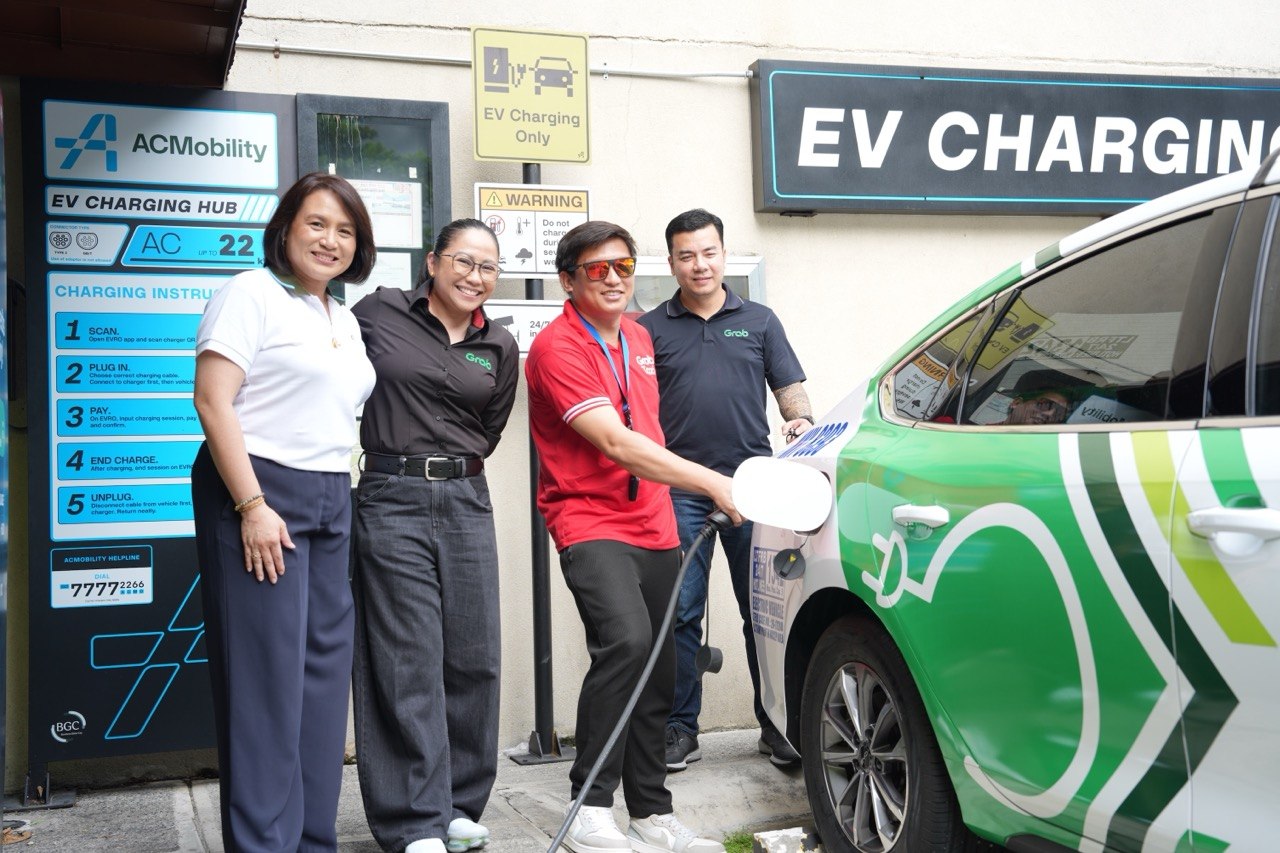
Grab Philippines is expanding its electric vehicle (EV) ecosystem through new partnerships with ACMobility and EVOxCharge, giving electric taxi and transport network vehicle service (TNVS) drivers wider access to charging stations as the company pushes to make cleaner transport more practical and affordable.
Under the agreements, GrabTaxi Electric and GrabCar Electric operators and driver-partners will gain access to more than 600 charging points nationwide at preferential rates, reducing charging costs by as much as 45 percent.
The move targets two of the biggest barriers to EV adoption in the Philippines: limited charging infrastructure and high operating costs. By expanding charging access and lowering energy expenses, Grab aims to improve vehicle utilization while encouraging more drivers and fleet operators to shift to electric mobility.
According to Grab, operators have reported that EVs cost 75 to 87 percent less per kilometer to operate than conventional gasoline-powered vehicles, creating significant savings amid volatile fuel prices.
“Sustainability can no longer be treated as just a green movement. For us, it has become a kabuhayan commitment,” said Grab Financial Group Philippines Country Head CJ Lacsican. “Through these partnerships, we are building the support system needed for more drivers to confidently consider electrification—not only as a cleaner transport choice, but as a livelihood resilience strategy amid the volatile fuel market.”
Beyond charging access, the collaboration integrates digital fleet management tools that simplify charging credit management, shift handovers, and route planning, allowing operators to maximize fleet utilization and improve driver productivity.
The partnership reflects a broader shift in the country’s EV landscape, where building charging infrastructure is becoming as critical as increasing vehicle adoption. While EV sales continue to rise, the availability of accessible and affordable charging stations remains one of the sector’s biggest growth constraints.
For commuters, the expanded charging network could support a larger fleet of reliable, lower-emission ride-hailing vehicles. More broadly, the initiative strengthens the ecosystem needed to accelerate EV adoption, helping reduce transport emissions, lessen dependence on imported fossil fuels, and support the Philippines’ transition toward cleaner and more sustainable urban mobility.