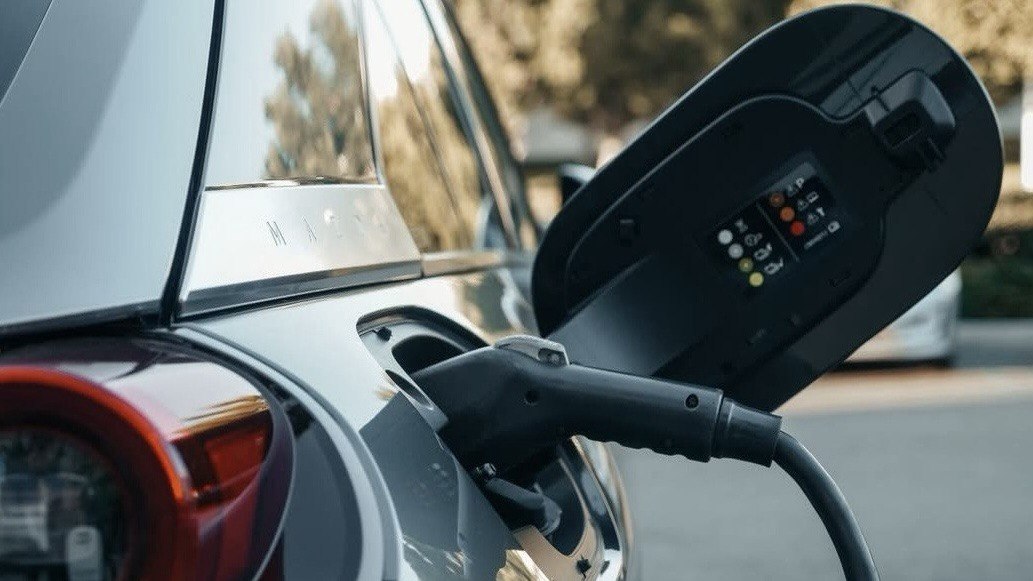
The government is positioning electric vehicle (EV) manufacturing for greater policy support while reviving a scaled-down automotive incentive program to prevent investment momentum from stalling before a long-term industry roadmap takes effect.
Special Assistant to the President for Investment and Economic Affairs and Finance Secretary Frederick Go said the proposed Electric Vehicle Incentive Strategy (EVIS) will likely offer more generous incentives than traditional internal combustion engine (ICE) vehicle projects, reflecting the government’s push to prioritize advanced manufacturing.
“I think there should be a premium to new technology,” Go said, noting that the Strategic Investment Priority Plan (SIPP) places frontier technologies, innovation and science-based industries at the top of the government’s investment agenda.
While EVIS is still awaiting approval from the Office of the President, Go said it will operate alongside the proposed Resurgence of the Automotive Industry through Comprehensive Enhancement (RACE) program.
Board of Investments (BOI) Managing Head Ceferino Rodolfo said EVIS carries a proposed P60-billion incentive package, with four qualified participants eligible to receive P15 billion each. The program will cover both passenger and commercial EVs, broadening its appeal to manufacturers.
Rodolfo emphasized that RACE is not replacing either the Comprehensive Automotive Resurgence Strategy (CARS) Program or EVIS. Instead, it will serve as a transition mechanism, using the remaining P9 billion from the CARS incentive fund to keep automotive investments flowing while the government finalizes its longer-term strategy.
Under the proposal, RACE will accommodate three participants eligible for up to P3 billion each over three years, a more modest package than the original CARS program, which offered up to P9 billion per participant.
Go said Toyota Motor Philippines Corp. has already expressed interest in joining RACE.
BOI Executive Director Corazon Halili-Dichosa said Mitsubishi Motors Philippines Corp. and two local firms with international partners have also signified interest in EVIS, leaving one remaining slot.
The parallel rollout signals that future incentives are increasingly being steered toward electrification rather than conventional vehicle production, as the Philippines seeks to strengthen its position in the regional automotive supply chain.