
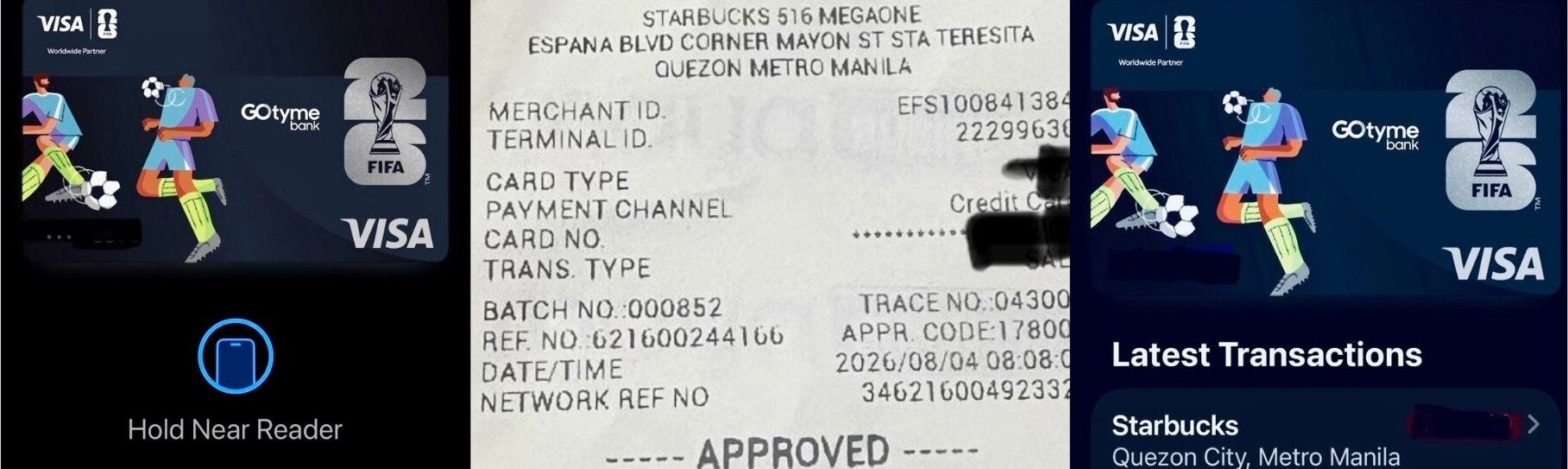
There is something oddly satisfying about paying for your morning coffee without ever opening your wallet. No coins rattling in your pocket. No frantic search for a card. Just a quick double click, a glance at your iPhone and, before the espresso machine finishes steaming the milk, payment is done.
That was my first encounter with Apple Pay in Manila, and it felt less like a technological leap than a small convenience that instantly made sense.
The service has generated a wave of excitement among iPhone users since it quietly became available over the weekend.
Social media quickly filled with screenshots of successful transactions after Metrobank users spotted Apple Pay support in their banking app. UnionBank, Chinabank and GoTyme soon joined the list of banks supporting the digital wallet.
Setting it up was refreshingly uncomplicated.
I first added my UnionBank Mastercard by opening Apple Wallet, tapping the “+” button and scanning the card. After updating the UnionBank app, I verified my iPhone as a trusted device before completing the process through a one-time password sent via SMS.
My GoTyme card was even easier. Scan the card, enter the OTP, and it was ready within seconds. Apple Wallet automatically made it my default payment card, although switching cards before checkout is effortless.
The real test came during my morning coffee run.
At the counter, I double-clicked the iPhone’s side button, authenticated with Face ID and held the phone over the contactless terminal. A soft chime, a check mark on the screen, and that was it. Coffee secured without touching a wallet.
The barista smiled and mentioned I was not the first customer to pay that way.
Apple Pay may still be in its early days in the Philippines, but the first wave of users is already beginning to show up at neighborhood cafés.
One fellow editor joked that someone had already tried using Apple Pay at Jollibee. The only problem, he quipped, was that only the mango pie was available on the menu.
Behind the punchline was a useful reminder that support remains uneven. While Apple Pay itself works, merchant readiness and available menu items are two very different things.
It is also still far from ubiquitous.
But if my coffee run was any indication, Apple Pay’s greatest appeal is not that it changes how Filipinos pay. It simply removes one more tiny friction from an ordinary day, and sometimes that is exactly what good technology is supposed to do.

Irma Isip is a seasoned business journalist covering corporate developments, international trade, and economic trends. A University of Santo Tomas graduate, she spent over 15 years as Business Editor at Malaya Business Insight, delivering clear, insightful reporting on key market and industry developments.