The Philippines is pushing for stronger ASEAN cooperation on climate finance, technology, and resilience, as it seeks to make climate change a bigger part of the region’s economic and security agenda during its chairmanship this year.
Environment Secretary Juan Miguel Cuna and Special Envoy for Disaster Risk Reduction and Management Antonia Yulo-Loyzaga said the Philippines has an opportunity to bring climate resilience closer to the center of ASEAN policymaking.
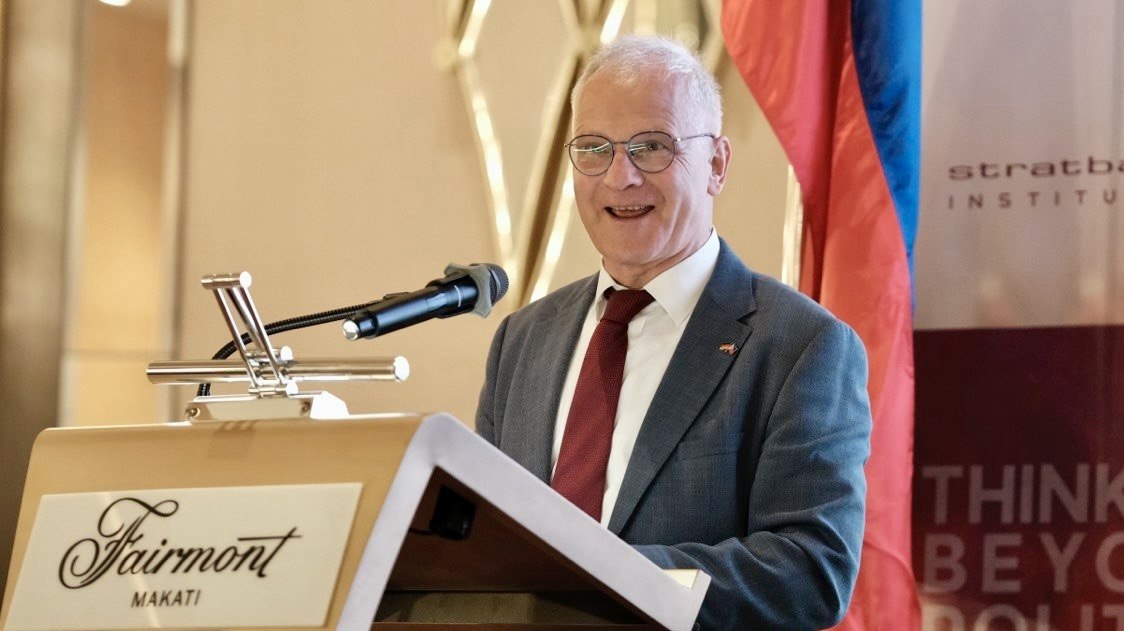
They spoke at a climate security forum organized by the Stratbase Group and the German Embassy on Monday.
“The region should speak with greater coherence in mobilizing the finance, technology, and partnerships needed for a just transition,” Cuna said.
“Climate resilience must increasingly become part of our ASEAN’s regional security architecture,” he added.
Cuna said the region needs greater access to climate finance, appropriate technology, science, data, and long-term partnerships to strengthen institutions and communities.
“No ASEAN member state can address these challenges entirely on its own,” he said.
Stratbase Group president Victor Andres Manhit likewise called for stronger partnerships among governments, businesses, civil society, and other stakeholders, saying cooperation across borders will be critical to building climate resilience.
He urged the private sector, civil society, and academe to play a bigger role in renewable energy, resilient infrastructure, climate-smart production, and nature-positive investments.
Yulo-Loyzaga said the Philippines has a “unique opportunity” to push ASEAN toward recognizing climate change as a security concern.
The country’s National Security Strategy 2023-2028 already identifies climate change as a threat multiplier, while its National Adaptation Plan estimates the cost of inaction at P1.2 trillion to P1.4 trillion during the current decade.
She called for better coordination among existing ASEAN mechanisms covering disaster response, climate change, food security, biodiversity, and maritime cooperation.
German Ambassador Andreas Pfaffernoschke urged ASEAN members to strengthen regional early warning systems that combine climate science with conflict-sensitive analysis.
He said ASEAN should also deepen cooperation on shared resources, including transboundary water, marine resources, and food systems, while improving coordination on disaster response and climate-related displacement.
Pfaffernoschke also called for climate finance to be linked more closely with peace-building efforts.
“A community affected by conflict and climate change should not have to choose between humanitarian assistance, peace-building and adaptation,” he said.
He also urged ASEAN to design climate adaptation projects with conflict prevention in mind and give vulnerable groups, including farmers, fishers, Indigenous peoples, women, and young people, a greater voice in policymaking.