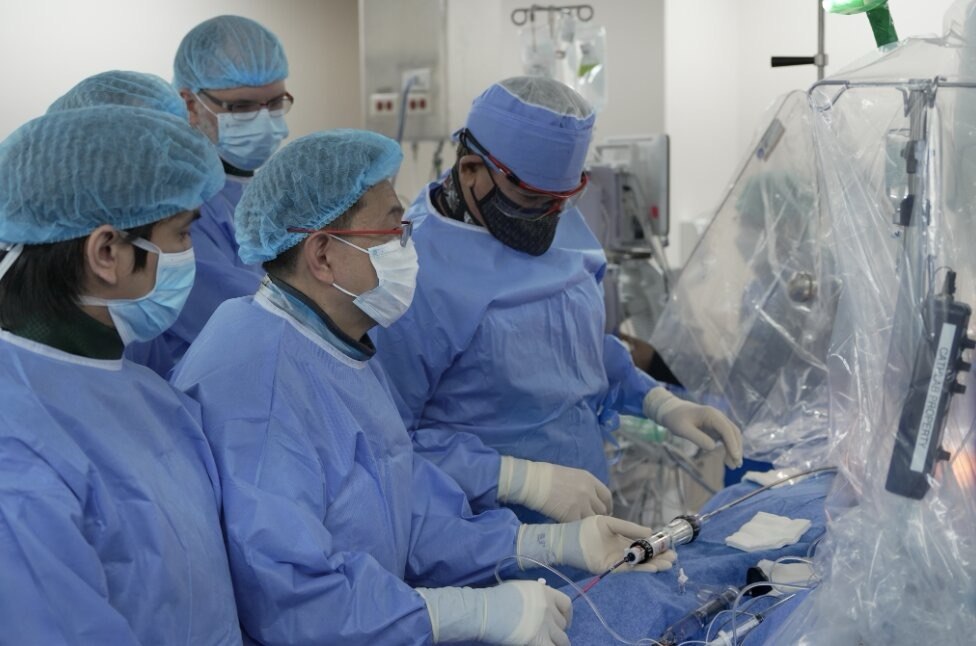
St. Luke’s Medical Center–Global City has successfully performed its first native balloon-expandable Edwards SAPIEN 3 heart valve implantation, expanding minimally invasive treatment options for Filipino patients with severe heart valve disease.
The procedure, known as Transcatheter Aortic Valve Replacement (TAVR), was performed on an 81-year-old woman diagnosed with symptomatic severe aortic stenosis, a condition in which narrowing of the aortic valve restricts blood flow from the heart.
The medical team was led by Dr. Fabio Enrique Posas, head of the hospital’s Center for Structural Heart and Vascular Interventions (CSHVI), alongside visiting interventional cardiologist Dr. Andrei M. Pop.
Unlike conventional open-heart surgery, TAVR involves delivering a replacement valve through a catheter, typically inserted through a blood vessel in the groin. This approach avoids a major chest incision and may reduce recovery time for eligible patients.
The Edwards SAPIEN 3 valve is delivered in a collapsed state and expanded using a balloon after being positioned inside the diseased aortic valve, restoring blood flow.
Posas described the procedure as smooth and complication-free, marking another milestone in the hospital’s cardiovascular treatment capabilities.
The achievement follows St. Luke’s completion of more than 300 successful TAVR procedures earlier this year, highlighting its experience in minimally invasive structural heart interventions.
TAVR is an important treatment option for eligible patients with severe aortic stenosis, particularly older adults and those who may face increased risks from conventional surgery. Treatment decisions depend on individual clinical assessments and the patient’s overall condition.
Following the procedure, Pop delivered a scientific lecture on TAVR Lifetime Management, discussing long-term patient care and developments in structural heart interventions.
The lecture underscored the importance of considering valve durability, future treatment needs and continued monitoring when planning care for patients undergoing transcatheter valve replacement.
St. Luke’s said the latest achievement reinforces its commitment to advancing cardiovascular care and expanding access to sophisticated heart treatments in the Philippines, as minimally invasive technologies continue to broaden options for patients with complex cardiac conditions.