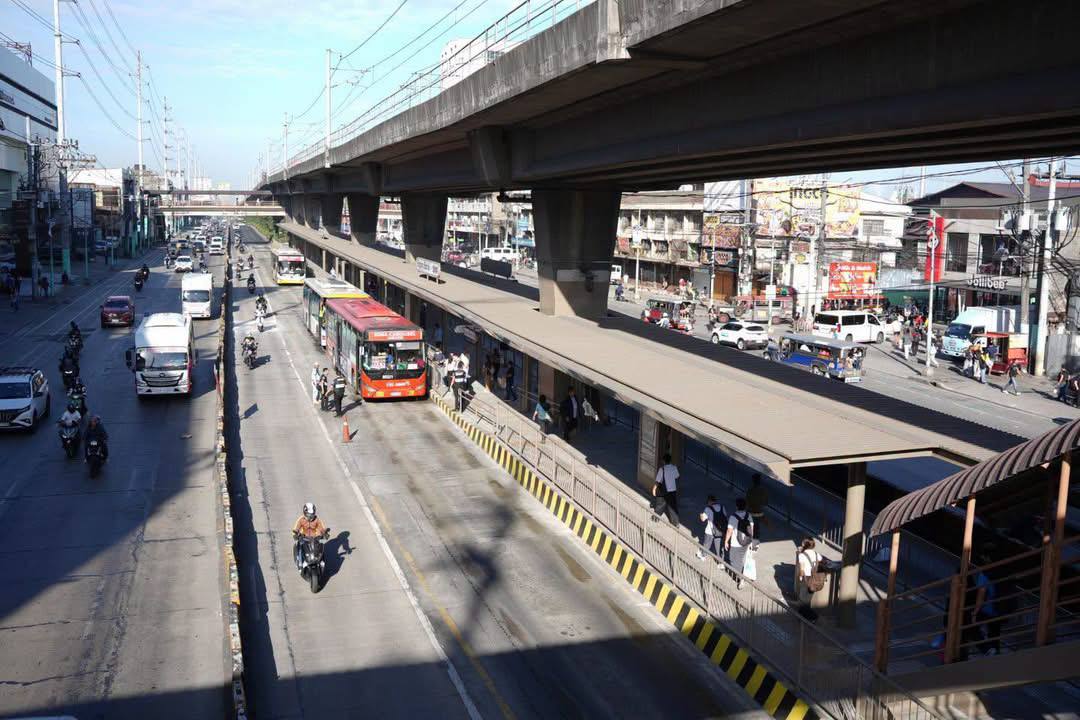
The Management Association of the Philippines (MAP) has rejected proposals to open the EDSA Busway to private cars, arguing that the government should fix gaps in bus services and infrastructure rather than weaken a corridor designed to move more passengers with fewer vehicles.
In a Nov. 3 statement, the business group said transporting students was not sufficient reason to grant private vehicles access to the dedicated bus lane.
“The policy should be to move passengers, not vehicles. Private vehicles on the roads should be reduced,” MAP said.
The association argued that allowing private cars into the busway would undermine its central purpose, which is to provide faster and more efficient transport through regulated, high-capacity buses.
Rather than expand exemptions, MAP urged the government to put more buses on the corridor, noting that their numbers have dwindled amid inadequate government support. It also called for shorter intervals between buses and the completion of missing stations to make the service more convenient and attract more commuters.
The group identified gaps in Roosevelt, Cubao, Rockwell, Ayala, Magallanes and Malibay, as well as along the stretch from Pasay to the Parañaque Integrated Terminal Exchange.
MAP also called on the House of Representatives and Senate to restore funding for the EDSA Busway System in the 2027 national budget, saying better service would require sustained government investment.
The busway has carried 341.3 million passengers from its opening in June 2021 through December 2025, according to MAP. Daily ridership peaked at 454,649 on Dec. 27, 2023, underscoring the corridor’s role in moving commuters along Metro Manila’s busiest thoroughfare.
The group, however, left room for limited access by vehicles carrying more passengers. It said carpools with at least four occupants could be allowed during specified school hours, provided regulators can enforce the rules effectively. School buses and point-to-point services could also be accommodated.
The priority for MAP is to improve the busway’s capacity and reliability, not dilute its advantage by adding more private vehicles to a lane built for mass transport.