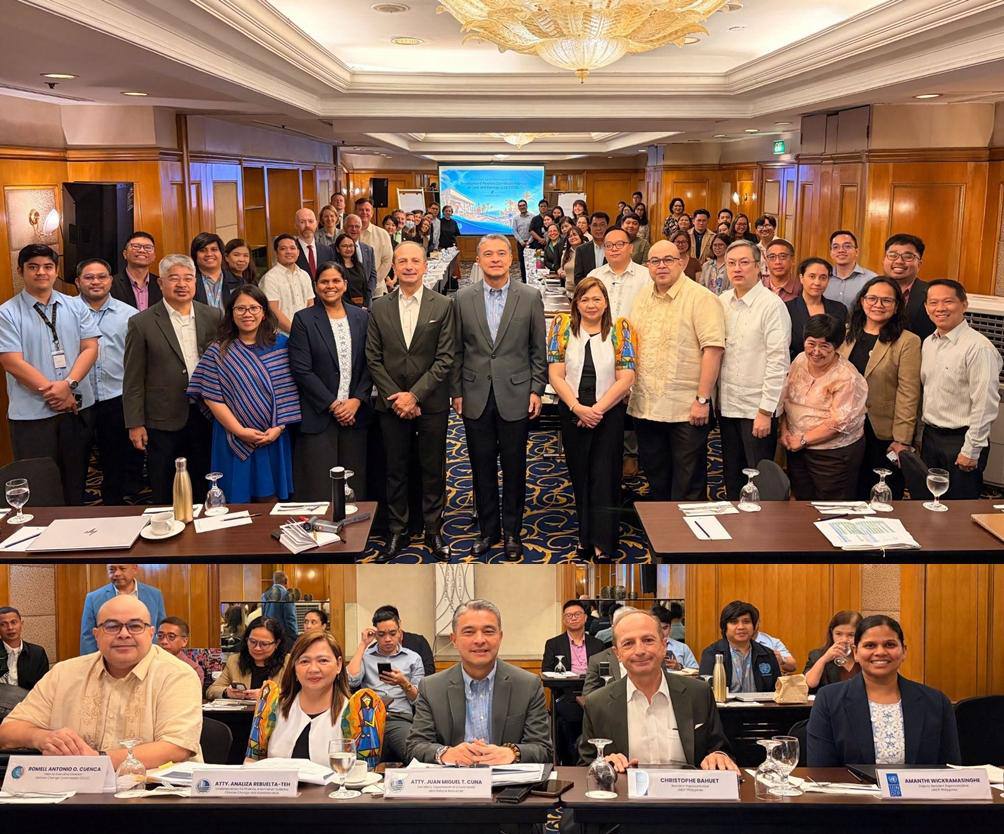
The Philippines, working with the United Nations Development Programme (UNDP) and a broad alliance of partners, is rolling out a unified national response to climate-related loss and damage — a move officials say will safeguard hard-won progress and unlock global financing.
Led by the Department of Environment and Natural Resources (DENR) and the Climate Change Commission (CCC), the initiative brings together government agencies, multilateral bodies, and development partners to build a national framework and long-term action plan for communities bearing the brunt of worsening climate impacts.
“Loss and damage is fundamentally a development issue,” DENR Secretary Atty. Juan Miguel T. Cuna stressed. He explained that when climate impacts go beyond what communities can adapt to, they can wipe out years of progress — pushing families back into poverty, deepening inequality, and eroding things like cultural heritage and community ties that money cannot replace.
The Philippines, which hosts the governing board of the global Fund for Responding to Loss and Damage, is turning its international leadership into on-the-ground action. UNDP is bringing global expertise to help integrate loss and damage into national planning, risk management, and public finance — and to help the country access international funding including the Loss and Damage Fund.
To keep efforts aligned, the government has launched the Development Partners Coordination Group on Climate-related Loss and Damage (L&D-DPCG), co-chaired by DENR, CCC, and UNDP Philippines. The platform will align aid, financing, and expertise, cut duplication, and direct resources where they are needed most.
Climate Change Commission Assistant Secretary Rommel Cuenca emphasized: “Loss and damage is already a development reality for the Philippines.” How the country responds will determine whether gains in poverty reduction and resilience are preserved — and strong national positioning means the Philippines can both shape global solutions and tap new financing streams.
UNDP Resident Representative Christophe Bahuet noted: “Hosting the Loss and Damage Fund Board, building a national strategy, and aligning partners around our own priorities are key steps toward a response led by Filipinos, for Filipinos.”
Two workstreams will turn commitments into action: one focused on on-the-ground sector needs, led by IOM, FAO, and UNDP; the other on stronger systems and capacities, led by GIZ, UN-Habitat, and UNDP. They will work alongside key agencies including DEPDev, DSWD, DILG, DOST, and others.
DEPDev Undersecretary Carlos Bernardo O. Abad Santos summed up the goal: “Recovery should not just rebuild what was lost. It must protect our development gains, restore livelihoods, and build stronger communities and a more resilient economy.”